Get Full Government Meeting Transcripts, Videos, & Alerts Forever!
Get email alerts on the Land Use topic
No spam. Unsubscribe anytime.
San Juan Capistrano council votes to study converting Capistrano Business Park into up to 225 homes
Summary
The City Council voted 3–1 to initiate a study for a specific plan that would allow up to 225 for‑sale residential units on the roughly 15‑acre Capistrano Business Park site; residents and business owners urged caution over traffic, tenant displacement and the amount of affordable housing.
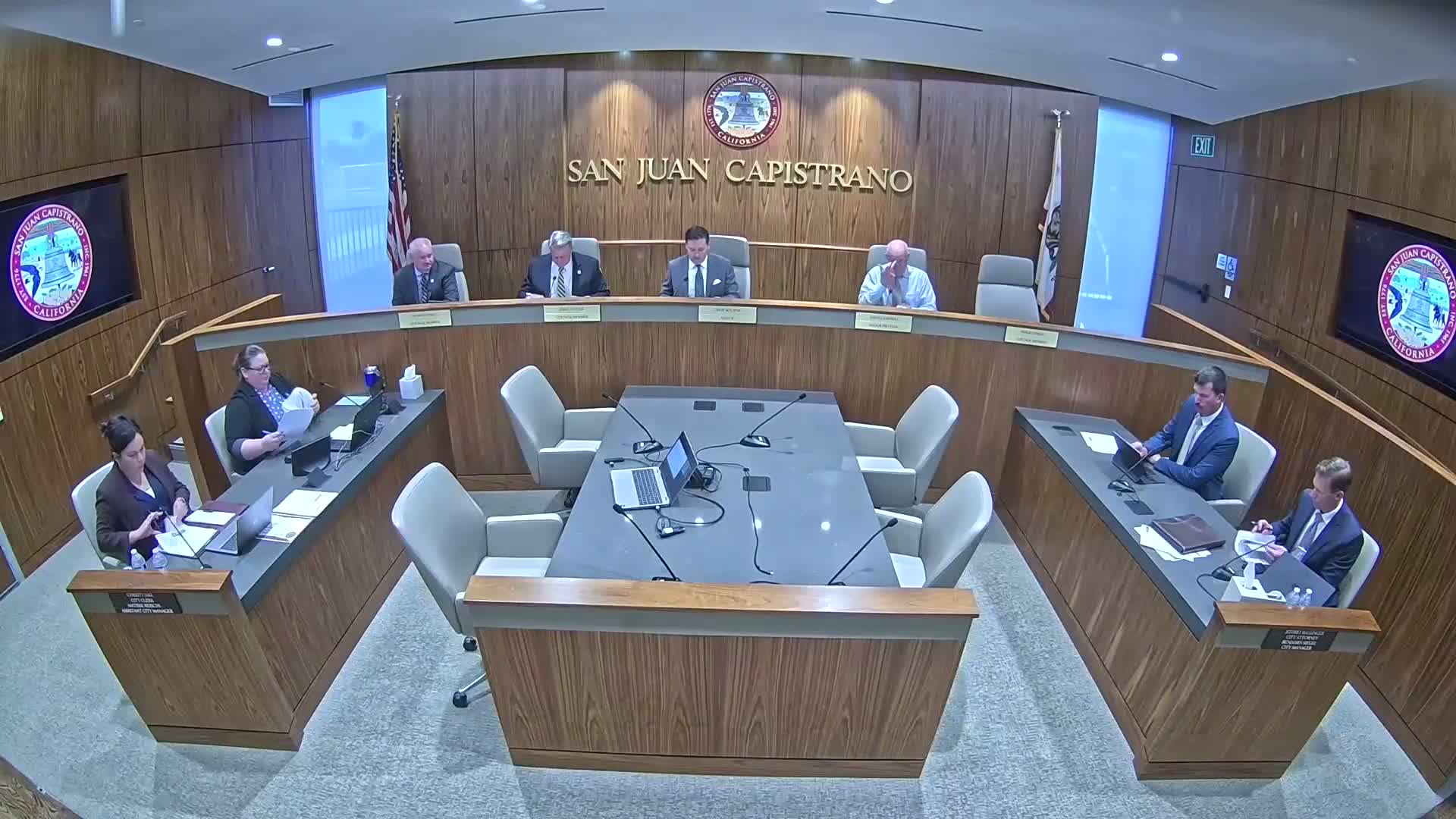
SAN JUAN CAPISTRANO — The San Juan Capistrano City Council on Aug. 19 voted to initiate a study to consider converting the 15‑acre Capistrano Business Park into a residential specific plan with up to 225 for‑sale units, after staff described the scope of the proposal and the applicant outlined a conceptual plan.
Joel Rojas, the city’s Development Services director, told the council the parcel — identified in the Ortega Plan Community Comprehensive Development Plan (CDP 7801) as Sector B — contains about 21 office and warehouse buildings and is currently designated industrial park. Staff recommended initiating a general plan amendment, rezone and code amendment study so the city and applicant can prepare a specific plan and complete an environmental analysis, which staff expects will be an Environmental Impact Report.
Kevin Hayes, the applicant, said the ownership envisions an adaptive reuse that would produce “entry‑level and workforce housing” near transit and jobs. Hayes said the site is less than a half‑mile from the train station and showed a conceptual plan with three‑story townhomes and detached units that would amount to roughly 15 dwelling units per acre.
“Given current home prices here, every unit we can add below the median helps make this community more affordable for those who want to buy,” Hayes said.
Residents and business owners urged the council to study broader impacts before committing to the process. Amanda Mefford, a resident, said the city is already experiencing new development downtown and raised concerns about rush‑hour congestion near Camino Capistrano and Ortega Highway. A speaker who identified himself differently than the clerk’s sign‑up slip warned the project’s proximity to Interstate 5 could create bottlenecks that impede first responders during evacuations.
Amy Vasquez, who said she owns a business in the Capistrano Business Center, opposed initiating the study and said converting the center would force more than 100 small businesses to relocate or close. Vasquez also cited, as she stated, health studies about living within 500 feet of a freeway and urged the council to deny the request.
Council members pressed staff and the applicant on how the study would address commercial impacts and tenant relocation. Hayes said occupancy in parts of the park is low — he reported nearly 50% vacancy on the second floor and about 10 vacant ground‑floor units — and suggested the owner would work to relocate tenants within its portfolio where possible.
On inclusionary housing, Rojas told the council that the city’s code contains a codified 10% inclusionary requirement but that the city’s approved housing element commits to a 15% inclusionary requirement for specific plans, which staff would apply to a new specific plan if adopted.
Council member Hart moved to follow staff’s recommendation to initiate the study; Council member Taylor seconded. The motion passed 3–1 with one council member opposed and one excused.
What happens next: If the council’s initiation stands, staff will work with the applicant to amend the land‑use and zoning maps, prepare a specific plan with development standards and design guidelines, and carry out the environmental analysis. The planning commission will review the completed package and forward a recommendation to the council for a final decision.
The council’s vote was procedural: initiating a study does not itself change zoning or authorize construction. The council directed staff to apply the inclusionary housing expectations from the housing element as the project moves through the study and environmental review.