Get Full Government Meeting Transcripts, Videos, & Alerts Forever!
Get email alerts on the Housing Policy topic
No spam. Unsubscribe anytime.
Orange council approves first reading to allow targeted single‑room occupancy conversions
Summary
The City of Orange voted 5–2 to adopt on first reading an ordinance permitting single‑room occupancy (SRO) housing via adaptive reuse in certain zoning districts, limiting eligibility to existing small hotels/motels and small office buildings and restricting units to very‑low and low‑income occupants.
The City of Orange council conducted a public hearing and adopted on first reading an ordinance to allow Single Room Occupancy (SRO) housing through adaptive reuse at targeted properties.
City planning staff described the ordinance as an implementation of a housing element action to permit compact, affordable units in appropriate commercial corridors. "SRO units, as they're known, offer a compact housing option ranging between 150 to 375 square feet," staff said while explaining that the ordinance would limit eligible conversions to existing hotels/motels (30 rooms or fewer) and office buildings under 5,000 square feet in specified C1/C2/CTR zones.
Staff identified seven motels and 28 office buildings that would be eligible under the proposed rules and clarified that eligibility is locked at the time of adoption (future new construction would not qualify). The ordinance requires affordability restrictions on all SRO units except a manager's unit, limiting occupancy to very‑low and low‑income households.
Supporters at the hearing said the measure provides an adaptive reuse pathway for underutilized properties; one public speaker, Reggie Mendicus, said conversions could put older properties to constructive use. Some council members expressed concerns about neighborhood impacts and asked whether HomeKey or other funding could support conversions; staff said HomeKey funding is generally tied to supportive housing and most SRO conversions to date have been privately funded.
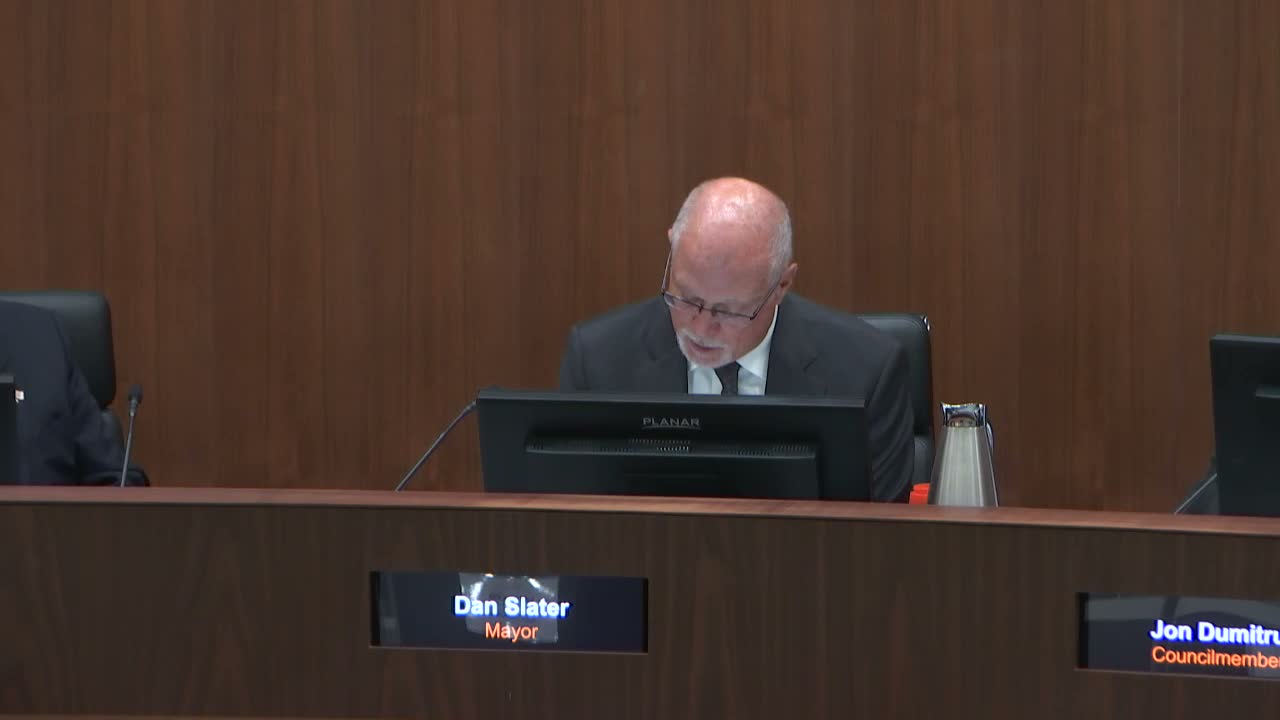
The council voted to introduce and conduct the first reading of Ordinance No. 1125 by a 5–2 vote. Mayor Pro Tem Tim Bilodeau and Council Member Tavares recorded no votes. The vote advances the ordinance to a subsequent reading for final adoption and establishes the list of eligible properties at the time of ordinance adoption.