Get Full Government Meeting Transcripts, Videos, & Alerts Forever!
Get email alerts on the Planning Design Review topic
No spam. Unsubscribe anytime.
Orange council directs staff to rewrite design‑review rules, rejects moratorium
Summary
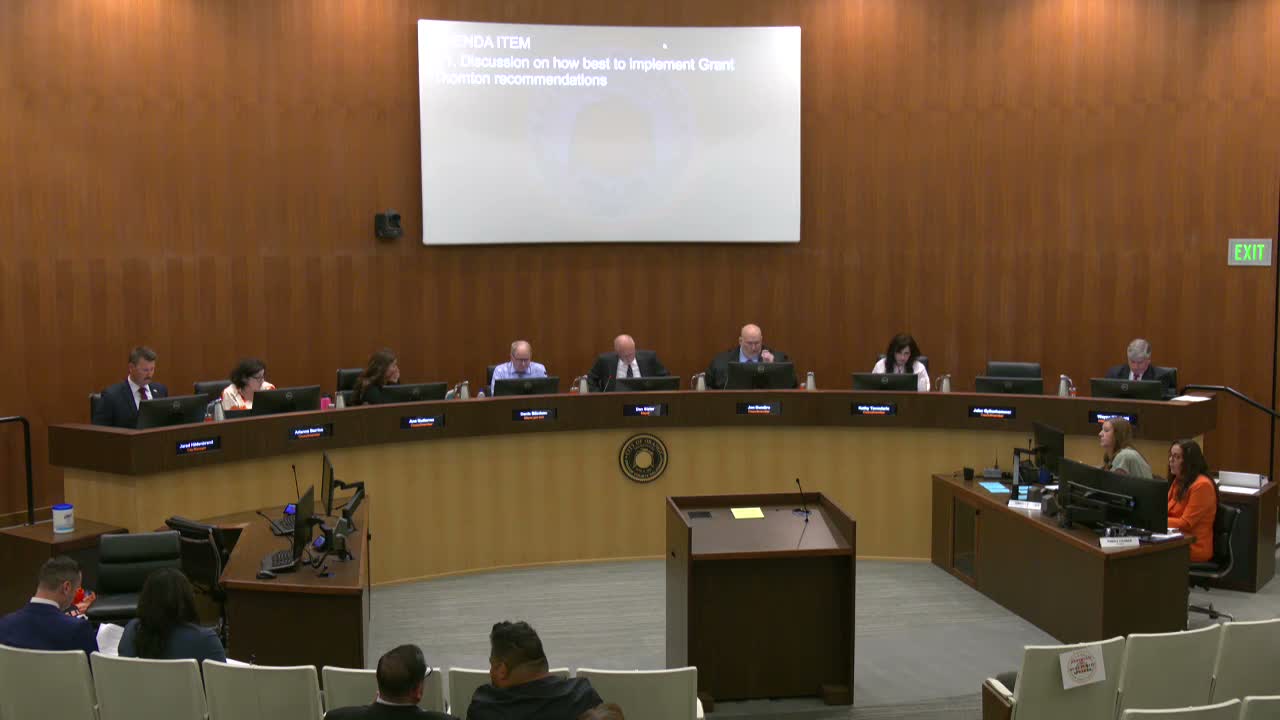
After months of volunteer work on a preservation ordinance and a split council debate over interim limits, the City Council voted 5–2 to direct staff to draft a new ordinance narrowing the Design Review Committee’s scope to primarily historic resources while moving routine commercial review to staff.
The Orange City Council voted 5–2 on Aug. 12 to direct staff to draft a rewritten ordinance that would scale back the Design Review Committee’s (DRC) authority and reserve DRC review primarily for historic districts and properties identified on the city’s inventory.
The action follows a presentation by Community Development Director Russell Bunim, who proposed four changes to speed up business permitting: (1) rely on administrative design review for most projects outside historic districts and properties on the city inventory; (2) move sign approval for non‑historic properties to staff; (3) allow demolition approvals for non‑contributing structures in historic districts at the staff level; and (4) apply clear 50‑year criteria for historic review.
Supporters on the council said the changes are intended to make Orange more business friendly and to reduce staff time spent preparing and noticing multiple public hearings. Mayor Slater framed the move as part of a broader effort to implement recommendations from a recent Grant Thornton fiscal review and to attract economic development to boost sales tax revenue.
Preservation advocates and volunteer groups, including the Orange Legacy Alliance and the Old Town Preservation Association, urged caution. Mary Ann Skorpanich, chair of the Orange Legacy Alliance and current DRC chair, told council members the volunteer working group had delivered a draft preservation ordinance and an MOU with the city; she asked council to allow that process to finish rather than to upend months of pro bono work.
Councilmember Barrios, who voted against the final substitute motion, proposed a temporary moratorium removing non‑historic projects from DRC purview while the comprehensive preservation ordinance is completed. The council ultimately adopted the mayor’s substitute motion instructing staff to draft the ordinance outlined by Bunim; Councilmembers Gutierrez and Barrios voted no.
Staff said any ordinance would follow Brown Act and municipal code noticing requirements and must pass through the Planning Commission before a final council vote. Russell Bunim said the draft could be ready in a matter of months, but emphasized that the procedural timeline—public notice, Planning Commission recommendation, and a public hearing—cannot be bypassed.
Next steps: staff will prepare an ordinance for Planning Commission review and return to council for public hearings. Council members asked that the volunteer groups be included in the review of any interim language and that staff clarify whether an interim ordinance would be permanent or have an explicit sunset provision.