Get Full Government Meeting Transcripts, Videos, & Alerts Forever!
Get email alerts on the Workforce Policy topic
No spam. Unsubscribe anytime.
Mission Viejo holds AB 2561 public hearing; staff reports 12% turnover and proposes retention strategies
Summary
City staff told the council the city experienced approximately 12% turnover in 2024 and projects a roughly 7% vacancy rate as of May 31, 2025. The council adopted a policy to satisfy California Assembly Bill 2561 and directed staff to pursue retention measures such as career ladders and salary-range adjustments.
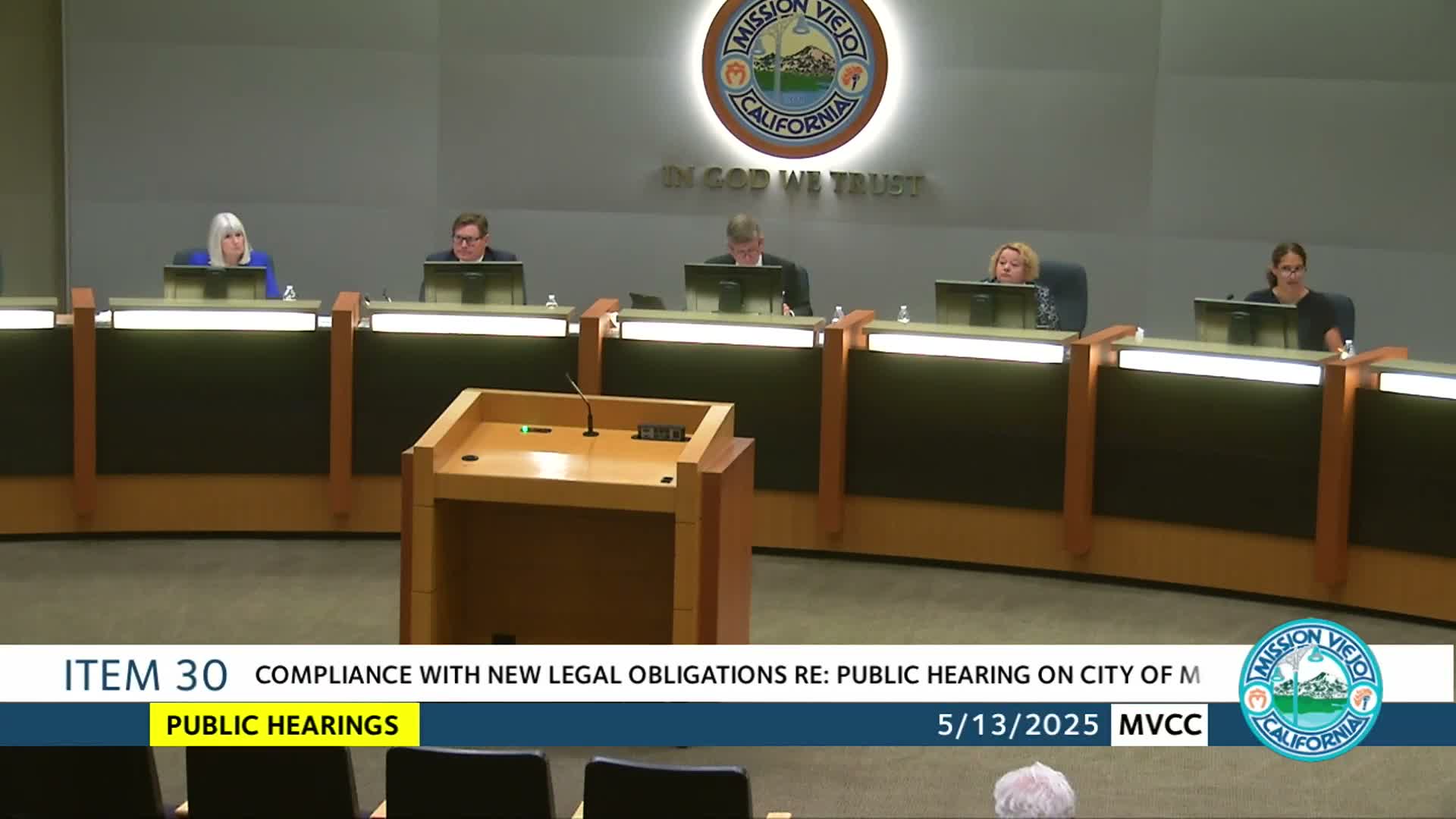
At a public hearing May 20 required under California Assembly Bill 2561, Mission Viejo staff reported on employee vacancies, turnover and proposed retention strategies, and the City Council adopted a new policy to establish an annual public review of recruitment and retention.
Human resources staff explained that in calendar year 2024 the city recorded 18 separations, representing roughly a 12% turnover rate of the 147.475 authorized positions approved in the 2024'25 fiscal year; retirements (6), moves to other public agencies (5), private-sector departures (2) and probationary separations (5) were cited. Staff projected a citywide vacancy rate of about 7% as of May 31, with the library and cultural services department carrying a majority of open roles.
Monique (Human Resources) told council the city must hold at least one public hearing before the council each fiscal year to present vacancy status and discuss recruitment and retention in compliance with AB 2561, which took effect Jan. 1, 2025. Proposed retention strategies included clarifying career ladders, reclassifying positions to reflect duties, salary-range adjustments to remain competitive with comparator agencies, and additional employee recognition and benefits modifications to support retention while protecting financial sustainability.
Council members asked about accommodations for qualified candidates with disabilities; staff replied that accommodations are covered by existing personnel policy and that recruitment templates inquire about accommodation needs. There was also public comment from Kathy Palmer asking how the library became largely self-sufficient, and staff clarified county-directed library property-tax allocations and historical council budget decisions.
The council voted unanimously to adopt the recommended public-hearing policy framework and directed staff to include recruitment, retention and vacancy reporting in future budget discussions.