Get Full Government Meeting Transcripts, Videos, & Alerts Forever!
Get email alerts on the Opioid Settlement topic
No spam. Unsubscribe anytime.
Residents say Madison County supervisors’ contract demands stalled opioid-settlement programs; task force partners withdrew applications
Summary
Public commenters and an opioid task force member told the board the county elayed rollout of opioid-settlement programs by imposing contract requirements; supervisors said they sought written agreements for accountability and the two sides disagree on why partners pulled applications.
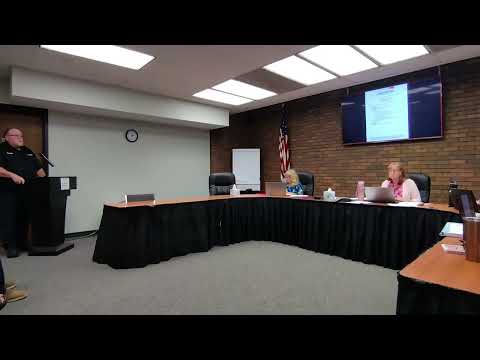
Vicky Brenner of Winterset told the Madison County Board of Supervisors during public comment that supervisors Stansell and Hobbs had imposed new, detailed contract demands that were not specified in the opioid settlement or state guidance, and that those requirements have delayed programs funded by the settlement. "When vital program funds are stalled or diverted by personal agenda or neglect, it is not just a breach of trust, It's misappropriation. And it's against the law," Brenner said.
Steve Swanson, who identified himself as a member of the county opioid task force, said community partners that helped write a grant proposal pulled their applications after being subjected to what they perceived as excessive scrutiny. "They pulled their grant application because... they got advice to pull their grant application so they don't get audited and everything get put under a microscope," Swanson said, adding that several school districts and treatment providers had been involved in the plan.
Board members disputed the characterization that they had refused support. At the meeting chair-level staff stated the supervisors supported the program in principle but sought a written contract or memorandum of understanding to provide accountability over how settlement funds are spent. "As far as I know, all of us were in support of this. We just wanted clear documentation," a board member said.
The disagreement centers on how much documentation and program detail the board should require before releasing funds. Commenters described the settlement dollars as restricted to opioid remediation and argued that additional contractual demands were outside the settlement nd deterred community partners from participating. Board members said the county must maintain fiscal accountability for funds it administers and requested terms and reporting be clarified in a contract or MOU.
There was no formal board vote to rescind or approve the task force proposals during the meeting; rather, supervisors instructed staff to prepare sample contract language and seek model documents for an agreement. Board members and staff said they would continue to work with the task force and with applicants, but speakers in the public comment period said several partners had already withdrawn their applications and the status of the task force nd some programs remained uncertain.
The board did not announce a timetable at the meeting for finalizing contracts or for reengaging the withdrawn applicants; multiple speakers said they would await clearer documentation and outreach from county staff.