Get Full Government Meeting Transcripts, Videos, & Alerts Forever!
Get email alerts on the Ethnic Studies topic
No spam. Unsubscribe anytime.
Irvine Unified presents semester-long ethnic studies pilot, opens public comment before final approval
Summary
Irvine Unified officials presented a semester-long ethnic studies pilot aligned to California—s model curriculum, outlined nine instructional standards across five units, and opened a public hearing and two-week feedback period before the board will consider final adoption of instructional materials.
Irvine Unified School District presented a semester-long ethnic studies pilot to the Board of Education and opened a public hearing, saying the course would be offered to 11th and 12th graders as a one-semester academic elective during the 2025–26 school year.
District curriculum leaders said the course was developed over two years with a broad stakeholder process that included teachers, counselors, students, parents, and university partners. Chris Krebs, executive director of curriculum and instruction, said the district followed the California Ethnic Studies Model Curriculum and sought to ensure the pilot is "rigorous and reflective" of multiple perspectives. "We are presenting this course today in the spirit of transparency, and to gather input from our community," Krebs said.
Blair Lekegan Pedore, coordinator of history and social sciences, outlined the course structure and nine instructional standards that will be taught across five units: foundations of ethnic studies; identity; history and systems of power; resistance and solidarity; and community action, culminating in a student capstone project. Pedore said the pilot will emphasize student self-reflection, analysis of multiple perspectives and community engagement.
Staff said the district will pilot two sets of instructional materials selected through a rubric that evaluated accessibility and representation, naming Newsela and McGraw (Active Learn) as the current choices. District staff committed to posting the full instructional materials and a feedback survey online; the survey will remain open through March 25 so community members can review and comment before the board votes on instructional materials at a subsequent meeting.
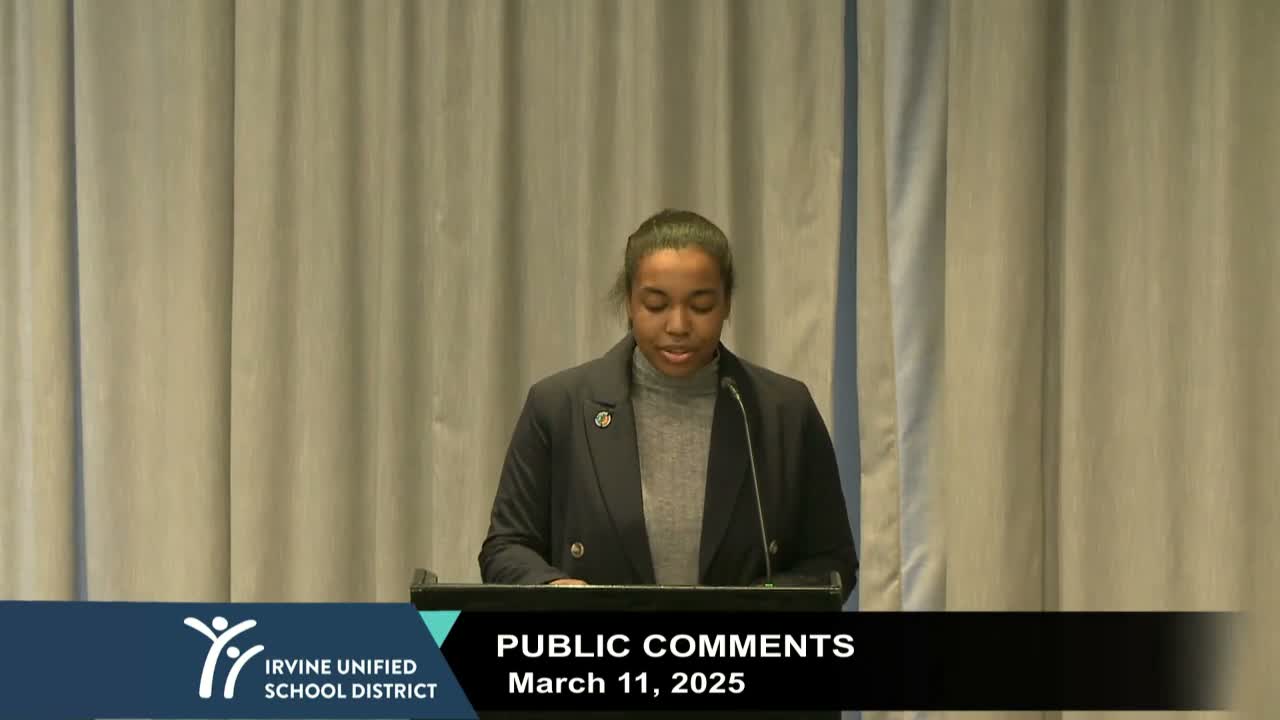
Public speakers at the hearing praised the district—s process and urged access to the detailed readings. Community member Ilana Maravich asked whether the full reading lists and materials would be available for review; staff confirmed materials and the survey would be posted online and reviewed by the curriculum design institute and the steering committee. Students and board members who spoke said the course would let students see their histories and the contributions of groups often underrepresented in traditional textbooks.
District staff said the pilot is voluntary and will appear on registration documents; final section counts will depend on student enrollment during registration. Pedore said the district plans to form a multi-site professional learning community of pilot teachers to collaborate throughout the year.
The board did not vote on adoption at the meeting; staff asked the public to submit feedback through the posted survey and stated that instructional materials will be approved at a subsequent board meeting after committee review and public access to the content.