Get Full Government Meeting Transcripts, Videos, & Alerts Forever!
Get email alerts on the Communications Infrastructure topic
No spam. Unsubscribe anytime.
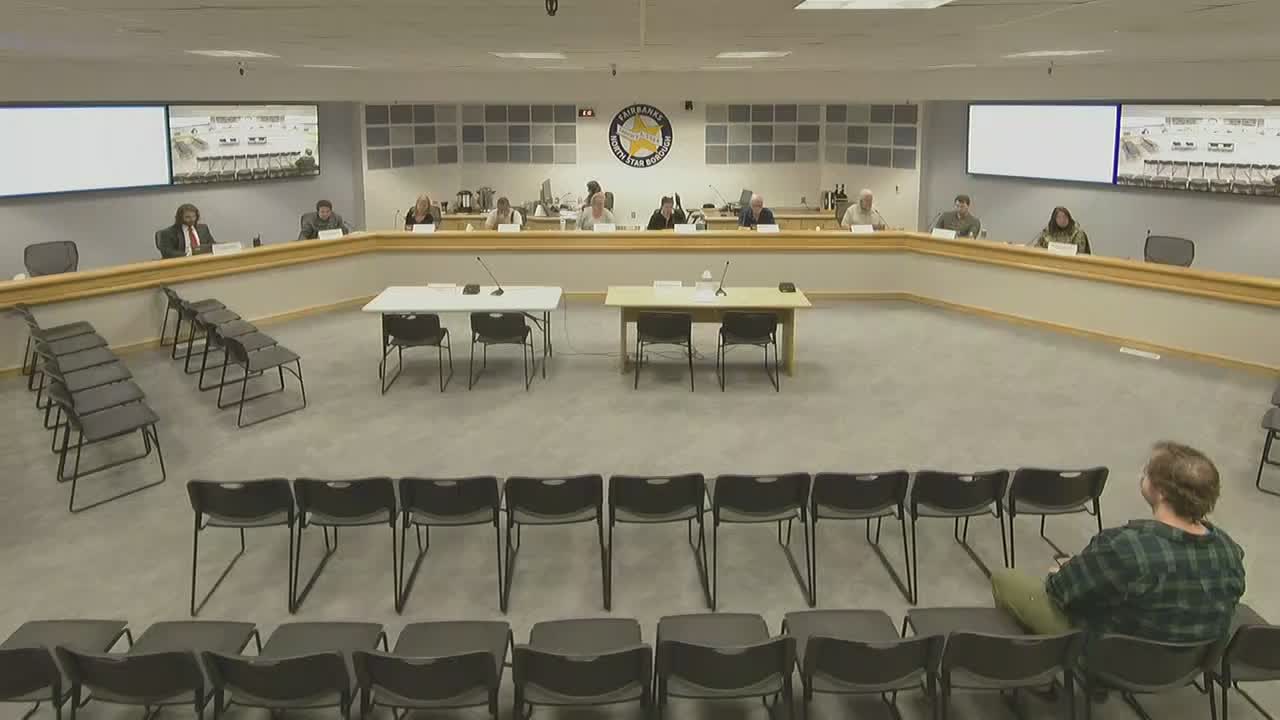
Planning Commission Approves 129‑Foot Communications Tower in Aspenwood with Conditions
Summary
The Fairbanks North Star Borough Planning Commission approved a conditional use permit for a 129‑foot communications tower at Aspenwood Subdivision after public testimony raised concerns about visual impact and a promised infrastructure payment; the commission removed a borough condition that would have barred any permanent tower lighting.
The Fairbanks North Star Borough Planning Commission on Sept. 9 approved a conditional use permit for a 129‑foot major communications tower on Lot 1, Block 1, Aspenwood Subdivision, subject to eight conditions and eight findings of fact.
The application by Parker Bingham on behalf of Atlas Tower 1 LLC drew public testimony from nearby property owners who said the site is in an emerging residential neighborhood. Kate Hall, who is building two residences in the adjacent Aspenwood area, told commissioners she had a written agreement with Atlas Tower under which the company would help pay for early Golden Valley power hookups, but she said the company repeatedly pushed back promised payment dates. "We were told originally that that would be, probably roughly within a week... then it turned into September 1," Hall said in testimony opposing the tower.
Staff planning analyst Sarah Bingham recommended approval with conditions intended to limit visual and operational impacts: retaining vegetation within a 65‑foot buffer around the fenced equipment compound, collocation requirements allowing up to four carriers, no permanent light fixtures as initially drafted, stamped engineering plans before construction, submission to the State Fire Marshal, and maintenance‑hour limits that allow work between 8 a.m. and 5 p.m. except for emergencies. The staff report noted the Federal Aviation Administration (FAA) reviewed the site and did not require tower lighting at the proposed location.
During discussion commissioners questioned the renderings, maintenance‑hours language and safety lighting. Commissioner Eric Muelling said improved cell coverage "better assist[s] in 9‑1‑1 call and response times" and described cell service as a public‑safety issue. Commissioner Christopher Stepovich raised a procedural concern that a borough condition barring permanent lighting might prevent a carrier from adding safety lighting later if federal or other evidence warranted it.
Legal staff and the commission reviewed borough code (Title 18) and a specific communications‑tower provision (18.96.0.16(c)(2)(f)) that generally prohibits lighting unless required by state or federal law or unless evidence is presented that lighting is necessary for public safety. After debate, the commission voted unanimously to strike the draft condition that would have categorically barred permanent fixtures and proceeded to approve the permit as amended.
Applicant Parker Bingham said Atlas Tower has a written agreement to make the infrastructure payment to Hall but that payment is contingent on a signed carrier agreement with GCI; he said GCI's internal legal review had delayed the signature and that Atlas expects payment to follow the executed carrier agreement. "Once we have that signed agreement, we would send the discussed payment to Mrs. Hall," Bingham said in his rebuttal.
The amended conditional use permit was approved by unanimous roll call. The decision may be appealed to the Borough Board of Adjustment by filing a notice of appeal, appeal fee and cost bond with the borough clerk within 15 days of notification of decision.
The planning commission also scheduled additional work sessions this fall on the comprehensive plan and other items that may further shape capacity and siting decisions for communications infrastructure in the borough.