Get Full Government Meeting Transcripts, Videos, & Alerts Forever!
Get email alerts on the Land Development topic
No spam. Unsubscribe anytime.
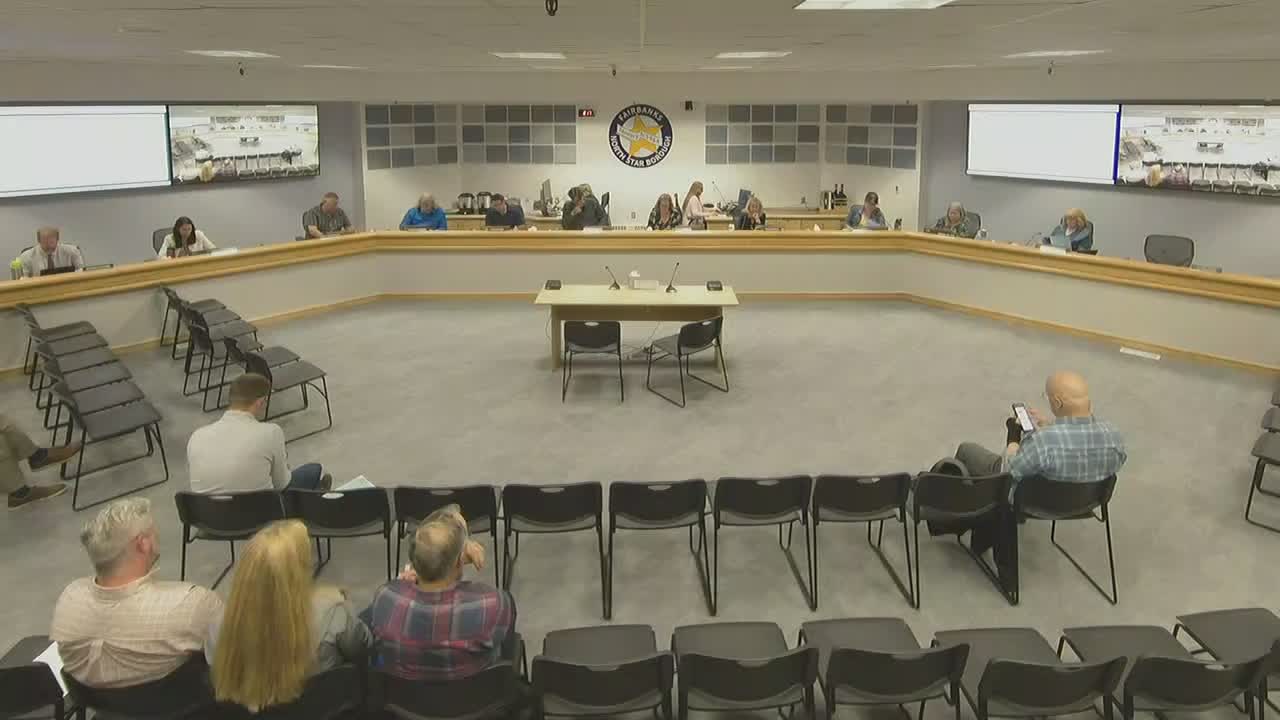
Assembly narrowly approves borough-led Ridgeview Heights subdivision appropriation after heated debate
Summary
After extensive public testimony and a lengthy assembly debate about whether the borough should act as developer or auction the land, the assembly approved $943,150 to advance a Ridgeview Heights subdivision plan (16 lots, ~67 acres developable, ~147 acres outdoor rec) by a 5–4 vote. Opponents argued the borough is competing with private developers and may underprice risk.
By a 5–4 vote on Aug. 28, the Fairbanks North Star Borough Assembly approved Ordinance 2025-21(g), authorizing a FY26 appropriation of $943,150 from the general fund to the capital projects fund to develop the Ridgeview Heights residential subdivision concept.
Staff presented background and a revised concept after community input: the 214-acre parcel would be rezoned and developed with 16 buildable lots (RE4 minimum lot size) and roughly 140 acres preserved as outdoor recreation and trail easements. Staff said the appropriation covers professional services, appraisal, design and construction contingencies; the lower estimate without contingency was about $760,000.
The vote followed protracted public comment from local realtors, developers and residents who urged the assembly either to proceed or to refrain. Critics including contractors and real-estate developers warned the borough’s margin is slim, that construction costs and site topography add uncertainty, and that putting borough money into development risks taxpayer exposure and undercuts private-sector bidders. Supporters argued the borough can deliver lots sized to community preference, provide trail connections, and lower upfront cost barriers for families and small contractors.
Assembly debate reflected the split: several members argued the borough should avoid competing with private developers, sell the parcel at auction and let market actors build and tax the land immediately; others said the parcel has been on borough books for years, the public has repeatedly objected to denser plans, and borough involvement can reconcile public values with new lots for buyers.
Why it matters: The project represents a policy choice about when and how public land should be developed — for direct service to residents (lowered upfront costs, controlled lot sizing) or to be sold to private developers (faster tax revenue, less direct taxpayer risk). The assembly’s narrow margin indicates continuing debate ahead.
What happens next: Administration will proceed with project steps consistent with the appropriation, return with a sale ordinance when ready and pursue required rezoning and planning approvals; opponents said they will press for alternative approaches and careful oversight.