Get Full Government Meeting Transcripts, Videos, & Alerts Forever!
Get email alerts on the Divestment topic
No spam. Unsubscribe anytime.
Medford council advances values-aligned investment ordinance after marathon public comment
Summary
After hours of council debate and nearly three hours of public testimony, Medford City Council approved a first reading of an ordinance that would direct the city to divest public funds from fossil fuels, weapons manufacturers, private prisons and entities tied to severe human-rights violations. Councilors outlined further legal and implementation review before final action.
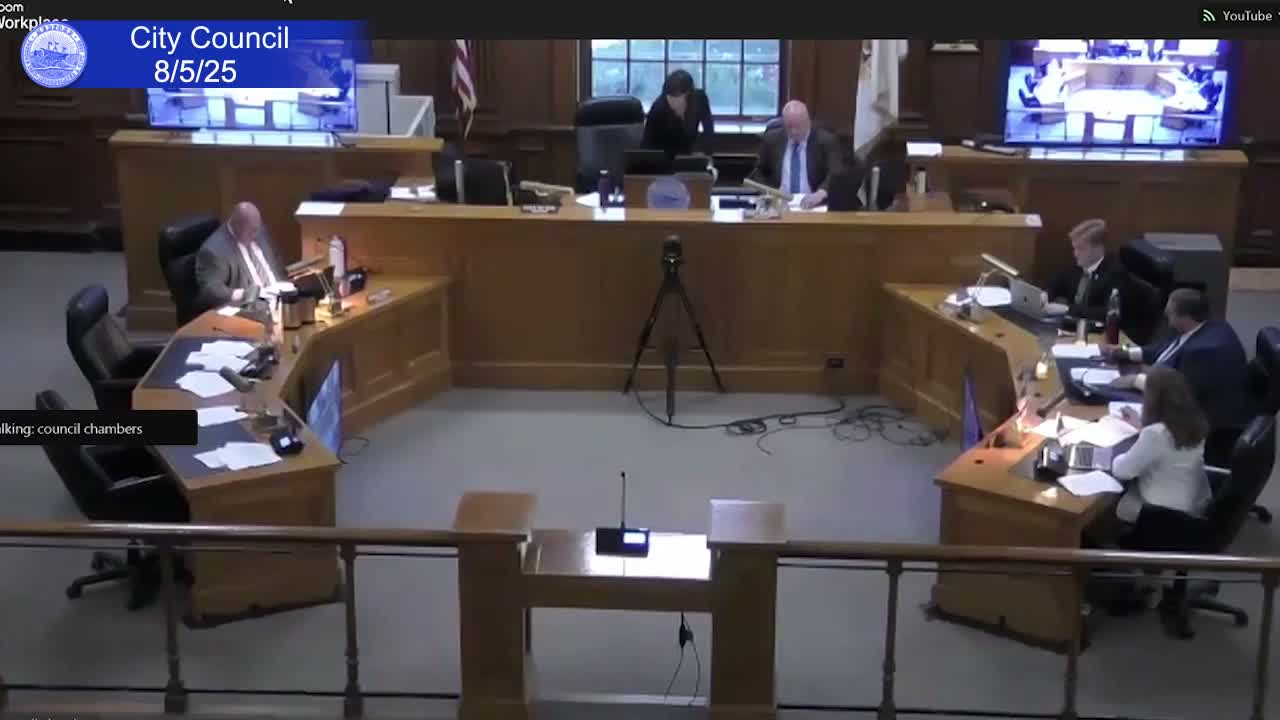
Medford City Council approved a first reading on Aug. 5 of a values‑aligned investment ordinance that would require city funds to avoid investments in fossil fuel companies, weapons manufacturers and for‑profit detention operators, among other categories. President Bares introduced the measure as an effort to align municipal investments with community values and to prevent tax dollars from supporting activities the city deems harmful.
The ordinance is designed to rely on an industry screening methodology (MSCI ESG controversies and other international conventions cited in the text) and sets thresholds for divestment in categories such as fossil fuels and private detention. President Bares told the council he had worked for months with staff and the retirement system on language and implementation guidance: "There is an entire methodology in here that makes it very plain and clear how to look at the potential investments to address this," he said during his remarks.
Supporters at the meeting — many of them Medford residents who spoke during public comment — urged the council to pass the ordinance as written and to move quickly. "I want to work alongside my courageous clients...and know that my tax dollars aren't supporting the fossil fuel companies threatening their futures," said Anne Castner Williams (public comment). Others testified about investments in companies such as Lockheed Martin and the moral imperative to withdraw city funds from those firms.
Opponents and some councilors urged caution, citing legal and fiduciary concerns. Councilor Scarpelli read a memo from city financial and legal advisers noting open questions about compatibility with state law, the Prudent Investor Act and potential bond‑rating impacts. At one point he moved to slow the process to permit more local outreach; that motion failed for lack of a second. In public testimony, resident Dave Sherman warned the council the ordinance could carry political and financial risk, including the possibility of federal consequences for cities viewed as participating in boycotts.
Council discussion repeatedly distinguished between discussion, administrative direction and formal action: councilors approved the ordinance for first reading so it can be advertised and come back for additional consideration and amendment. The council also asked staff and stakeholders to supply focused legal and policy memos to clarify compliance, implementation pathways, and the relationship between municipal funds and state‑regulated retirement accounts. Council President Bares said implementation questions would be considered prior to a third reading.
The measure passed the council on a roll‑call vote of 5 in favor, 1 opposed and 1 absent. Next steps include formal advertisement required for the ordinance process and additional staff memos requested by the council. No final divestment action was taken at this meeting; the first reading advances the ordinance for later votes and potential amendments.
The council closed the night by returning to other agenda business and adjourning after a late session. The ordinance will return to the council for further readings and technical work by staff and counsel.