Get Full Government Meeting Transcripts, Videos, & Alerts Forever!
Get email alerts on the Public Comment topic
No spam. Unsubscribe anytime.
Residents press commission on rising property taxes and question United Way fundraising inside county offices
Summary
Public commenters described rising property tax burdens and criticized a 20‑day signature window for opt‑out petitions; other commenters and county staff raised concerns about the Sioux Empire United Way’s fundraising in county offices and staff time required to process payroll deductions.
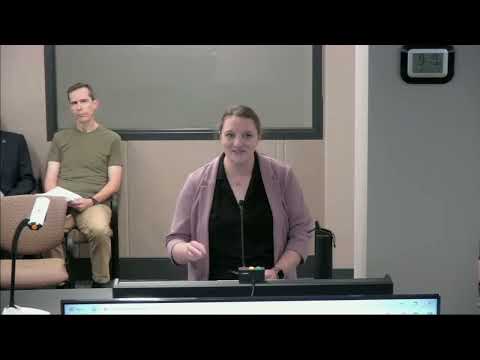
Several members of the public used the non‑agenda comment period to press the Minnehaha County Commission about property taxes and to question the county’s relationship with the Sioux Empire United Way.
John Coonerty, a District 11 resident, said he had been collecting signatures related to school district opt‑outs and described conversations with many residents worried about rising property taxes, including homeowners who feared they could be forced to sell. “Keep in mind those many tens of thousands of people across this county…and see if there aren’t things you can do differently…to make those people's lives a little bit easier,” Coonerty said.
Manny Steele, another resident, also criticized the statutory 20‑day window for gathering signatures to place an opt‑out on the ballot and called 20 days “not even reasonable.” The chair noted the county does not set that statutory deadline; it is established by state law.
During extended public comment, Dan Goler, a Sioux Falls resident, supplied documents and criticized the Sioux Empire United Way’s fundraising efforts and funding criteria. Goler alleged elements of the United Way’s materials and trainings reflected “partisan” or ideological content (citing DEI materials and training references) and asked why a nonprofit’s fundraiser is conducted in government buildings and on county employees’ time. “Why is a nonprofit's fundraiser being conducted on government...time and utilizing government resources?” he asked.
Leah Anderson of the auditor’s office said county staff time is required to process payroll deductions for the United Way campaign and provided participation data: in the 2024 campaign year (payroll deductions enacted in 2025), about 103 of roughly 620 full‑time employees participated (about 17% participation), with a small share of employees accounting for a majority of the dollars. Anderson said processing the deductions and related administration takes staff time and suggested the commission consider whether the county should promote the campaign.
Commissioners later debated the merits of hosting United Way fundraising and the petition timeframes; some expressed sympathy for petitioners and support for United Way's community role, others emphasized that the petition timeframe is set by state statute and that the county's role is limited. No formal action on United Way or petition rules was taken at the meeting.