Get Full Government Meeting Transcripts, Videos, & Alerts Forever!
Get email alerts on the County Budget topic
No spam. Unsubscribe anytime.
Minnehaha County outlines 2026 budget with public-safety costs and layered opt-outs driving forecasts
Summary
County finance staff presented a proposed 2026 budget that keeps opt-outs at 2025 levels, shows roughly $122 million in means of finance and nearly $132 million in appropriations, and projects pressure from public-safety spending, CPI caps and reserve targets that could require layered opt-outs or use of reserves.
Minnehaha County finance officials on Tuesday presented a proposed 2026 budget that staff said keeps opt-outs at 2025 levels while showing rising costs concentrated in public safety and justice.
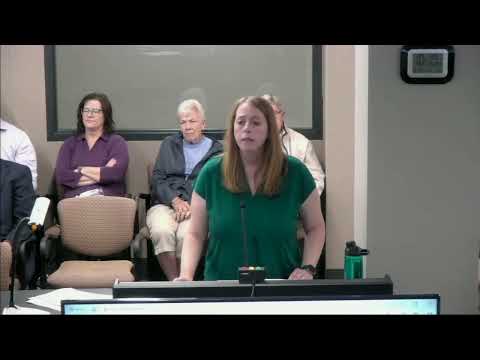
‘‘The 2026 budget, we have in there just over just under $65,000,000 in property tax revenue for the general fund,’’ Susan Beeman of the auditor’s office said, identifying property taxes as the budget’s primary revenue source. Beeman said the county currently levies about $15,500,000 in general-fund opt-outs and has roughly $20,100,000 in approved general-fund opt-outs that are not all levied yet.
Beeman told commissioners that total net means of finance across all funds is about $122 million while total appropriations approach $132 million. She noted the budget figures already reflect a required 5% holdback on appropriations under state guidance (about $5.5 million) and projected a roughly $2.7 million property-tax increase for 2026 from the combined state-reported CPI (2.9%) and growth (2.98%) factors.
Why it matters: county officials say roughly 70–71% of the general-fund budget goes to public-safety and justice functions (sheriff, jail, juvenile detention, public defense, prosecution and courts), and many of those costs are statutorily or operationally driven. Beeman said the county has hit the state CPI cap (the lesser of actual or 3%) several times in recent years, which limits property-tax revenue growth even as inflation raises costs.
Forecasts and reserves: staff showed a five-year forecast that models layering opt-outs and modest position growth; the forecast assumes $750,000 a year as a placeholder for new position requests. Beeman said projected cash applied for 2026 is about $11.1 million (roughly 11.7% of appropriations) and emphasized the commission’s adopted policy to maintain a minimum unassigned fund balance of 25% to protect bond ratings and fiscal flexibility.
Costs and shifts: notable items in the proposed general-fund budget include a $2.7 million increase in property-tax revenue, an $800,000 increase in investment income (budgeted conservatively at $2 million), a $224,000 increase tied to border-prisoner revenue, and a $2 million placeholder related to compensation-study adjustments and other salary changes. Facilities-related expenses of about $799,000 were shifted from the general fund into the building fund where statute allows.
Next steps: staff told commissioners they will revisit personnel requests, vehicle requests and outside-agency funding next week; the provisional budget filing and public-notice schedule were discussed for early September, with final budget adoption targeted later in the month. Commissioners asked for follow-up detail on opt-outs, layering strategies and the return-on-investment for outside-agency increase requests.
Outcome: no formal budget vote was taken; the presentation closed with the commission asking staff to return with more detail at subsequent budget meetings.