Get Full Government Meeting Transcripts, Videos, & Alerts Forever!
Get email alerts on the Housing Development topic
No spam. Unsubscribe anytime.
Laguna Hills planning agency approves 180-unit La Paz Village senior housing amid intense public opposition and legal pressure
Summary
After more than five hours of public testimony and legal briefing, the Laguna Hills Planning Agency approved a 180-unit, age-restricted La Paz Village senior housing project that invokes state "builder—s remedy" and AB 130 CEQA exemptions. The decision passed 3-1 amid continuing resident concerns over parking, traffic, hazardous soil vapor and potential litigation risks to the city.
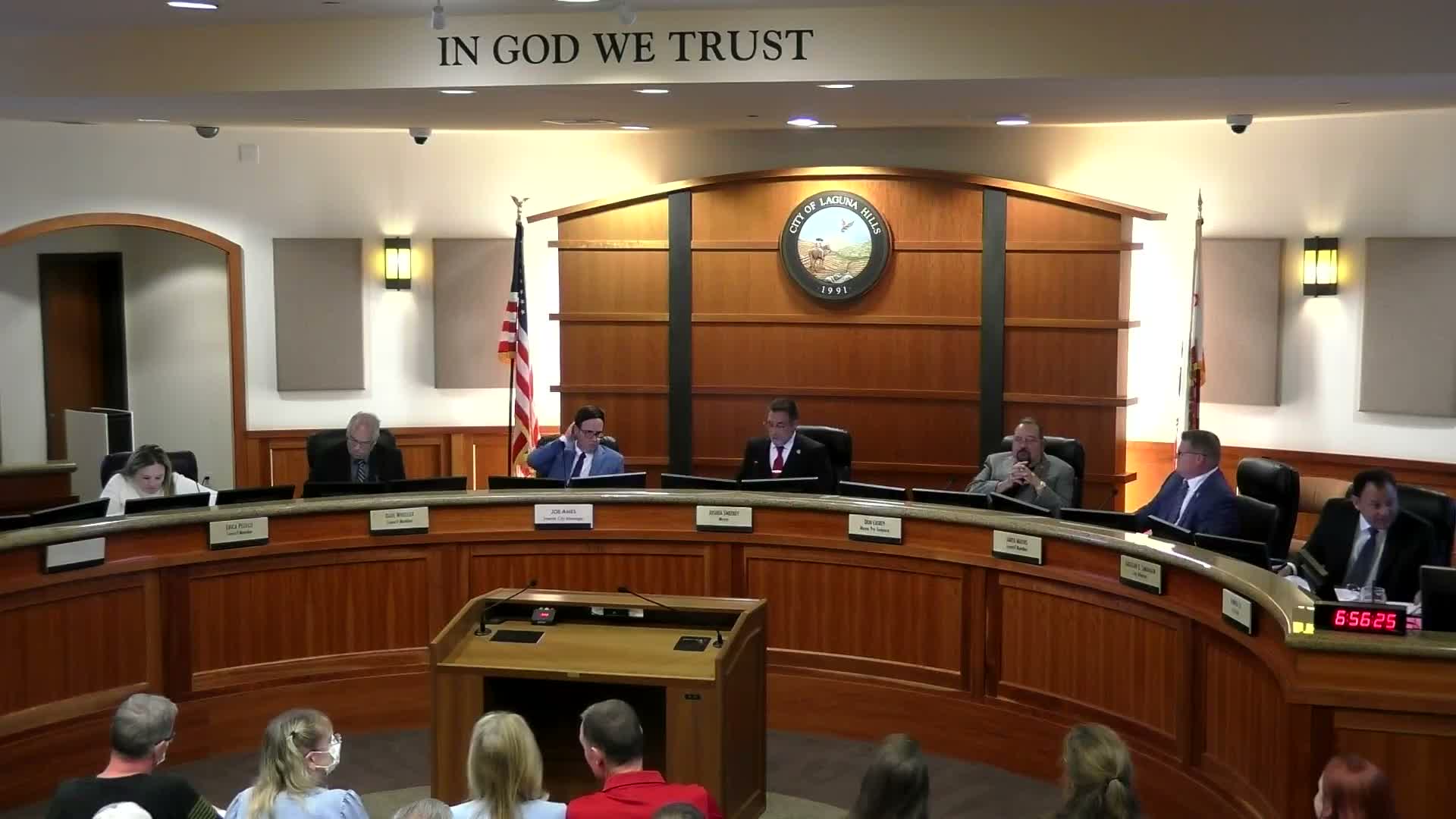
The Laguna Hills Planning Agency approved a site development and parking use permit on Sept. 23 for a 180-unit senior living complex at the La Paz Village Center, adopting a resolution that includes a 10-percent set-aside for very-low-income units and a long list of conditions staff say will guide construction. The vote was 3-1, with Mayor Sweeney and Mayor Pro Tem Kaskey voting in favor, Council Member Wheeler voting "aye" under protest and Council Member Hazel opposed.
The project, proposed by La Paz Village Investors LLC and developer Nick Buchanan, would replace part of the existing La Paz Village retail center with a five-story, 61-foot building containing studios and one- and two-bedroom units, a range of resident amenities and a parking structure with 253 stalls. Staff presented the project as an infill housing proposal that the applicant contends qualifies as a "builder—s remedy" development under SB 330 and, therefore, is exempt from some local zoning constraints and from CEQA review under AB 130 if it meets statutory criteria.
Why it matters: The developer—s use of state housing statutes limited the local agency—s grounds for denial and forced a debate about whether Laguna Hills should resist approval and risk litigation. Outside counsel retained by the city warned that denying a qualifying builder—s remedy project can expose a city to mandatory statutory penalties and large attorney-fee awards in Housing Accountability Act litigation. Peter Sheridan, the city—s special housing counsel, cited prior cases in which cities paid seven-figure legal awards and bonds imposed on appeal.
What supporters said: The applicant argued the site is an appropriate infill location, that senior housing generates less traffic than the existing commercial uses, and that the project includes community benefits such as on-site retail and 18 units (10 percent) reserved for very-low-income households. Nick Buchanan told the agency the development reflects extensive design and market work and that Phase II environmental testing discovered only a small vapor pocket that the team will remediate as required.
What opponents said: More than a dozen residents and local-business representatives urged denial or substantial changes. Speakers cited concerns about traffic safety in nearby Castle Hill neighborhoods, insufficient parking and the likely spillover of cars into residential streets, loss of sales-tax revenue if retail space is replaced by rentals, the adequacy of fire access and emergency response, and the history of contamination at the site (a prior dry-cleaning tenant). Local church and business leaders warned that shared parking and long-standing reciprocal arrangements would be disrupted.
City staff and consultants said: Staff reiterated that AB 130 allows the city to impose conditions addressing hazardous substances, tribal cultural resources monitoring and public-safety mitigations even when the CEQA infill exemption applies. The planning staff report also estimated about $15,636 in park fees per unit (roughly $2.8 million total) and listed more than 100 conditions that trigger at different stages (grading, building permit issuance, etc.). A hazardous-materials consultant confirmed soil vapor was detected and that remediation or mitigation by the applicant will be required before certain permits are issued.
Council—s deliberation and legal risk: Council members expressed deep misgivings about the scale and neighborhood impacts. Several members urged compromise, bonds or further assurances; others emphasized the legal and fiscal exposure of denying a qualifying project. During deliberations the city—s special counsel warned about minimum statutory fines of $10,000 per unit and potentially much larger awards and fee shifting if a city loses a Housing Accountability Act challenge; one member noted city reserves of roughly $20 million and said litigation risk could threaten core services.
Outcome and next steps: The agency approved the permit and associated CEQA exemption with the revised conditions on the record. Conditions include requirements for a parking-management plan, secured easements or agreements for fire access prior to permit issuance, remediation of identified contamination to state standards, and other technical prerequisites. The applicants must sign and accept those conditions and proceed to technical design, permitting and permit-stage reviews by building and fire officials before construction can start.