Get Full Government Meeting Transcripts, Videos, & Alerts Forever!
Get email alerts on the Homelessness topic
No spam. Unsubscribe anytime.
Mission Viejo outreach team reports 7 exits, 9 new clients in Laguna Hills; council presses for more resources
Summary
Mission Viejo staff told the Laguna Hills City Council their outreach partnership has moved seven people into exits and taken on nine new clients since July; councilmembers pressed staff on behavioral‑health supports, barriers to stable housing and possible county resource requests.
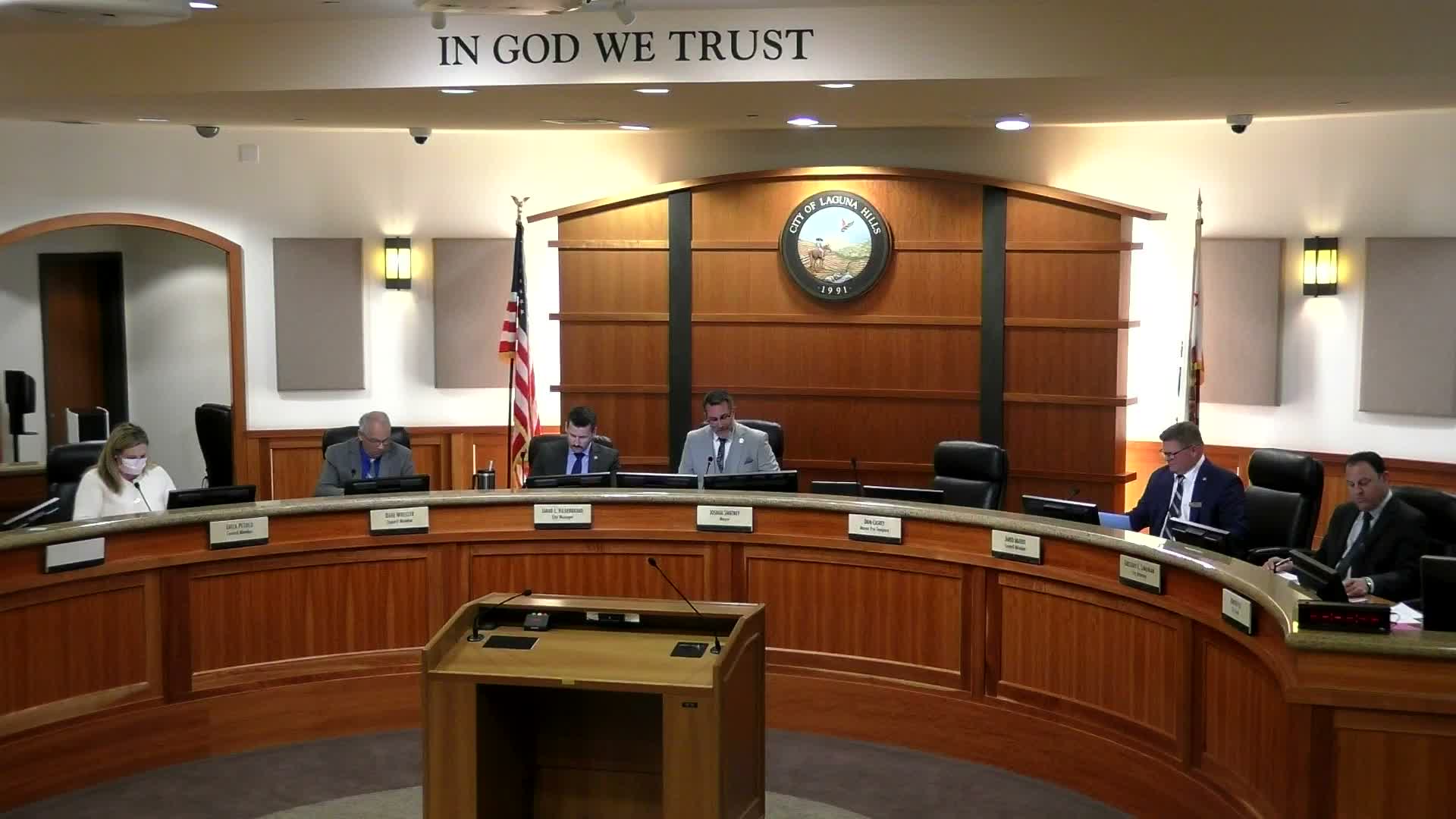
Drew Fine, community services manager for the City of Mission Viejo, told the Laguna Hills City Council on Feb. 11 that Mission Viejo’s multi‑city outreach partnership is producing steady turnover: from the July 1 reporting start through the end of last month staff recorded seven exits from the outreach caseload and nine newly enrolled clients.
The presentation described where people went after exit (a mix of permanent and temporary housing and several cases listed as “no contact” after 90 days), recounted a long‑running case of a person who repeatedly declined sustained housing, and highlighted a pilot that pairs outreach staff with a dog, “Rocky,” to break the ice with people reluctant to engage. Fine said the team took over work previously handled by Mercy House and emphasized the operational difficulty of sustaining outreach staffing and placements.
Why it matters: Councilmembers noted the program’s small caseload but high intensity. Council Member Hazel framed homelessness as intertwined with untreated mental illness and asked whether Laguna Hills and Mission Viejo could jointly seek county support for mobile or interim shelter resources; Fine agreed staff could pursue lobbying the county but cautioned the hardest cases often refuse services or quickly disengage after placement.
Council questions covered age and demographic patterns, placement pathways and service gaps. Fine and outreach staff said most current clients are single adult males, typically in their 40s to 50s, though they are also working with seniors and veterans. Staff outlined two main housing pathways used in the region—rapid rehousing for households with an income path and permanent supportive housing with ongoing case management for those who cannot sustain rent—and said the principal local barrier is a shortage of available units.
What was not decided: The council received the report and asked staff to follow up with written materials. There was no formal vote or budget action tied to the presentation; councilmembers requested contact information and additional detail on behavioral‑health referrals and county resources.
The council moved on to other agenda items; staff said they would provide follow‑up information to council and to the resident who raised parking concerns earlier in public comment.