Get Full Government Meeting Transcripts, Videos, & Alerts Forever!
Get email alerts on the Homelessness topic
No spam. Unsubscribe anytime.
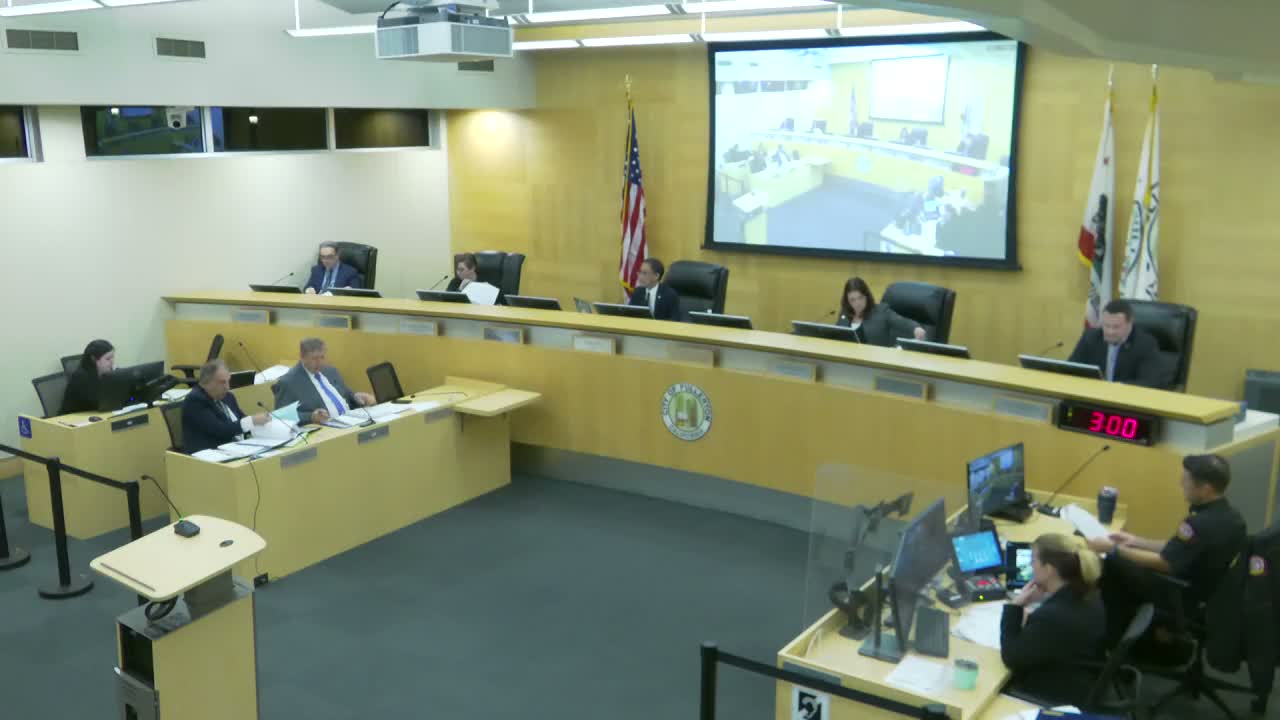
Fullerton council adopts clearer camping and critical‑infrastructure rules amid heated public debate
Summary
The council passed amendments to municipal code sections addressing unauthorized camping and protection of critical infrastructure (ordinances 3338 and 3339). Supporters said the measures protect public safety and infrastructure; opponents warned enforcement would harm unhoused people without more shelter capacity.
The Fullerton City Council voted on two ordinance measures after lengthy public testimony and staff presentations. Ordinance 3338 (amending Fullerton Municipal Code sections on unlawful camping and obstruction) and ordinance 3339 (repealing and replacing sections of chapter 7.108 addressing protection of critical infrastructure) were both introduced and approved following council debate about enforcement, services and legal limits.
Deputy City Manager told the council the proposed camping/obstruction amendments were drafted to clarify prohibited behaviors in public rights of way, better align definitions with recent court decisions and preserve service‑first outreach. "The Fullerton Navigation Center provides 40 emergency shelter beds exclusively for Fullerton residents..." the deputy manager said, outlining existing shelter and voucher programs the city uses before enforcement.
Public comment was sharply divided. Some speakers — including shelter and public‑health advocates — argued the city lacks adequate shelter beds and cautioned against criminalizing homelessness without housing pathways. Others, including residents and activists, said clearer rules are necessary to protect sidewalks, critical infrastructure and public access.
On the protection of critical infrastructure, staff proposed tightening distances and clarifying the summary abatement process to ensure immediate action when public safety is at risk. Supporters pointed to risks at bridges, utility access points and transportation hubs; critics warned the rules could be overbroad and urged strict discretion.
Council debate centered on enforcement safeguards, ADA carve‑outs and the need for continued investment in shelter and outreach services. The council approved the camping/obstruction ordinance on a 3–2 vote and later approved the critical‑infrastructure ordinance on a 3–2 vote (recorded as ordinance numbers 3338 and 3339). Council members who opposed said the ordinances were too broad or premature given service limitations; supporters cited recent court guidance and the city's expanded services as justification.
Both ordinances were introduced for first reading and staff said they would track compliance with federal and state law and report back on enforcement results and service coordination.