Get Full Government Meeting Transcripts, Videos, & Alerts Forever!
Get email alerts on the Governance topic
No spam. Unsubscribe anytime.
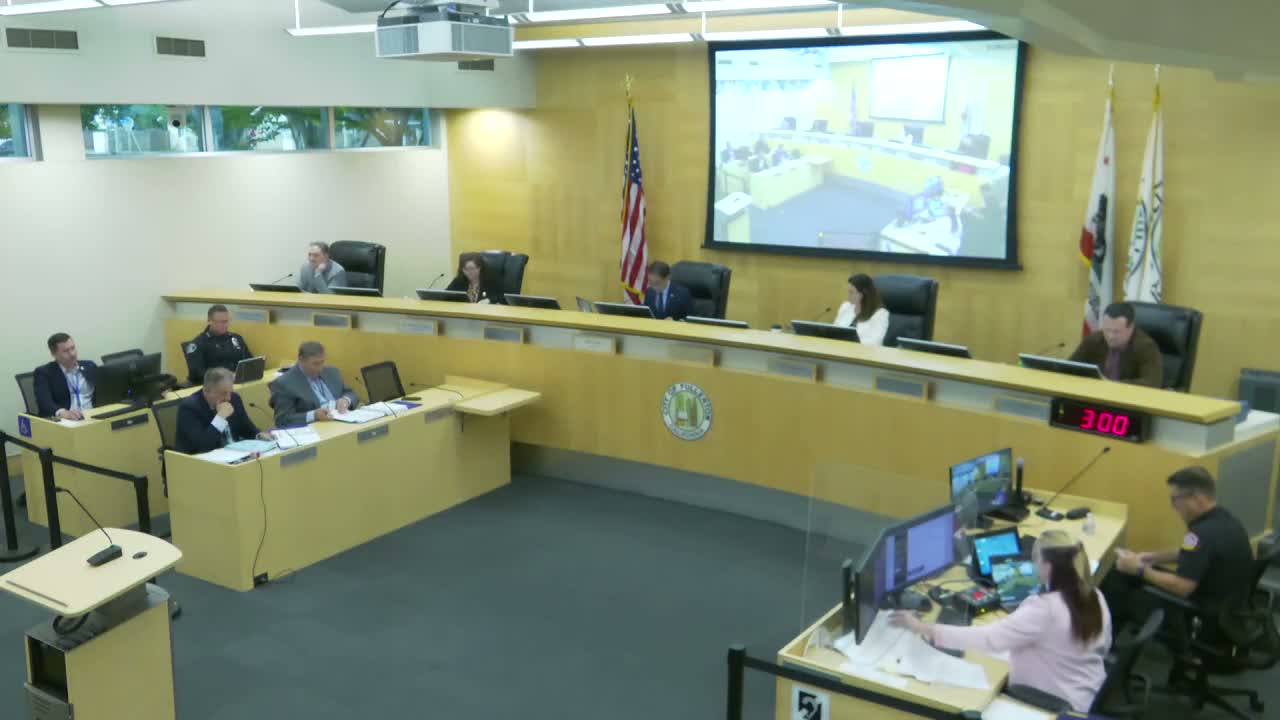
After heated debate, Fullerton council forms ad hoc committee to explore city charter
Summary
Following hours of public comment and debate, the council voted 3–2 to create a council‑appointed ad hoc committee (one appointee per councilmember) to draft a charter proposal; speakers warned of cost, litigation risk and lack of public support.
After extensive public comment and a long council discussion, the Fullerton City Council voted on June 3 to form a council‑appointed ad hoc committee to explore drafting a city charter and return a proposed charter approach to the council.
Staff outlined two main options for pursuing a charter: (1) put a measure on the ballot to elect a charter commission (15 at‑large commissioners) that would draft the charter for voter approval, or (2) have the council draft a charter itself with at least two required public hearings. Staff described sample timelines and presented cost estimates for adding measures to scheduled November elections (incremental cost noted as roughly $8,500 when combined with an existing municipal election) and much higher costs for special standalone elections.
More than two dozen public speakers expressed concern about the proposal — many urged the council not to proceed because of expected expense, litigation risk and low public demand. Common themes in public testimony included requests to prioritize street repairs, parks and homelessness services over a charter process. Speakers repeatedly urged either tabling the matter or, if the council moves forward, using an elected charter commission rather than a council‑written charter.
Council debate reflected divergent views. Several council members said they supported further study; others warned that a council‑drafted charter could concentrate power and exclude broad community input. Councilmember Dunlap moved to create a council‑appointed ad hoc committee to continue work; the motion included that appointees file Form 700 conflict‑of‑interest disclosures. The motion passed 3–2 (Council members Dunlap, Valencia and Mayor Jung in favor; Councilmember Zara and Mayor Pro Tem Charles opposed).
Council directed staff to return with an ad hoc committee process and to include straightforward disclosure and appointment procedures. The item generated prolonged public comment and a substantial amount of written correspondence in the meeting record.