Get Full Government Meeting Transcripts, Videos, & Alerts Forever!
Get email alerts on the Public Safety topic
No spam. Unsubscribe anytime.
Fountain Valley to replace aging chest‑compression machines with Lucas 3 devices after field trial
Summary
Fire staff recommended and council approved buying four Lucas 3 automated chest compression devices to replace aging Autopulse units; staff cited lower per‑call consumable costs and positive field trial results and said funding is available from the capital replacement budget.
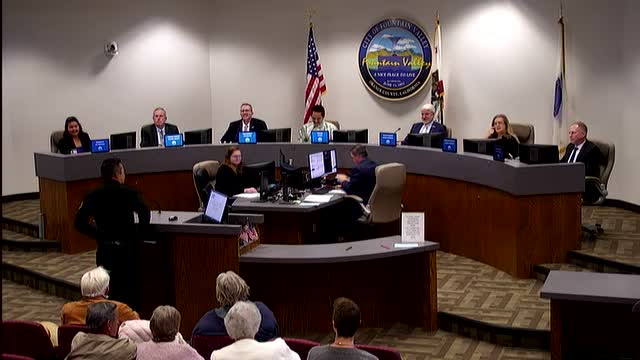
The City Council approved the Fire Department’s recommendation to replace aging automated chest‑compression devices (ACCDs) on Jan. 21, authorizing the purchase of four Lucas 3 units and associated accessories using existing capital‑replacement funds.
Battalion Chief Tim Saiki told the council that the city’s current ZOLL Autopulse units — acquired in 2019 — are nearing the end of their five‑year service life and that ZOLL will stop selling some replacement parts in 2025. Fire staff evaluated both the ZOLL Autopulse NXT and the Lucas 3, including a 30‑day field trial of the Lucas device that covered nine cardiac-arrest calls; crews reported that two of the nine patients achieved ROSC (return of spontaneous circulation) during the field trial period.
Saiki said an important long‑term cost difference is consumable pricing: the ZOLL band is a single‑use item that ZOLL last listed at roughly $236 per cardiac arrest, while Lucas consumables (a reusable suction cup) cost about $51 and can be cleaned and reused. The quoted purchase prices were approximately $124,043.92 for the ZOLL option and $110,626.66 for the Lucas option; staff recommended four Lucas 3 units with a five‑year warranty and a 5% contingency. The recommended purchase fits within the department’s capital replacement allocation of $122,600, Saiki said, and no additional budget appropriation was requested.
Council members asked about device sizing, programming for compression depth and how the devices would be used alongside manual CPR. Saiki explained devices detect chest depth and adjust compression accordingly; they are not intended to replace other life‑saving tasks but to maintain consistent high‑quality compressions and free personnel for additional interventions.
The council approved the purchase 5–0.
Why it matters: High‑quality, continuous chest compressions are a key variable in out‑of‑hospital cardiac arrest survival. The equipment is required by county EMS protocols for paramedic units and the purchase replaces devices nearing end‑of‑service with supported units.