Get Full Government Meeting Transcripts, Videos, & Alerts Forever!
Get email alerts on the Emergency Services topic
No spam. Unsubscribe anytime.
Mitchell chief outlines ambulance-district model as option for Yankton County amid rising EMS demand
Summary
Dan Polarize, Mitchell chief of fire and EMS, described how a voter-approved ambulance district funded hiring and preserved city operations; Yankton County commissioners heard the presentation and a Sage Project Consultants representative offered grant-funded data analysis to explore local options.
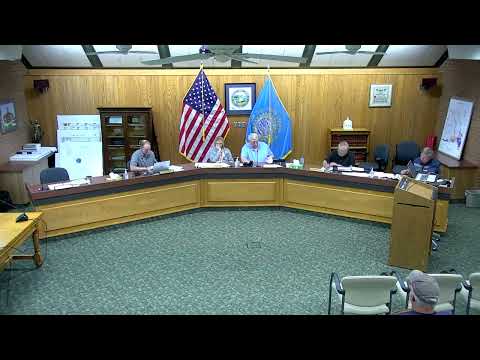
Dan Polarize, chief of fire and EMS for the City of Mitchell, told the Yankton County Commission on June 17 that Mitchell’s recent move to an ambulance district was driven by surging call volume and persistent financial losses in EMS operations. “From 2014 to 2024, our unit responses had increased 44%,” Polarize said, and he described a funding package that would raise about $700,000 to hire six staffers to stabilize coverage.
Polarize said the district election he described won overwhelming voter support—“about 95% of the people said yes”—and that the city would enter into a contract with the district to maintain employment, training and equipment while the district provides funding. He told commissioners the city had been losing money on billable ambulance runs and that his service commonly loses roughly 64% of gross billing on billable calls.
Sharon Chantos of Sage Project Consultants, a Vermillion-based firm, told the commission her firm received a Department of Health grant to provide free technical assistance for data management and financial sustainability and is already analyzing call data for Yankton County. “We just worked with Moody County,” Chantos said, describing a braided funding approach in which a hospital (Avera) contributed to local EMS and the city and county provided ongoing support.
Commissioners asked how a district would work locally, who would handle complaints and how tax dollars might be collected and governed. Polarize said the district board would be an oversight body for tax dollars while operations and complaints would be handled by the city’s EMS leadership under contract. He emphasized that a district structure allows a predictable revenue stream to hire staff and retain service levels.
The presentation did not include a formal action by the commission. Commissioners thanked Polarize and Chantos and asked staff to work with the consultant to review county call-data and options ahead of any future decision. The county’s data-collection app, Chantos said, is grant-funded and available at no charge through 2026; the county will receive the consultant’s findings before considering any formal next steps.