Get Full Government Meeting Transcripts, Videos, & Alerts Forever!
Get email alerts on the Agriculture Cafop topic
No spam. Unsubscribe anytime.
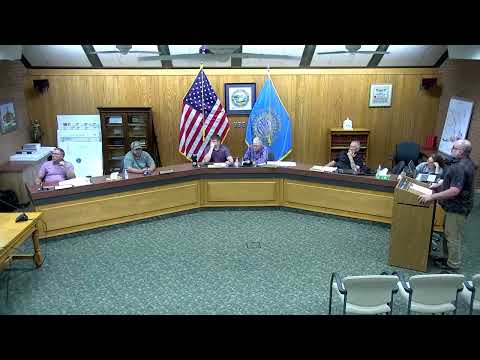
Yankton County planning panel approves conditional use permit for 5,600-head hog barn with state-permit condition
Summary
The Yankton County Planning Commission approved a conditional use permit for a Class A concentrated animal feeding operation to house 5,600 finishing hogs, contingent on required state permits and with conditions addressing road haul agreements, resident waivers and monitoring provisions.
The Yankton County Planning Commission on June 10 approved a conditional use permit (CUP) for a Class A concentrated animal feeding operation proposed by Jamesville representatives to house 5,600 swine finishers on property legally described as the south half of the southwest quarter of Section 4, Township 96 North, Range 56 West of the 5th P.M., Yankton County.
Commissioners said the application packet was thorough and included a nutrient management plan and engineering drawings. Joe Genther of Nutrien Advisors told the commission the plan identifies 865.7 acres available for land application after setbacks, and that only fields listed in the plan will receive manure. "We have 865.7 acres available for land application," Genther said, and he added that injection — not surface spreading — will be used to apply manure to fields.
Engineer Brian Frederickson of VantagePoint Solutions described the facility as a single deep-pit hog barn and said state permitting and DNR operations-and-maintenance inspections are part of the review process. Frederickson said owners are responsible for routine inspections and recordkeeping, and that DNR will review soil samples, erosion calculations and landowner agreements as part of its permit review.
Public comment included concerns about state oversight and local screening. Ron Schafer, a nearby landowner, said he was "neither for nor against" but raised concerns that the Department of Environment and Natural Resources (DNR) is currently overburdened and "is so busy that the only thing they're doing is dealing with complaints" rather than routine inspections. Other speakers described economic benefits, long experience with hog operations and monitoring practices on older facilities.
Commission discussion emphasized conditions to address sequencing and local impacts. Commissioners moved to approve the CUP with an explicit condition that the permit be contingent on receiving the required state general permit from DNR (the commission later referenced the "Department of Ag and Natural Resources" in correcting the agency name) and noted that road haul and road maintenance agreements and written resident waivers were included or will be required. A motion to approve, which included the DNR-permit contingency, passed on a roll-call vote with all members recorded in favor.
The commission also discussed optional water-quality monitoring wells, noting that whether wells are required is determined by the state groundwater review during its permit process. Presenters said their plan anticipates soil sampling, nutrient budgeting and third-party assistance for compliance and recordkeeping.
Next steps: the CUP package, as approved with conditions, will move forward to the county commission in the next county meeting cycle for final action and the county will condition any building permit upon completion of the state permitting requirements.