Get Full Government Meeting Transcripts, Videos, & Alerts Forever!
Get email alerts on the Rezoning Sheetz 14mile topic
No spam. Unsubscribe anytime.
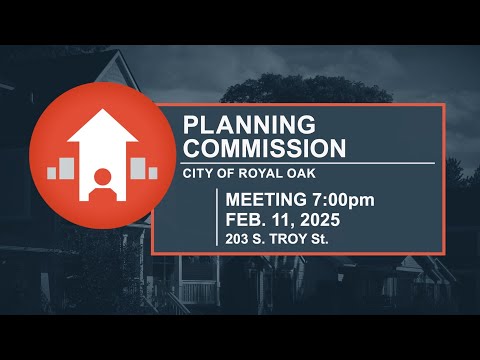
Planning Commission recommends conditional rezoning for Sheetz site at 14 Mile and Coolidge after heated public comment
Summary
After hours of public comment, the Royal Oak Planning Commission voted 6— to 1 to recommend conditional rezoning of 3200 W. 14 Mile Road for a Sheetz convenience store, car wash and cemetery maintenance facility, while requiring a peer review of the petitioner's traffic study and several site contingencies before the City Commission acts.
The Royal Oak Planning Commission on Tuesday recommended approval of a conditional rezoning for 3200 West 14 Mile Road, clearing a key procedural hurdle for a proposed Sheetz convenience store, automatic car wash and a cemetery maintenance addition. The commission's 6— to 1 recommendation sends the matter to the City Commission with explicit contingencies, including a peer review of the developer's traffic study before the City Commission acts.
The petitioner proposes dividing the site into three parcels: parcel A to host a vehicle fueling station with convenience retail and a restaurant, parcel B to contain an automatic car wash, and parcel C to retain its industrial zoning to serve as a maintenance facility for the adjacent Cloverhill Park Cemetery. City planner Doug Hedges summarized the staff report, noting engineering concerns about proposed signal-timing changes at the Coolidge and 14 Mile intersection and recommending a city peer review of the traffic model prior to any final approval.
The hearing drew dozens of residents opposed to the project. Neighbors raised repeated concerns about traffic congestion and safety at a complex three-way intersection, potential light and noise impacts near nearby homes and Upton Elementary School, and the proximity of fueling infrastructure to a cemetery and residential streets. Longtime resident Trish Oliver urged commissioners to "say no to Sheetz," saying the intersection already suffers backups and adding that political contributions tied to project consultants have fueled distrust.
The petitioner's representatives defended the proposal as a way to redevelop a vacant, contaminated industrial site and said they had already committed to a number of traffic improvements. "We're talking about the use and the site plan, not necessarily the name on the side of the building," said Steve Robinson, the developer's vice president of acquisitions and development, who emphasized the team's environmental due-care steps and a baseline environmental assessment done at purchase.
Sheetz representative Alex Sawicki addressed environmental safety measures for modern fueling operations: "We maintain a nearly 100% technical compliance rate with the EPA," he said, adding that the company uses double-wall tanks and multiple monitoring systems. During the hearing staff later confirmed the company proposes six underground storage tanks totaling 78,000 gallons.
Commissioners debated nine zoning criteria that govern conditional rezonings, including land-use compatibility, traffic impacts, and public-health considerations. Several members said redevelopment of a vacant, contaminated site carries public benefit, while others underscored unresolved questions about intersection safety and asked for formal input from police and emergency services.
Commissioner Gantina moved to recommend approval with the staff's listed contingencies; the motion required a roll-call-style confirmation and passed 6— (Esbury and others voting yes; Commissioner Cooper voting no). The commission's recommendation includes specific conditions the applicant must meet on lighting levels, site access and queuing, and a peer review of the traffic study by the city's traffic consultant to verify signal-timing and corridor impacts.
The Planning Commission's action is a recommendation; the City Commission will make the final decision. The Planning Commission placed a clear procedural condition that the peer review be completed and considered before the City Commission acts on the rezoning.
What happens next: the project will move to the City Commission for a final decision, with the Planning Commission's recommendation and the pending peer review included in the record.
(Reporting in this article is drawn from the Planning Commission meeting transcript and on-the-record statements by staff, petitioners and public commenters.)