Get Full Government Meeting Transcripts, Videos, & Alerts Forever!
Get email alerts on the Land Use And Development topic
No spam. Unsubscribe anytime.
ZBA denies use variance for proposed gas station at 3030 Rochester Road
Summary
Royal Oak’s Zoning Board denied a petitioner’s request to allow a fueling station at 3030 Rochester Road, finding the applicant did not meet the five-part use-variance test. The applicant cited historical aerials and promised environmental remediation; neighbors raised lighting and trash concerns.
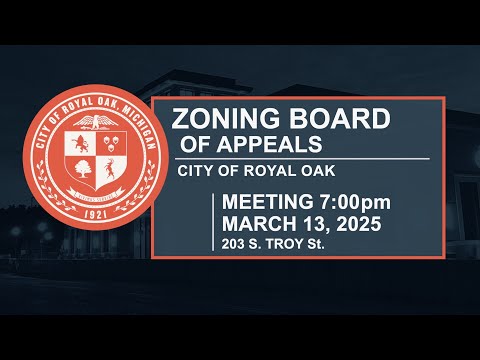
The Royal Oak City Zoning Board of Appeals on March 13 voted to deny a use variance that would have allowed an automobile filling station at 3030 Rochester Road, a parcel presently occupied by a convenience store.
Petitioner representatives argued the site historically contained pumps and a canopy dating to at least 1963, presented photographic evidence and said the proposed three-pump station and renovation would remove blight and modernize the building. Mike Knowles of Amloor Group, speaking for the applicant, said he found historical aerial photos "dating back all the way to 1963, showing that it was historically used as a fueling station," and that modern environmental controls and a renovated storefront would improve the block.
Board members focused on the stringent five criteria for a use variance, pressing the petitioner on whether the hardship was self-created and whether permitted uses could make the parcel viable without a fueling operation. Commissioners also raised environmental and remediation questions: the petitioner said Phase 1/Phase 2 environmental testing would be conducted and that the applicant had experience remediating sites, but the board noted such testing might reveal costs that could make the project infeasible.
Several neighbors raised concerns during public comment about prior site conditions, light pollution and overflowing dumpster problems. One long-term resident urged careful attention to lighting and stated that bright, west-facing lights have previously lit backyards; the resident warned that increased illumination could create a nuisance for nearby houses.
The motion to grant the use variance failed on a voice vote. A subsequent motion to deny the petition, made by a board member who argued the application did not satisfy the five variance criteria, carried on a second voice vote; the chair announced the use variance would be denied for at least one year.
The board’s denial ends the use-variance pathway for reintroducing a fueling use at the property for the period set by ordinance; the petitioner was told it could pursue other permitted uses, revise plans (for example, removing accessory structures) or reapply in the future if conditions change.