Get Full Government Meeting Transcripts, Videos, & Alerts Forever!
Get email alerts on the Arizona Braided Funding topic
No spam. Unsubscribe anytime.
Arizona officials outline braided‑funding model, crisis network and court‑ordered treatment arrangements
Summary
Arizona presenters described a long‑running regional behavioral health authority model that braids Medicaid, state and grant dollars to fund crisis lines, mobile teams and stabilization units and to support a 'no wrong door' approach; presenters also explained county variability in court‑ordered evaluation and treatment under Title 36.
Arizona officials spent the latter part of the task force meeting describing an integrated, braided funding and regional‑authority approach intended to simplify access and expand crisis coverage.
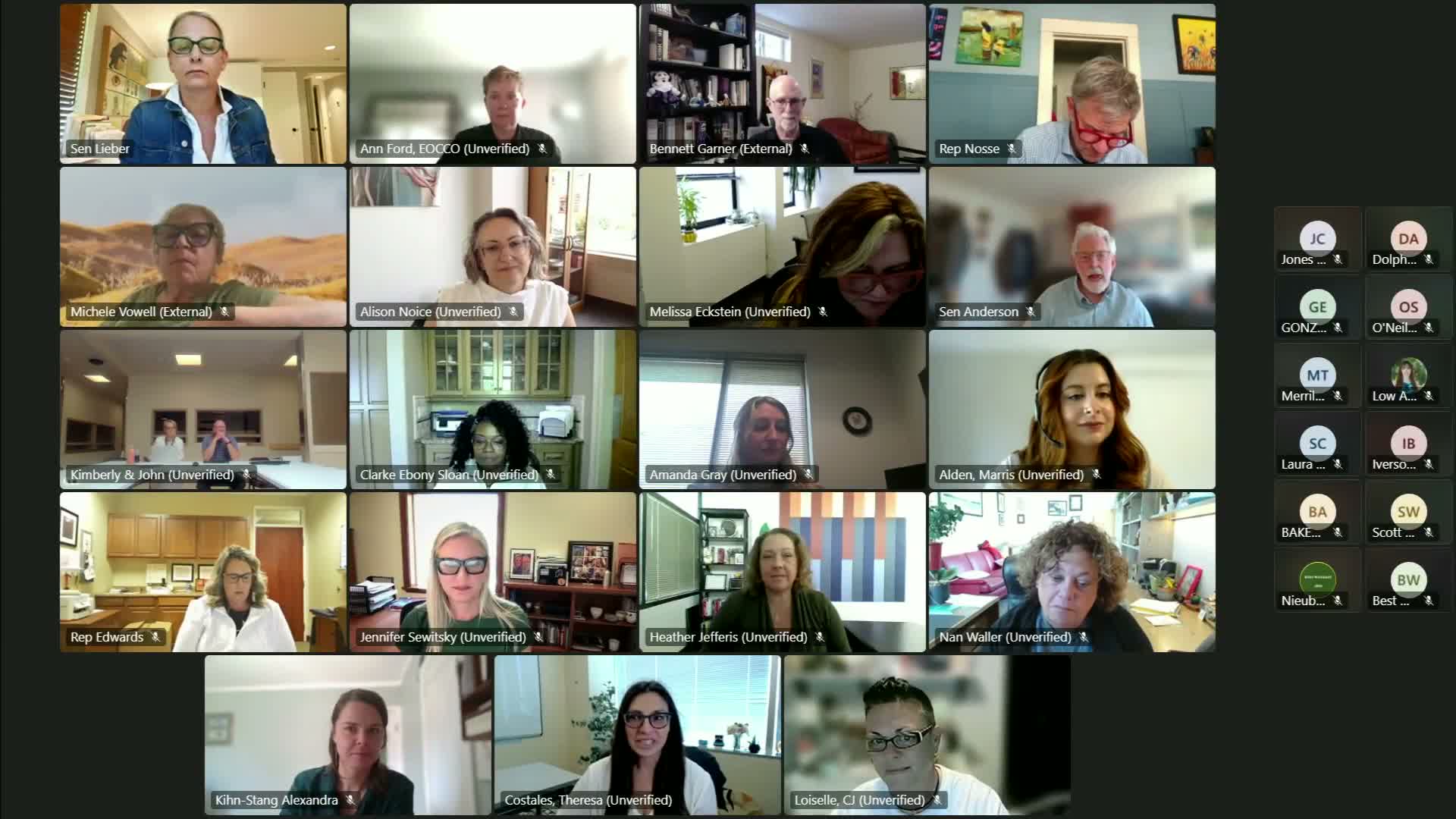
CJ Loiselle, assistant director at ACCESS, and Dr. Therese Costales, chief medical officer for Arizona Medicaid, said ACCESS functions as the Medicaid agency, the state mental‑health authority and the single state agency — enabling the state to combine (braid) Medicaid payments, state non‑title dollars and grant funds and pass them to Regional Behavioral Health Authorities (REBAs).
Loiselle described a "no wrong door" model: REBAs maintain a provider network and can issue block awards or use non‑title dollars so a provider can treat a person at first contact and sort out payer eligibility later. That approach enables immediate access even when a person’s insurance status is unclear, presenters said.
Arizona also described its crisis system: a centralized crisis call center that dispatches mobile response teams (monitored by GPS) and a network of crisis stabilization units licensed for observation (not inpatient) to quickly resolve crises. Presenters shared utilization data: in recent months, roughly 41 percent of crisis‑line callers were Medicaid eligible and 59 percent were non‑Medicaid, while mobile‑team calls were roughly split between titled (47 percent) and non‑titled populations. Presenters argued many interactions resolved by phone or mobile teams, reducing emergency department and law‑enforcement involvement.
On court‑ordered evaluation and court‑ordered treatment, Arizona officials noted variability across counties. Title 36 requires counties to provide screening and evaluation services; some counties contract directly with providers while others execute intergovernmental agreements with ACCESS or with REBAs (Maricopa and Pima have specific IGAs). Presenters said the county‑by‑county variation complicates statewide consistency, data sharing and quality oversight.
Members asked about staffing, rural time‑and‑distance standards and the role of state hospitals and forensic populations. Arizona officials said courts, county processes and state hospital authority create distinct financing and oversight pathways for forensic patients, and recommended follow‑up conversations about detailed statutes and operational rules. Arizona offered to provide links and references for statutes and expenditure reports.
Task force members praised the coordinated crisis infrastructure but also raised caution about unintended consequences when shifting populations or funding into new regional arrangements. Arizona officials encouraged Oregon to consider licensing, time/distance standards and braiding rules to reduce provider administrative burden.