
Oregon committee advances emergency transportation funding package after long public hearing
Get AI-powered insights, summaries, and transcripts
Subscribe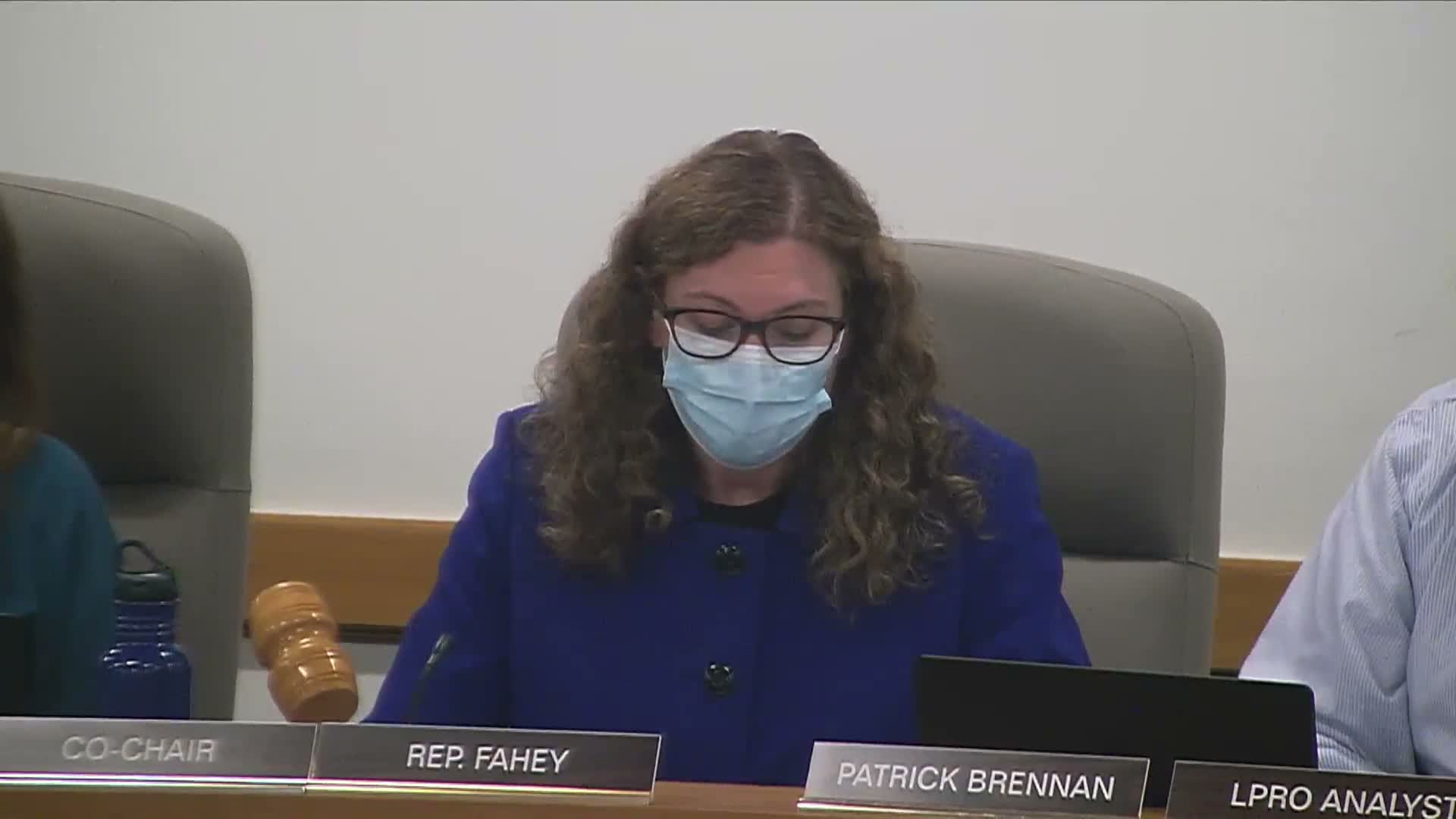
Summary
A joint special session committee advanced House Bill 3,991 (transportation funding) and associated budget bill HB 3,992 after hearing hours of testimony and adopting amendments that add oversight and a temporary payroll-tax sunset. The measures now go to the floor with due-pass recommendations.
SALEM, Ore. — Lawmakers on a joint special session committee voted Sunday to send a transportation funding package and a companion budget bill to the full legislature after a marathon hearing marked by sharp disagreements over priorities, accountability and who should pay.
The committee advanced House Bill 3,991, an omnibus transportation funding measure, and House Bill 3,992, the related budget adjustments, after adopting a set of amendments that add oversight steps for major projects, limit administrative authority to lower (but not raise) certain tax rates and temporarily sunset a payroll-tax increase two years after it begins.
The package is designed to avert immediate cuts and layoffs at the Oregon Department of Transportation, stabilize transit funding and preserve the long-standing 50/30/20 distribution of transportation revenues among state, county and city governments. Amanda Bridal of the Legislative Fiscal Office, who summarized the budget bill, said HB 3,992 is an omnibus appropriation measure that provides targeted general fund appropriations and uses an $800,000 draw on the emergency fund to offset those items so total general fund appropriations remain unchanged for the biennium.
"This bill is an omnibus appropriation measure," Bridal told the committee, outlining funding and the adjustments required to implement the transportation measure.
Why it mattered
Committee members and dozens of public witnesses framed the vote as a choice between passing a temporary funding patch to maintain services and personnel, or allowing deep cuts that would reduce winter maintenance, shutter maintenance stations and force transit agencies to curtail routes and jobs.
Kelly Brooks, a witness who outlined ODOT service-level maps and the agency’s winter-maintenance plan, warned that "all of our roads will see a reduced level of service" without new funding and said the agency could be forced to close 12 maintenance stations and substantially reduce high-level winter service across the state.
Supporters included local elected officials and transit leaders who argued the package would prevent layoffs and preserve critical services. "We support this package because the 50/30/20 split will allow money to come to cities and counties to help us maintain our connected system," said Mayor Melanie Heebler of Bend.
Opponents and skeptics, including business owners and some county officials, said the bill would place new burdens on households and businesses and urged greater accountability of large capital projects before approving new revenue. Commissioner Patty Adair of Deschutes County told the committee she was "a no on House Bill 3,991 and 3,992," alleging long-term mismanagement and urging reforms rather than tax increases.
Key changes adopted
- Dash 17: Revisions to the highway cost allocation study and limits on administrative authority; adopted by the committee. - Dash 18: A sunset amendment that restores a payroll-tax rate after two years (01/01/2028); adopted by the committee. Supporters said it forces a follow-up deliberation; opponents warned it could destabilize transit planning.
Votes at a glance
- Dash 9 (08/31/2025), an amendment to reallocate certain dedicated funds and to direct climate compliance revenue to the State Highway Fund: failed on a roll call (Aye: Starr, Bossard Davis, Breeze Iverson, Bonham (co-vice chair Gautam recorded as aye in roll); No: Campos, Pham, Bowman, McLean, Sanchez, Co chair Wagner, Co chair Fahey). (Motion failed.)
- Dash 3 (08/29/2025), a measure to allow flexibility among certain revenue streams while preserving the 50/30/20 split: failed on roll call (recorded no majority).
- Dash 17 (08/30/2025), accountability and HCATS adjustments including limits on DAS authority to raise rates: adopted on roll call.
- Dash 18 (08/31/2025), sunsets the payroll-tax increase on 01/01/2028: adopted on roll call.
- Final committee action: House Bill 3,991 as amended and House Bill 3,992 (budget) were sent to the floor with due-pass recommendations after roll-call votes recorded by the committee.
What the bills do (summary)
HB 3,991 packages multiple adjustments: it revises oversight of major projects; modifies administration of the diesel fuel tax, weight-mile and heavy-vehicle tax tables; phases in and adjusts vehicle registration and title fees; implements road usage charge provisions for electric vehicles; and increases certain fuel and fee rates. The measure pairs those revenue changes with accountability requirements for audits and project oversight.
HB 3,992 is the implementing appropriation bill that contains the budgetary adjustments necessary to carry out HB 3,991, including small general fund appropriations and an $800,000 offset from the emergency fund balance.
What comes next
Because the committee advanced the bills with a due-pass recommendation, they will be carried on the floor by designated house and senate carriers for final action. Several lawmakers emphasized that passage of this stopgap does not close the broader debate over long-term funding, project prioritization and possible reforms to ODOT governance and spending.
"This is a step forward but we need to follow up with a longer conversation about sustainable and equitable funding," said one committee member during floor debate.
The committee also recorded extensive public comment that will accompany the bills as they move to the floor. Many witnesses urged lawmakers either to pass the package to prevent immediate service disruptions or to demand stronger accountability and changes to ODOT’s capital program before approving additional revenue.
The committee adjourned after adopting HCR 51, a concurrent resolution declaring sine die for the special session.