Get Full Government Meeting Transcripts, Videos, & Alerts Forever!
Get email alerts on the Transportation Funding topic
No spam. Unsubscribe anytime.
Senate passes transportation stopgap bills after heated debate over taxes, tolls and ODOT oversight
Summary
After hours of debate over taxes, tolling and agency oversight, the Oregon Senate approved House Bill 3992 (appropriations) and House Bill 3991a (revenue measures) to avert layoffs at the Oregon Department of Transportation; votes were recorded and several attempts to adopt alternative amendments failed.
The Oregon Senate passed two measures intended to keep the state's roads, bridges and transit services operating this winter, approving House Bill 3992, the appropriation for the package, and House Bill 3991a, a companion revenue bill that raises fees and taxes to shore up the Oregon Department of Transportation (ODOT).
The legislation passed after extended floor debate in which lawmakers argued over whether the bills were a necessary stopgap to prevent layoffs at ODOT or an unacceptable new tax burden on struggling families. "House bill 39 91 is a stopgap measure to avoid catastrophic loss of hundreds of road workers," Sen. Pham said while introducing the bill, summarizing the package's intent to preserve maintenance and transit services. Supporters said the mix of modest increases in registration fees, payroll-based transit levies and a road-usage charge for electric vehicles would prevent immediate service cuts and hundreds of layoffs.
Opponents pressed harder on accountability and long-term fiscal fairness. Sen. Starr described alternate proposals intended to redirect noncore spending and to put the question to voters; his motion to suspend the rules and adopt a dash-9 amendment (an "off-ramp" alternative) failed, as did a motion to suspend rules and refer the bill to the ballot via a dash-5 amendment. Critics repeatedly raised project cost overruns, the size of certain Portland-area mega-projects and the need for stronger audit detail before approving new revenue.
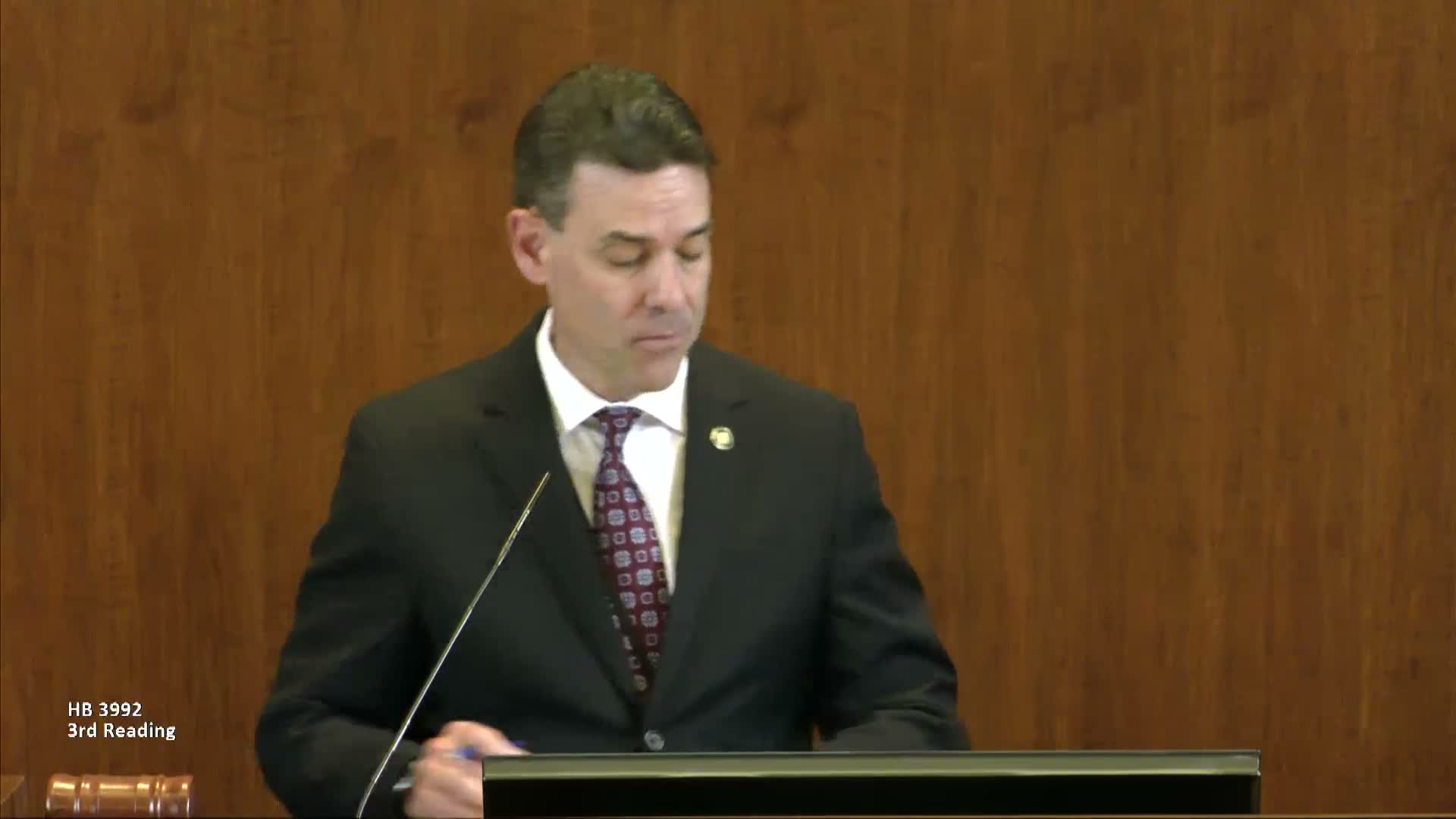
The appropriation bill, HB 3992, was presented with line-item funding details: "the measure includes $204,900,000 in other funds and $800,000 general fund related to the fiscal impact of house bill 3991," Sen. Pham said during the reading. The Senate recorded a roll-call approving HB 3992; the clerk announced "20 ayes" and declared the motion carried.
On House Bill 3991a, senators delivered lengthy remarks about the bill's components and consequences for rural and urban communities. Proponents highlighted that half the raised funds would remain in local regions and that the measure requires additional performance audits and oversight of ODOT. Opponents said the package is regressive and urged deeper reforms at ODOT. After final debate the clerk called the roll; the record shows HB 3991a "having received a constitutional majority is declared passed," with the clerk noting the recorded ayes in the roll call.
What changed in the chamber
- Failed suspension motions: Senator Starr moved to suspend the rules to adopt dash-9 and dash-5 amendments (off-ramp and referral options). Both suspension motions failed on roll-call votes, which left the bills before the full Senate for final passage. - Appropriation details: During the HB 3992 reading, sponsors cited several specific funding lines, including other-fund allocations for ODOT staff positions and performance audits. - Oversight language: The passed measures include provisions for additional performance audits and a tightened role for the secretary of state's office in auditing ODOT projects.
Votes and formal actions
- HB 3992 (appropriation): recorded roll-call resulted in 20 ayes; motion carried and the bill was declared passed. - HB 3991a (revenue measures): the clerk recorded a constitutional majority and declared the bill passed (roll-call tallies recorded in the official record).
What happens next
Lawmakers and bill sponsors repeatedly described the package as a near-term solution that leaves broader reforms for a later session. Supporters urged prompt oversight work and audits to ensure that the revenue is spent on maintenance and core functions; opponents urged further investigation of ODOT costs and stronger statutory limits before future revenue increases.
Speakers quoted in this story are members of the Oregon Senate as recorded on the Senate floor transcript. The bills will proceed to the usual enrollment and transmittal steps; House Bill 3992 and House Bill 3991a will take effect as provided in the text and per constitutional requirement for revenue measures.