Get Full Government Meeting Transcripts, Videos, & Alerts Forever!
Get email alerts on the Tsunami Warning topic
No spam. Unsubscribe anytime.
Legislators press for improved warning systems after mixed tsunami alert performance; $300M multi‑year plan proposed
Summary
Representatives David Gomberg and Paul Evans described uneven public receipt of a recent tsunami warning, emphasized lessons learned about communications and public confidence, and outlined a proposed $300 million, 10‑year preparedness plan to fund training, mitigation and recovery capabilities.
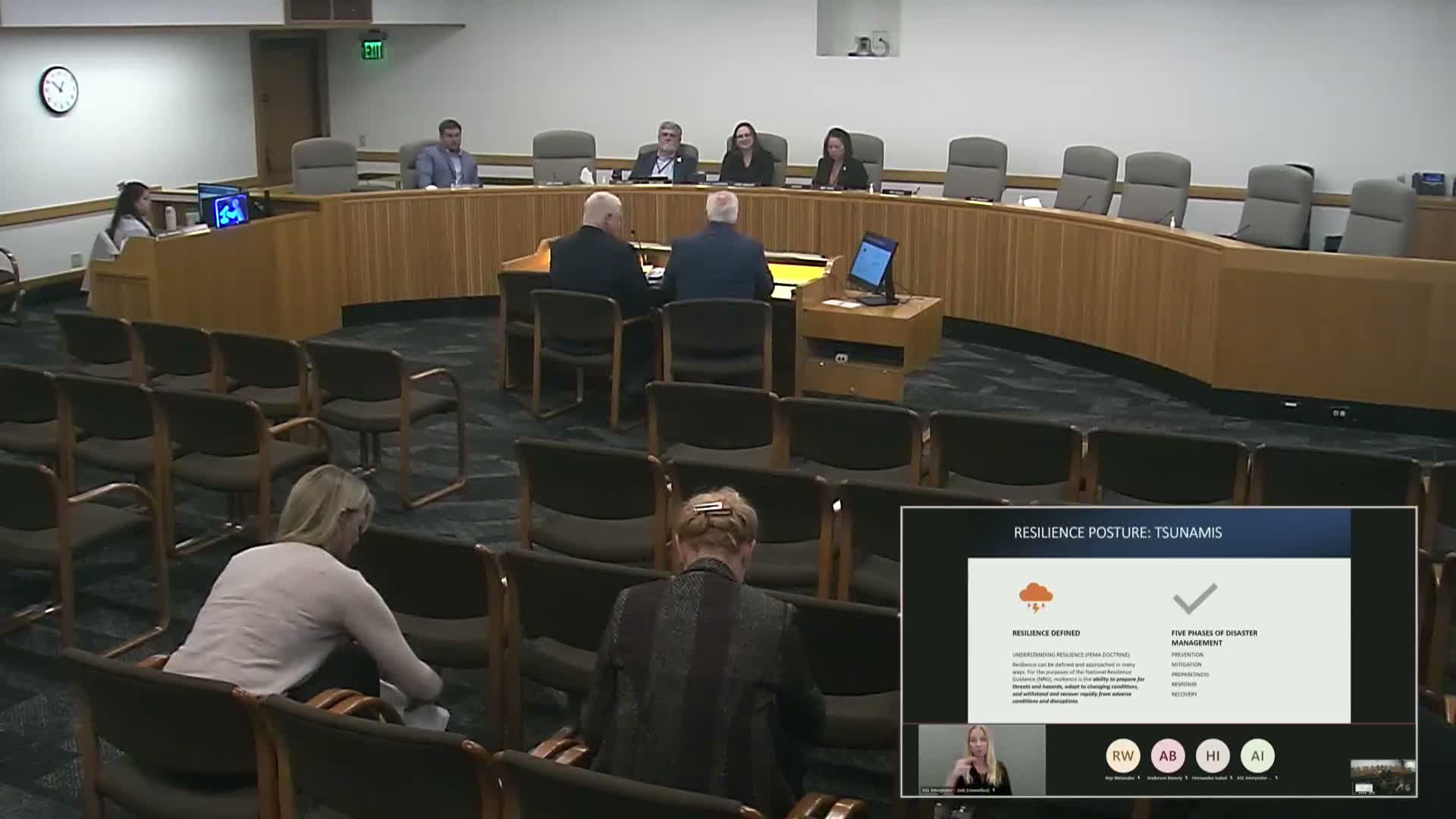
Representatives David Gomberg and Paul Evans told the committee that a recent tsunami warning exposed gaps in the state’s alerting and public information systems. Gomberg described receiving a cell‑phone warning while visiting the coast and said some visitors did not receive the same notice, which created confusion. Both legislators said the July warnings underscored that warning coverage, timing and public understanding must improve.
Rep. Paul Evans described a multi‑part proposal — referred to in the hearing as a $300 million investment over 10 years — to fund satellite training facilities, expand volunteer and part‑time responder capacity, clarify disaster recovery processes and support mitigation that may reduce long‑term costs. Evans suggested a progressive funding mechanism (a 4% deduction proposal targeted at higher brackets) as one avenue to raise revenue for the plan and said the package could be phased down if necessary.
Both lawmakers said the state should balance near‑term needs (communications, staff and warning operations) with long‑term mitigation and training investments. They asked legislative fiscal staff and agency partners to examine creative funding sources beyond the general fund and to consider how to pair state investments with federal grant opportunities.