Get Full Government Meeting Transcripts, Videos, & Alerts Forever!
Get email alerts on the Preservation Stabilization topic
No spam. Unsubscribe anytime.
Affordable-housing owners warn of growing preservation crisis; industry seeks bond funding and program support
Summary
State housing officials, nonprofit operators and lenders told lawmakers that rising costs and insurance spikes have left many affordable rental properties financially fragile, with OHCS reporting 3,641 units’ affordability expirations by mid‑2029 and 39% of their portfolio at or below breakeven debt coverage ratios in 2023.
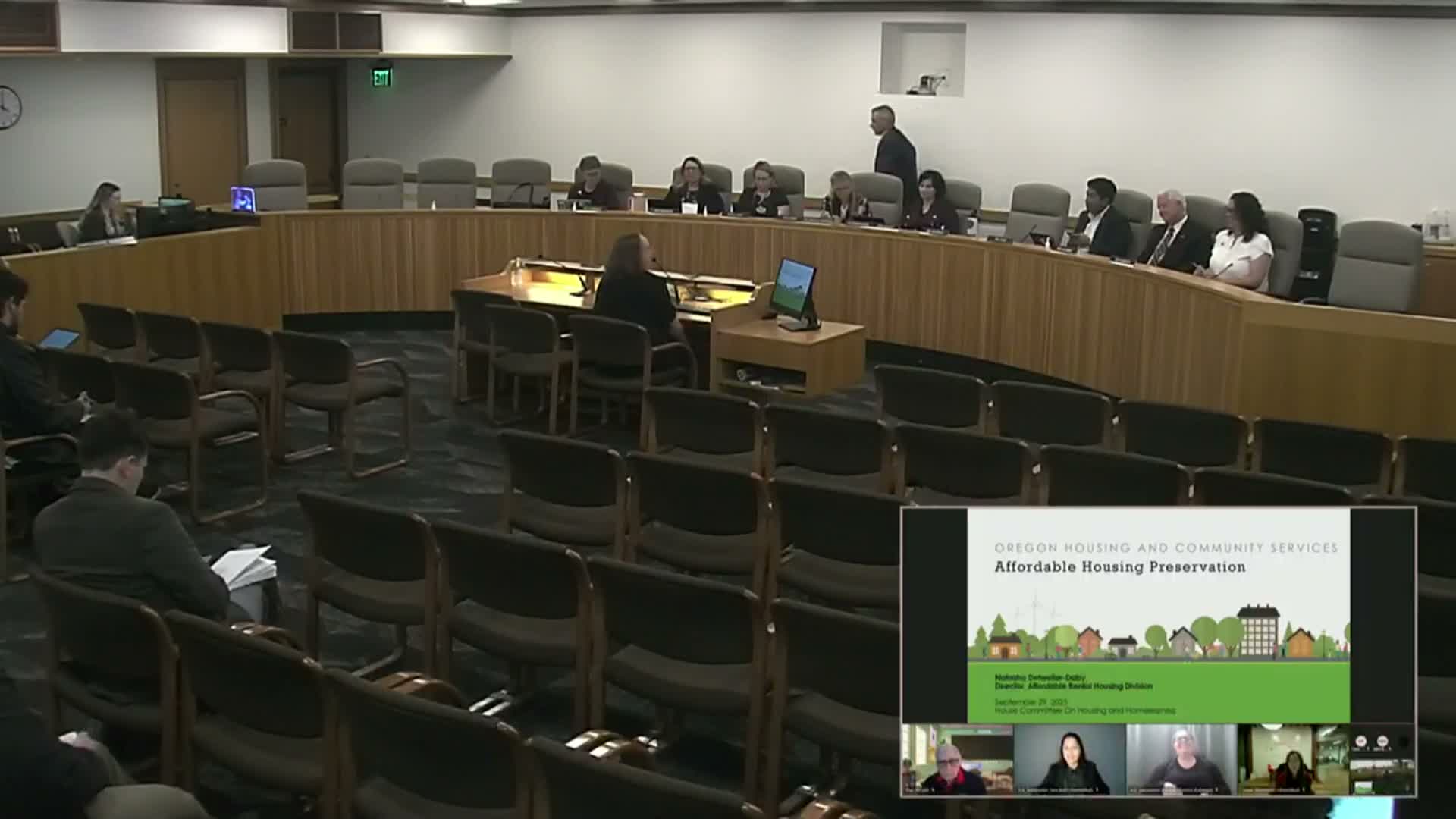
Lawmakers heard Sept. 29 that Oregon faces an urgent affordable‑housing preservation and stabilization problem as projects age, costs rise and revenue remains constrained.
Natasha Detweiler Davie, director of affordable rental housing at Oregon Housing and Community Services (OHCS), told the committee that there are “over nearly 4,000, 3,641 units that are anticipated and due to expire in those affordability restrictions between now and 06/01/2029.” She said OHCS’s internal analysis of audited 2022–23 financials found that 39% of the affordable rental portfolio had debt‑coverage ratios below 1.1 — essentially at breakeven — and that this share increased 44% since 2021.
Nonprofit operators described real‑world impacts. Sarah Stevenson, executive director of Innovative Housing, said nearly half of IHI’s properties were financially troubled; she cited insurance premium spikes, reporting that property insurance “nearly doubled in 2024” and that general liability premiums rose “83% to over 1000%.” Erica Mills of NeighborWorks Umpqua gave a case study of a 10‑unit property in Coos Bay that faced a $135,000 loan balloon and a potential $1,000,000 grant recapture with no available preservation tools until NeighborWorks America provided a grant.
Speakers urged the legislature to expand preservation funding beyond the $50 million in lottery bonds allocated this session. Bill Van Fleet of the Network for Oregon Affordable Housing and others urged tapping Article 11 Q bond capacity used for LIFT production funds to support preservation as well, and said a legal opinion confirming that some Article 11 Q uses could include preservation was uploaded to OLISS.
Several witnesses urged a package that would combine modest stabilization investments, tax-credit leveraging and targeted bond allocations to prevent foreclosures and preserve long‑term affordability. Committee members flagged both financial and physical preservation needs and requested more detailed, practicable options for stabilization and capital reinvestment.