Get Full Government Meeting Transcripts, Videos, & Alerts Forever!
Get email alerts on the Oregon Housing Needs Analysis topic
No spam. Unsubscribe anytime.
Senate committee adopts rules, hears DLCD update on Oregon Housing Needs Analysis
Summary
The Senate Interim Committee on Housing and Development adopted committee rules and received a Department of Land Conservation and Development update on implementing HB 2,001 and rule refinements to the Oregon Housing Needs Analysis, including development‑ready inventories, safe harbors, and an accountability dashboard.
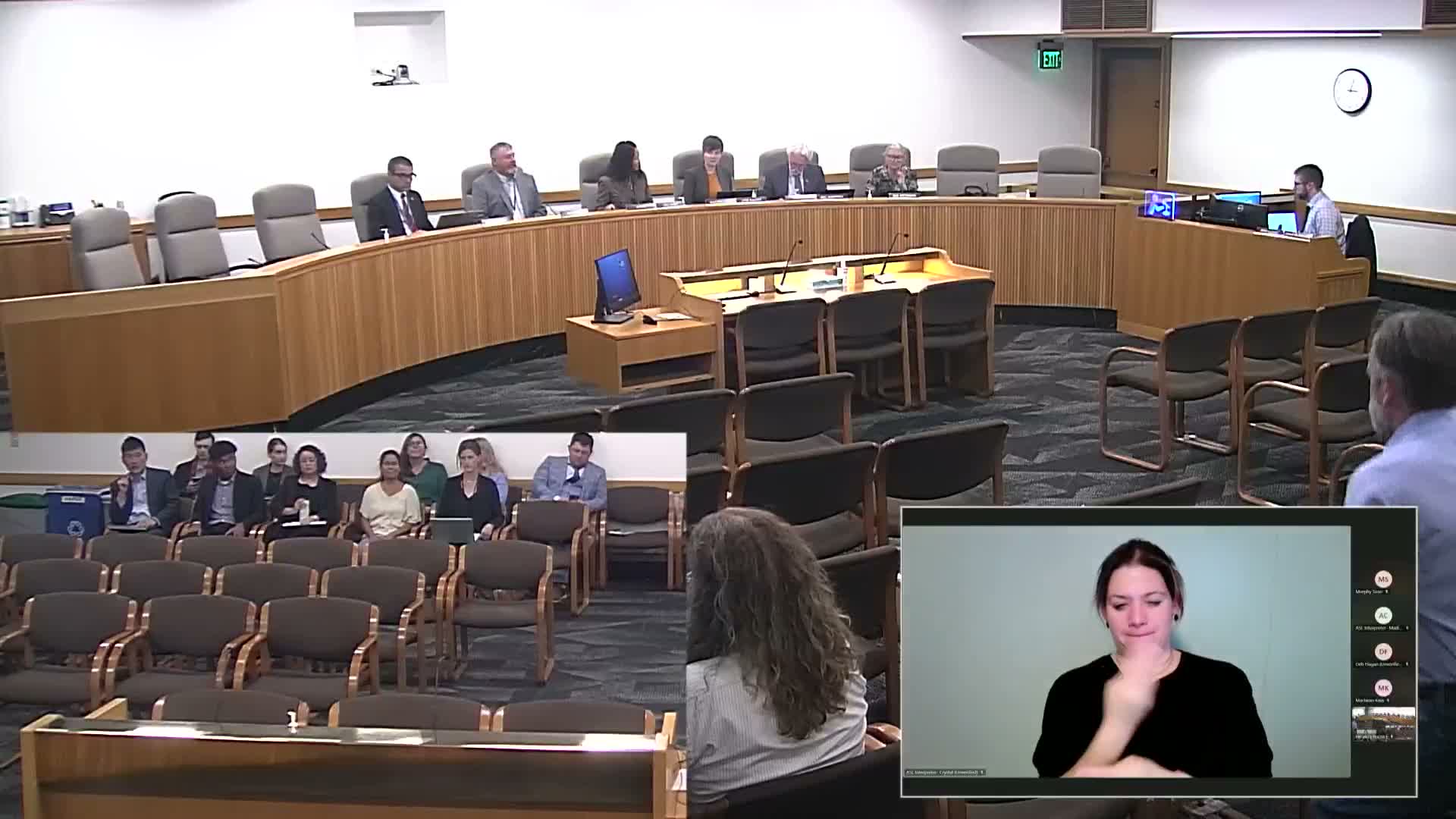
The Senate Interim Committee on Housing and Development convened Sept. 29, adopted committee rules dated 09/29/2025 and held an informational briefing on implementation of the Oregon Housing Needs Analysis (ONA).
Karen Chapman of the Department of Land Conservation and Development briefed the committee on ONA implementation under House Bill 2,001, saying the state now provides a housing‑need allocation from the Office of Economic Analysis and the Department of Administrative Services that cities must contextualize locally by income band. "What you'll see now with Oregon housing needs analysis is a far more robust process where we look at what are the local housing needs?" Chapman said.
Chapman described key changes: a development‑ready land inventory for jurisdictions above 10,000 people (74 of 241 cities will perform an eight‑year housing capacity analysis), a housing production strategy requiring local actions where capacity is insufficient, and new tracking and monitoring tools to show how many units of different types are being built. She said the department proposed safe harbors and clarified inventory rules to reduce legal uncertainty for cities, including a land‑market supply factor to discount "paper" capacity where full development within the planning horizon is unlikely.
Vice Chair Anderson and other senators pressed for clarity on who is "underserved" under the framework. Chapman said the ONA allocations are contextualized locally by income levels (for example, households at 30 percent of area median income) and by local population characteristics such as seasonal or short‑term rentals in coastal communities.
The committee also heard industry testimony. Deborah Flagan, vice president at Hayden Homes and first vice president of the Oregon Home Builders Association, said the association supported HB 2,001 but warned the draft rules "have layered on much complexity, making planning harder, not easier, and pushing affordability targets…builders alike are set to fail." Chapman responded that rule refinements seek to balance production and affordability goals and that the commission expects to adopt the final rules in December, with training for consultants and jurisdictions next year.
Action taken: Vice Chair Anderson moved to adopt the committee rules dated 09/29/2025; the clerk called the roll and the chair announced the motion passed and "the rules are adopted." The committee then proceeded to informational hearings on urban reserves and adaptive reuse.
The committee adjourned after a sequence of briefings and Q&A.