Get Full Government Meeting Transcripts, Videos, & Alerts Forever!
Oregon officials warn HR 1 could shrink direct certification, strain school meal programs and chip away at early‑intervention Medicaid funding
Summary
State education, health and human services officials told the Senate committee HR 1’s SNAP and Medicaid changes may reduce direct certification, put Community Eligibility Provision participation at risk and reduce billing revenue for school‑based Medicaid services, with potential immediate and long‑term effects on children's nutrition and services.
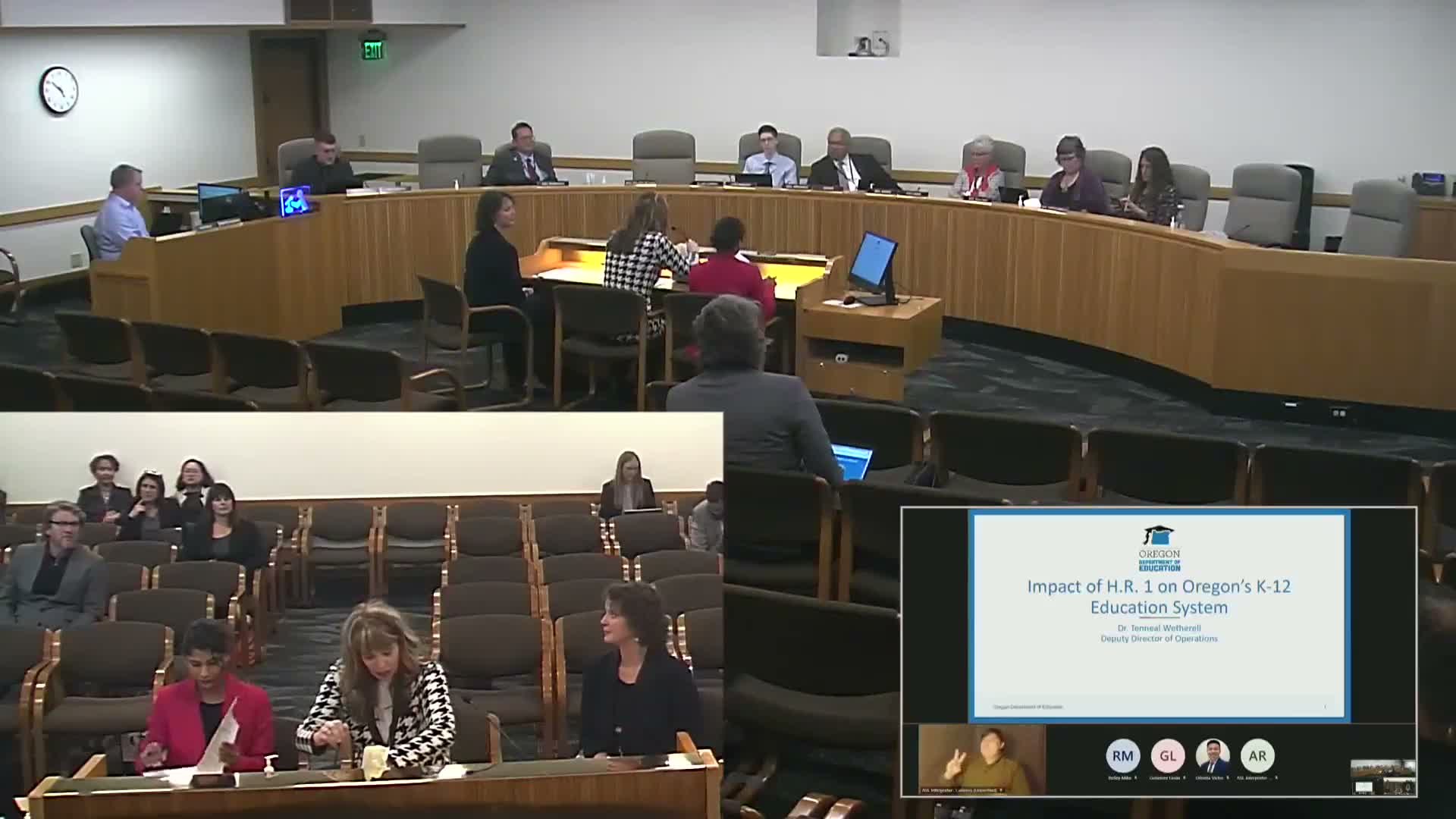
State officials told the Senate Interim Committee on Education on Sept. 29 that changes to SNAP and Medicaid in the federal reconciliation bill will carry immediate and long‑term consequences for school nutrition, school‑based health services and early intervention in Oregon.
Teneal Weatherall (Deputy Director of Operations, Oregon Department of Education) explained how direct certification — the automated match of student enrollment with SNAP, TANF, foster care and Medicaid records — drives automatic eligibility for free or reduced‑price school meals. "If a child shows up in these records, they are directly certified and automatically eligible for free or reduced price meals," Weatherall said, and she warned that reductions in SNAP or Medicaid eligibility could mean fewer children are picked up by the matching process, which would increase paperwork for…
Already have an account? Log in
Subscribe to keep reading
Unlock the rest of this article — and every article on Citizen Portal.
- Unlimited articles
- AI-powered breakdowns of topics, speakers, decisions, and budgets
- Instant alerts when your location has a new meeting
- Follow topics and more locations
- 1,000 AI Insights / month, plus AI Chat