Get Full Government Meeting Transcripts, Videos, & Alerts Forever!
Get email alerts on the Deflection Programs topic
No spam. Unsubscribe anytime.
Lane County and Washington presenters outline LEAD/deflection navigator successes and core elements for statewide scale
Summary
Lane County described a 24/7 recovery navigator program and hotel‑based stabilization to deflect people with substance‑use or behavioral‑health needs from the criminal system; Washington presenters emphasized LEAD fidelity, sustained case management, data sharing and funding strategies as keys to success.
Lane County and Washington presenters briefed the joint Judiciary committees on deflection and LEAD‑aligned navigator programs designed to redirect people with behavioral‑health needs from the criminal legal system into treatment.
Clint Riley, Lane County Deflection Program Manager, said Oregon’s House Bill 4002 helped prompt a countywide design: a LEAD model adapted to a 4,700‑square‑mile county with 11 police agencies, peer‑navigators available 24/7 and emergency stabilization housing. Arturo Zamudio, supervisor for navigators with Ideal Option, described operational details: officers call a dedicated line, a navigator responds on‑site, offers voluntary services and completes an intake and individualized service plan within 24 hours; navigators provide intensive case management, help with basic needs and stay engaged to support recovery trajectories.
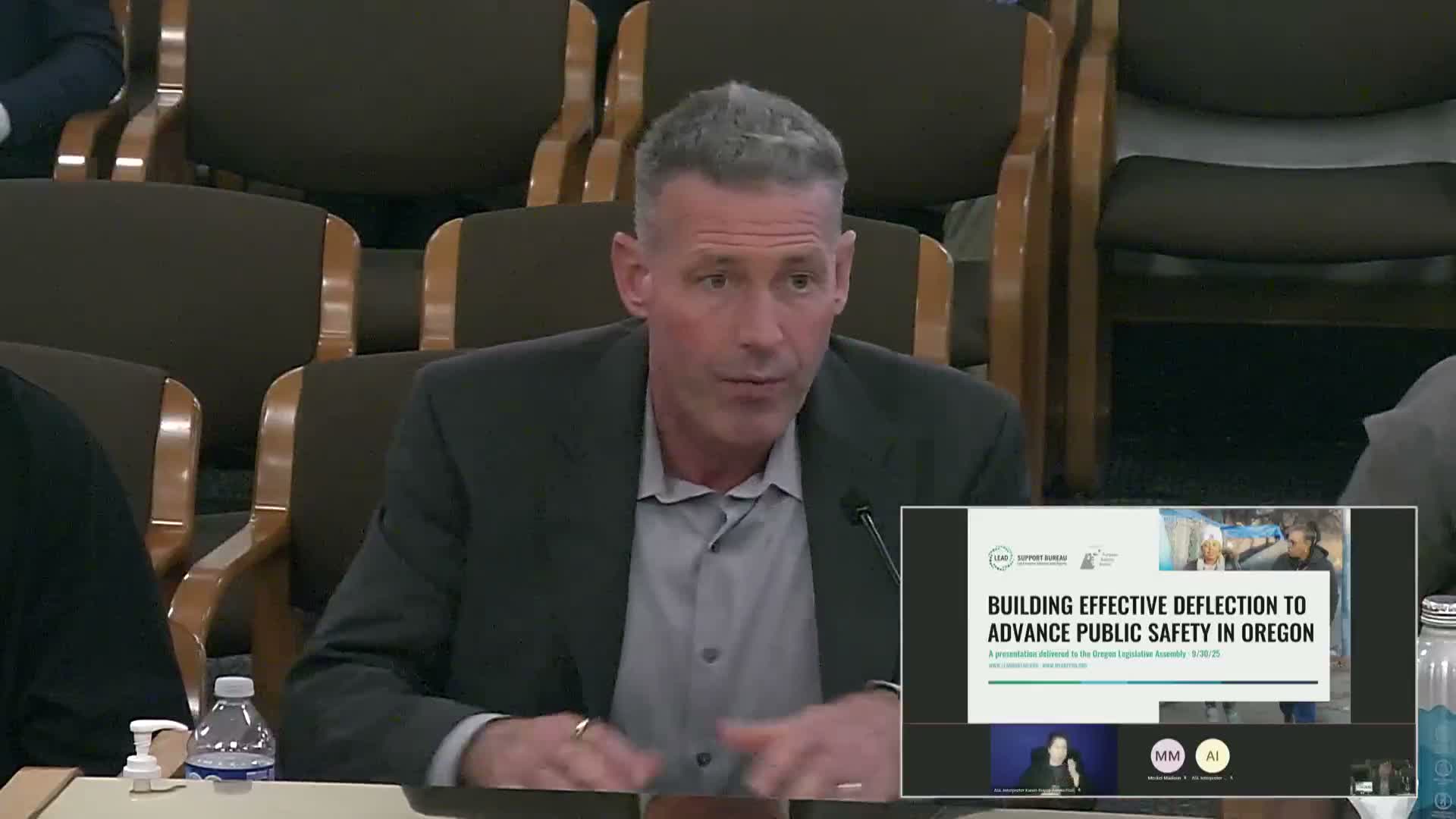
Seattle‑area presenters (Purpose Dignity Action and Washington State technical support) described statewide technical assistance and evaluations showing LEAD‑style programs reduce recidivism, jail stays and felony filings when implemented with fidelity. They stressed sustained case management, data interoperability, partner coordination and stable blended funding — including exploration of Medicaid‑waiver approaches — as central to replicable outcomes.
Presenters cautioned deflection is discretionary and must operate pre‑filing to preserve LEAD/deflection benefits. Committee members thanked presenters and noted differences between deflection (pre‑arrest) and diversion (post‑arrest) and requested follow‑up on interstate technical assistance opportunities.