Get Full Government Meeting Transcripts, Videos, & Alerts Forever!
Get email alerts on the HB 4086 topic
No spam. Unsubscribe anytime.
HB 4086 committees recommend narrower child‑welfare scope, consistent definitions and statewide response for children exhibiting complex behavior
Summary
Jurisdictional and CECSB advisory committees presented recommendations under HB 4086: narrow child‑welfare investigative scope, consolidate child‑abuse definitions and dispositions, establish a statewide response pathway for children with complex behaviors, and create an OHA implementation task force with phased funding and training.
Presenters from HB 4086 advisory committees told the joint Judiciary committees about recommendations aimed at improving Oregon’s child‑abuse investigations and responses to children exhibiting complex sexual or problematic behavior.
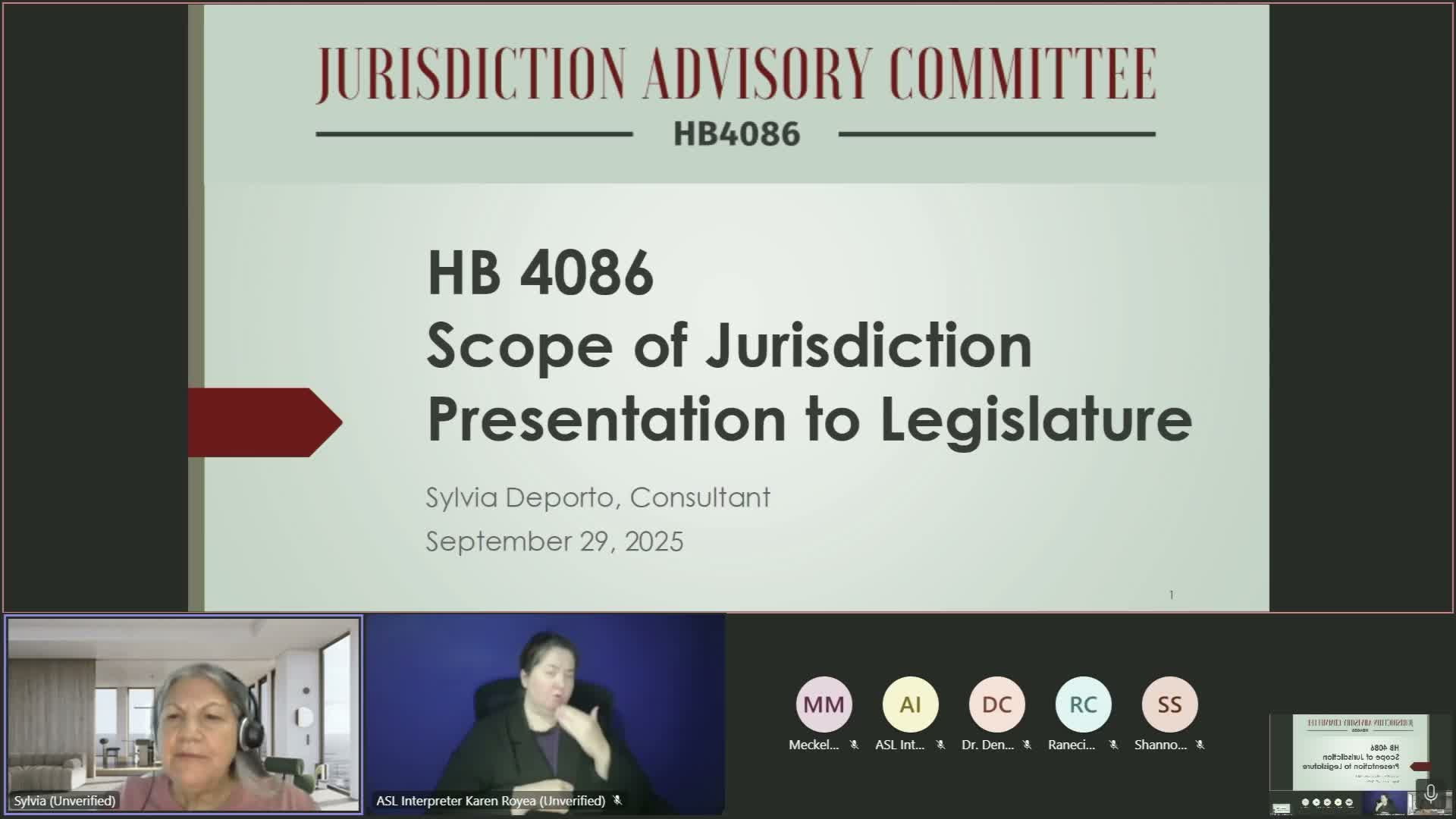
Sylvie de Porto summarized the jurisdiction advisory committee’s 19 recommendations: expand community‑based prevention and alternative response pathways, narrow child‑welfare scope for third‑party allegations (so law enforcement handles third‑party crimes against children), limit naming of children as perpetrators except when acting in a parental or caretaking role, allow flexibility to refer matters to appropriate partners (law enforcement/licensing) without completing a CPS investigation in certain circumstances, and consolidate dispositional language to a single set (founded, unfounded, unable to determine) to reduce confusion across systems.
Denisha Carley, Shannon Scott and Renisha Cormier presented CECSB findings: inconsistent statewide responses, confusion around mandated reporting, workforce shortages (especially rural), sparse data collection across systems and an overreliance on reactive responses. CECSB’s top recommendations include creating a statewide response pathway with consistent protocols, investing in workforce and evidence‑based treatment access, standardizing terminology, clarifying mandated‑reporting expectations through statute and training, and standing up an OHA task force to oversee phased implementation with accountability and funding strategies (blended state, Medicaid alignment and philanthropic support).
Committee members raised operational questions — how children’s advocacy centers fit into the model, the use of threat‑of‑harm language in schools, and how to preserve due process and expungement pathways. Presenters recommended a multi‑stakeholder implementation work group and pilot approaches to refine protocols before statewide rollout.
The committees asked presenters to provide additional materials and answers to detailed procedural questions; staff will circulate follow‑up items and consider next steps and potential statutory changes.