Get Full Government Meeting Transcripts, Videos, & Alerts Forever!
Get email alerts on the Corrections Health topic
No spam. Unsubscribe anytime.
Oregon Department of Corrections unveils Falcon Group findings and steps to modernize inmate health care
Summary
DOC Director Mike Rees and Assistant Director Kevin Bevenkamp told lawmakers an outside Falcon Group assessment found antiquated infirmaries, an aging high‑acuity in‑custody population, lack of an electronic health record (EHR) and staffing shortages; DOC plans an EHR launch Nov. 4 at OSP and a phased implementation tied to a December rollout plan.
Oregon Department of Corrections Director Mike Rees and Assistant Director Kevin Bevenkamp briefed the joint Judiciary committees on a comprehensive assessment by the Falcon Group and DOC’s implementation priorities for health services.
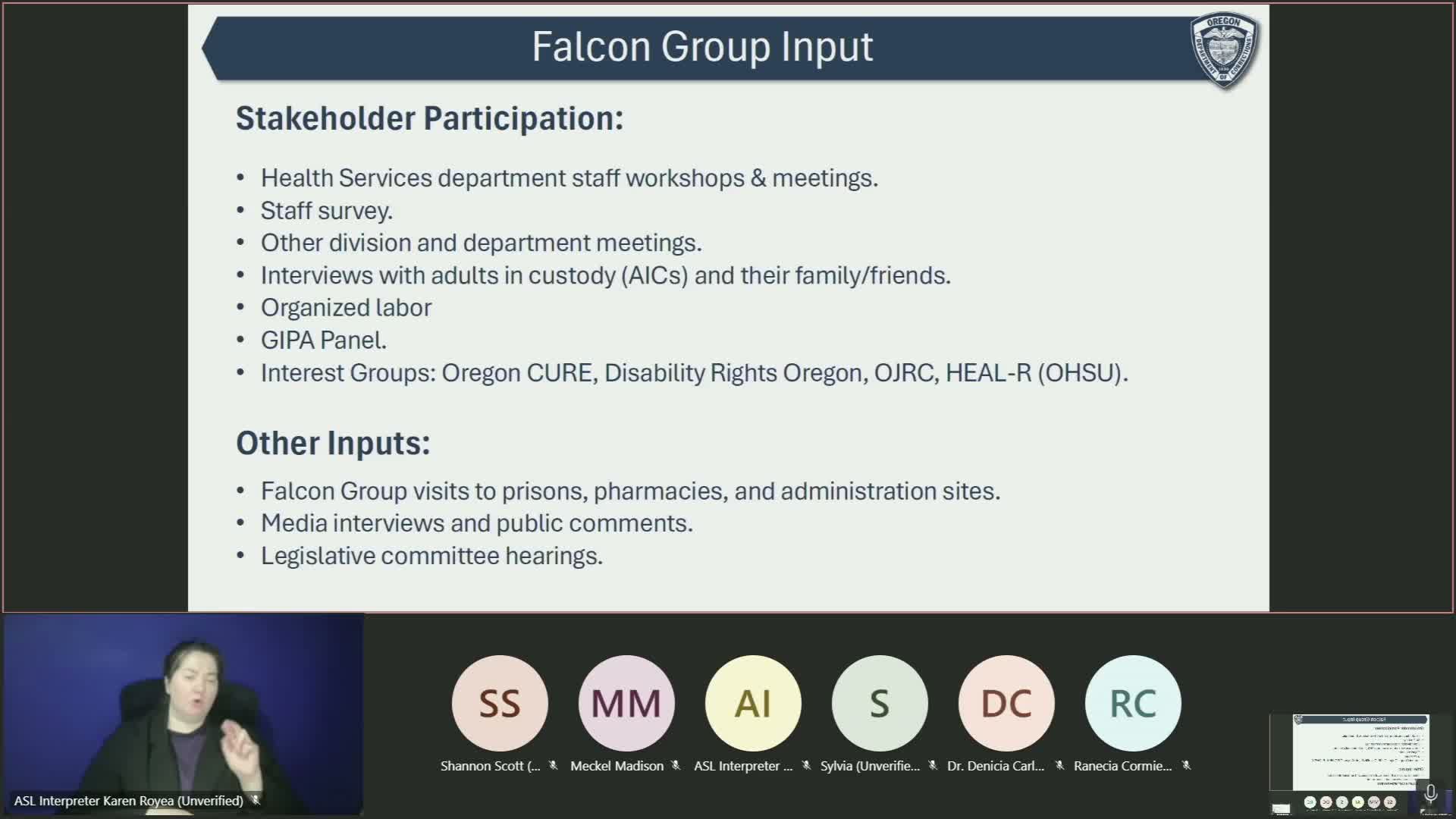
Rees summarized how internal complaints and an independent investigation in 2024 led DOC to engage Falcon for a statewide assessment. Falcon identified several systemic challenges: antiquated infirmaries (notably the Oregon State Penitentiary, OSP), an aging in‑custody population with higher acuity needs (over 1,000 adults aged 60+), reliance on paper charts and the absence of an electronic health record (EHR), staffing shortages that force DOC to use costly locum providers, and an outdated offender‑management system (DOC 400 from 1989). Rees said the DOC publicly released the investigative report and made leadership changes during the review.
Bevenkamp outlined near‑term implementation steps: improving scheduling and reducing backlogs for off‑site specialist appointments (April showed ~1,100 trips; August ~1,600), launching an EHR at OSP on Nov. 4, 2025 with phased rollout to other facilities, developing a continuous quality‑improvement program, and staffing and structural changes to clarify clinical and administrative responsibilities. Falcon recommended scalable, prioritized actions; DOC said it worked with Falcon to ensure recommendations were feasible given the state budget context.
Committee members asked about the cost difference between DOC‑employed nurses and locum contractors (DOC said locum use can cost nearly double due to agency overhead and housing costs), whether Falcon visited all facilities (Falcon visited 11 of 12 institutions), and whether recommendations include compassionate release or alternative care pathways (DOC said compassionate release requires legislative action but feasibility studies on alternative delivery and possible partnerships are planned). DOC committed to providing staffing and cost breakdowns to the committee.
Direct follow‑up items included requested analyses of health‑service spending on older adults, cost comparisons for locum vs. DOC staff and specifics on rollout timing and resource needs tied to the Falcon implementation plan.