Lifetime Citizen Portal Access — AI Briefings, Alerts & Unlimited Follows
Advocates present green‑bank model to finance solar, efficiency and resilience projects in Oregon
Loading...
Summary
Nonprofit lenders, business coalitions and Energy Trust outlined options for an energy and infrastructure fund (EIF) or 'green bank' to provide affordable loans, credit enhancements and capacity to scale efficiency, solar and resilience projects across Oregon, proposing quasi‑public structures and capitalization scenarios.
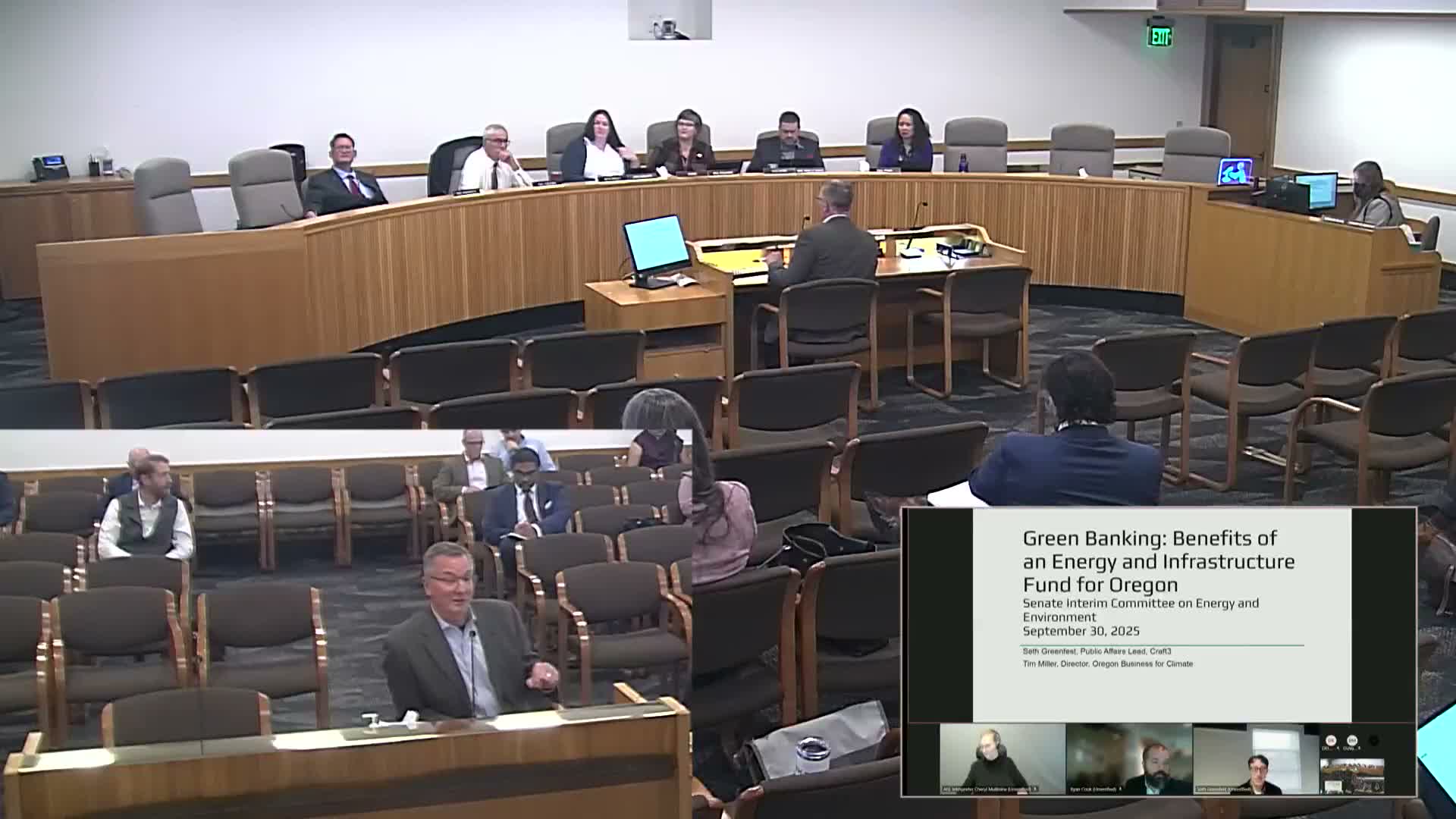
A multi‑stakeholder panel described how an energy and infrastructure fund (EIF) could address gaps in financing for clean‑energy projects across Oregon.
Seth GreenBest (Craft3) defined EIFs as mission‑driven financing institutions—not retail banks—that pool public, philanthropic and private capital to offer low‑cost loans, loan loss reserves and other credit enhancements. Tim Miller (Oregon Business for Climate) and other panelists argued that an EIF could increase energy affordability, resilience and local economic development by covering upfront project costs that yield long‑term savings and jobs.
Panelists presented three implementation options: a full‑scale EIF with initial capitalization (typical startup capital estimates presented ranged from $2–5 million for setup and $25–50 million to achieve meaningful lending scale), a middle approach that would provide initial state capital and leverage bonding authorities, or a delayed approach focused on studies to identify precise gaps. They emphasized that the entity’s statutory mission should be broad to allow the board to adapt product offerings — including loans for housing efficiency, commercial and industrial decarbonization, microgrids, storage and working capital for contractors.
Energy Trust representatives described partnership models that pair cash incentives with financing to reduce customer costs, provide loan loss reserves and support contractor growth. Panelists warned lending is not a universal solution — some households require no‑cost assistance — but said EIFs can complement grants and incentives while leveraging private capital.
Committee members asked about capitalization models, governance and alignment with the forthcoming Oregon Energy Strategy. Panelists offered to provide more specific legislative and capitalization proposals and noted that other states and the District of Columbia provide examples of successful models.