Get Full Government Meeting Transcripts, Videos, & Alerts Forever!
Get email alerts on the Cap And Invest topic
No spam. Unsubscribe anytime.
Washington legislators and agency officials outline how Climate Commitment Act auction proceeds are spent
Summary
Representatives from Washington described the Climate Commitment Act’s account structure, spending priorities (minimum 35% benefit to overburdened communities, 10% tribal projects), early auction revenue, and challenges around free allowances for large emitters and future allocation decisions.
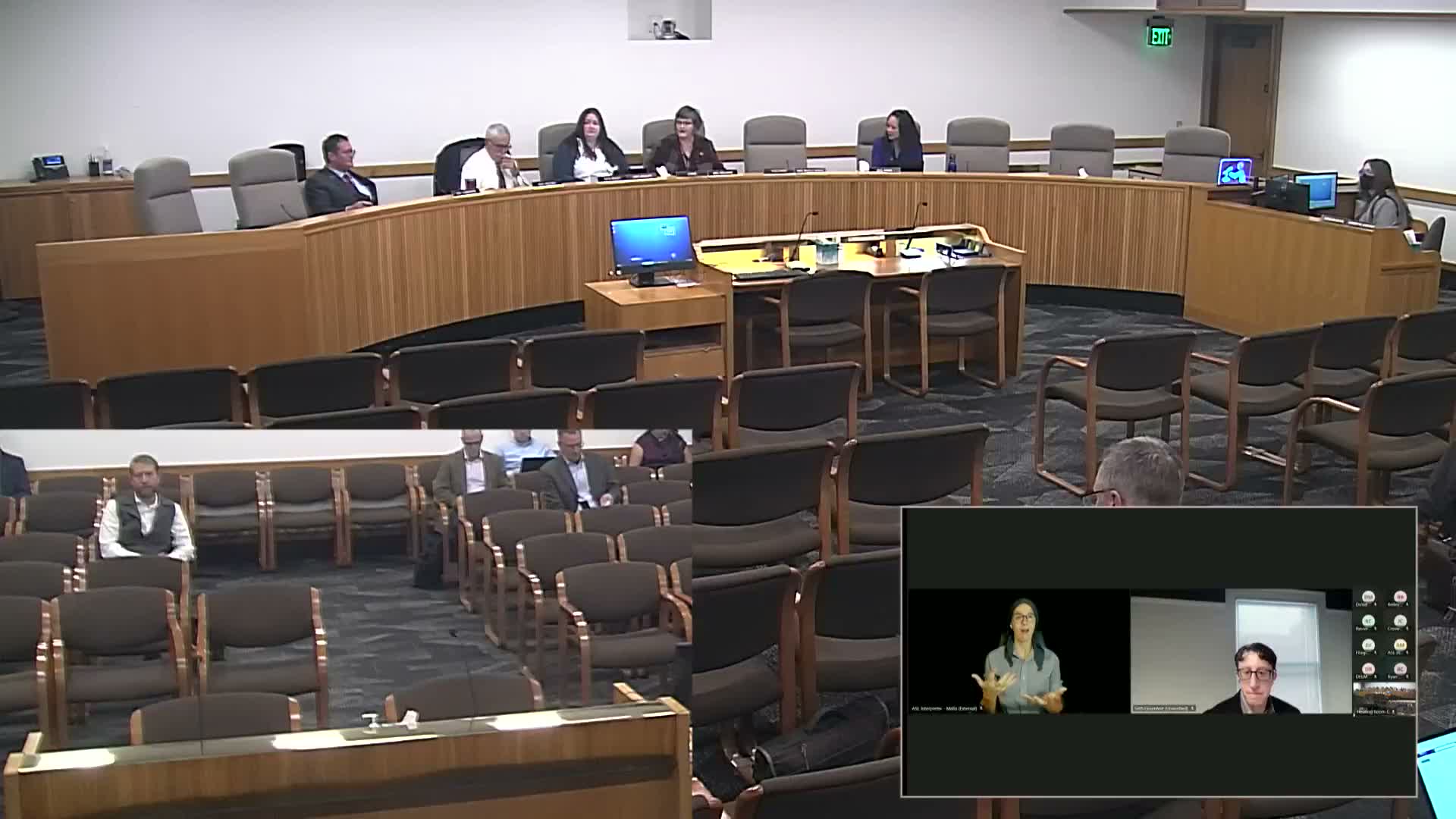
In an informational briefing to the Senate Interim Committee on Energy and Environment, former and current Washington policymakers and an Ecology official outlined how proceeds from allowance auctions under the Climate Commitment Act (CCA) have been allocated and the policy choices lawmakers face going forward.
Representative Joe Fitzgibbon, who chaired Washington’s House environment committee and led passage of the CCA, summarized statutory intent and spending priorities. He said the program targets covered entities—those emitting more than 25,000 metric tons CO2e annually—and that auction proceeds have generated “billions” for investment (he cited roughly $3,200,000,000 in the program’s first 1½ years). Fitzgibbon emphasized the law’s equity provisions: a statutory minimum of 35% of investments must benefit vulnerable and overburdened communities (with a 40% goal) and at least 10% of investments are designated for projects supported by a tribal resolution.
Joel Creswell, manager of the climate pollution reduction program at the Washington Department of Ecology, reviewed account flows and the revenue forecast. Ecology’s forecast presented large early auction receipts and projected declines over time as the allowance supply tightens; a slide labeled in thousands showed early years in the range of $1 billion and a projected drop to about $317,000,000 in fiscal 2030. Creswell also explained that some allowances are allocated at no cost to electric and natural‑gas utilities and to energy‑intensive, trade‑exposed (EITE) industries (the transcript lists allocation shares of roughly 28% electric utilities, 13% natural‑gas utilities and 17% EITEs for 2025), and that those no‑cost allocations reduce the supply sold at auction and therefore revenue.
Panelists and committee members discussed practical questions and tradeoffs. Members asked whether proceeds can fund transit operations; Fitzgibbon said operations are eligible but auction proceeds have favored capital because auction revenue is less stable than local sales tax and other ongoing revenue sources. The group also discussed ambiguous capital‑budget boundaries — for example, whether investments in ferries or diesel generators at a psychiatric hospital fit the program’s goals — and approaches to define eligibility more clearly for budget writers.
Former Senator Reuven Carlisle and others framed cap‑and‑invest as an evidence‑based policy that can decouple economic growth from emissions and noted benefits from linking Washington’s allowance market with California and Quebec (larger market size yields price stability). Creswell told the committee that Washington expects a legislative decision by 2028 on how free allowances to EITE sectors will be treated going forward, because current allocation formulas will become infeasible as the cap declines.
Committee members requested follow‑up for several numerical questions (for example, the exact share of Natural Climate Solutions account funding used for wildfire prevention and suppression), and panelists offered to provide agency reports and annual spending breakdowns. Fitzgibbon said agencies report annually on expenditures and that Ecology and other offices track whether investments meet statutory equity targets, though disagreement remains about precise criteria for identifying 'benefit to overburdened communities.'
The committee closed the Washington CCA update after panelists said they would provide more exact budget figures and technical reports on allowance allocation and revenue forecasts.