Get Full Government Meeting Transcripts, Videos, & Alerts Forever!
Get email alerts on the Ethics And Governance topic
No spam. Unsubscribe anytime.
Ethics commission clarifies food-and-beverage guidance and issues FAQs on serial communications
Summary
The Oregon Government Ethics Commission issued an advisory opinion explaining when food or beverages provided by public bodies count as part of an official compensation package, and released FAQs aimed at clarifying prohibited serial communications; the commission plans a work group and a proposal to the Law Commission for larger fixes.
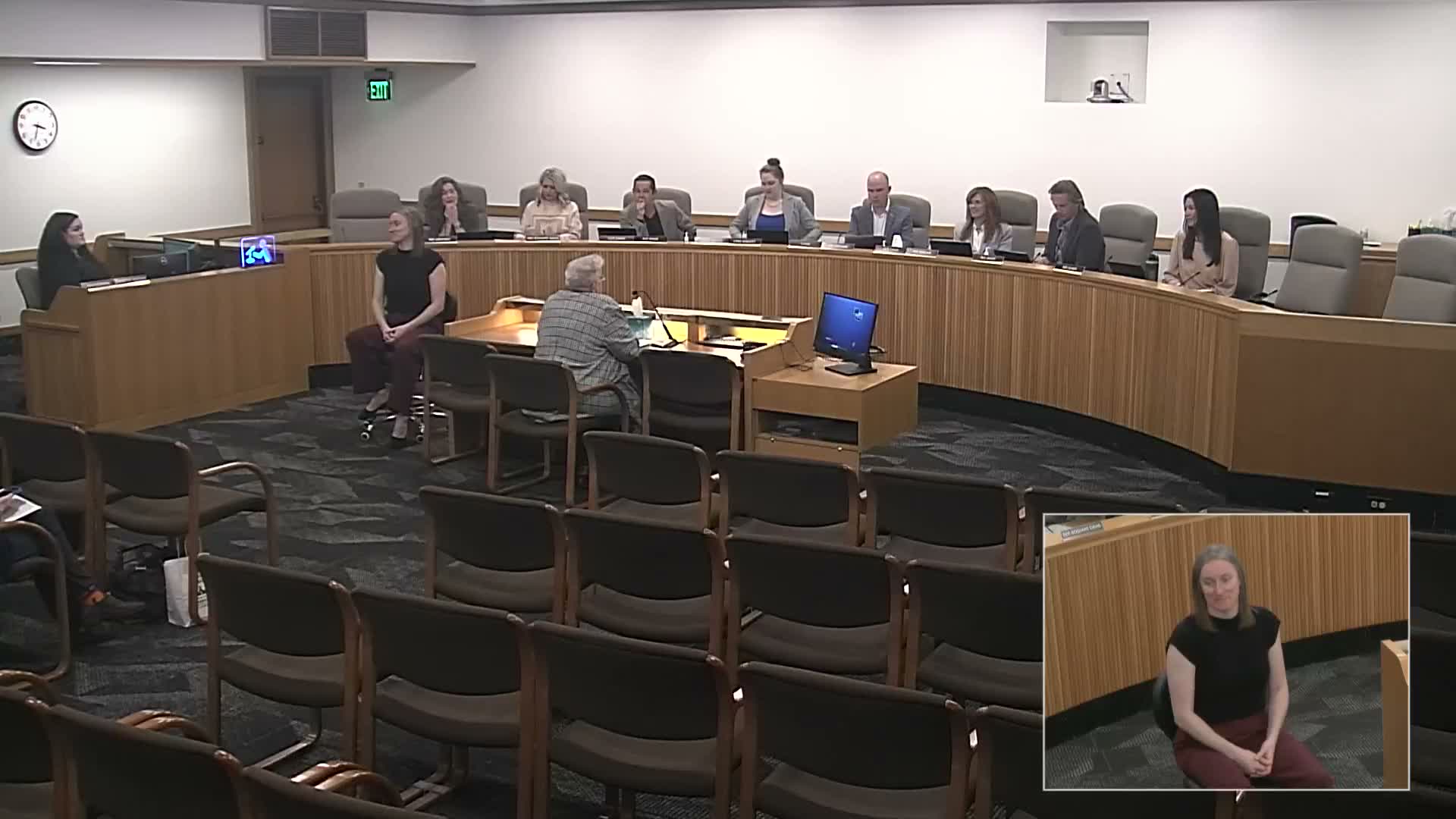
Susan Myers, executive director of the Oregon Government Ethics Commission, told the House Interim Committee on Rules on Sept. 30 that an advisory opinion requested by the League of Oregon Cities clarifies how ethics laws apply when public bodies provide food and beverages to employees or officials.
Myers said the commission analyzes food and beverage from outside sources under the gift clause, but when a public body provides the item to its employees or officials according to a policy, contract or union agreement it is treated as part of an official compensation package and therefore permitted. "If the food is out there for everyone attending, then the members are not getting it but for their position because people in the public can have a sandwich," Myers said, explaining why written policies matter. She urged public bodies to adopt clear written policies so employees and officials know what they may accept.
On serial communications, Myers described frequently asked questions issued this summer to address a range of misreadings from trainings and to offer practical guidance. The commission has been enforcing the public meetings law for two years and identified serial communications as a difficult area. Myers said the FAQs were designed to reassure officials that routine contact with the press or with constituents is permitted while clarifying that coordinated communications among a quorum directed to deliberate or decide on public business can be prohibited.
Myers suggested a short-session work group of subject-matter experts on serial communications and said the commission is drafting a proposal to the Oregon Law Commission to address broader structural issues in the public meetings law and grievance processes.
Committee members raised concerns about where the bright lines fall, whether volunteers or mayors (who may not have formal compensation packages) are covered, and whether caucuses or coordinated member-to-member inquiries could be swept into a prohibition. Myers repeatedly emphasized that the operative bright line is whether a public-body policy authorizes a benefit and that the prohibition targets communications among a quorum for the purpose of deliberation or decision.