Get Full Government Meeting Transcripts, Videos, & Alerts Forever!
Get email alerts on the CEN Program topic
No spam. Unsubscribe anytime.
Legislative hearing: Children's Extraordinary Needs waiver launched; advocates push for more capacity and data
Summary
ODDS told the Senate committee the Children's Extraordinary Needs (CEN) program launched July 1, 2024, is serving 137 children with a wait list of 2,664 as of Sept. 19, 2025; staff said rate-model and billing questions will be addressed in the November legislative report.
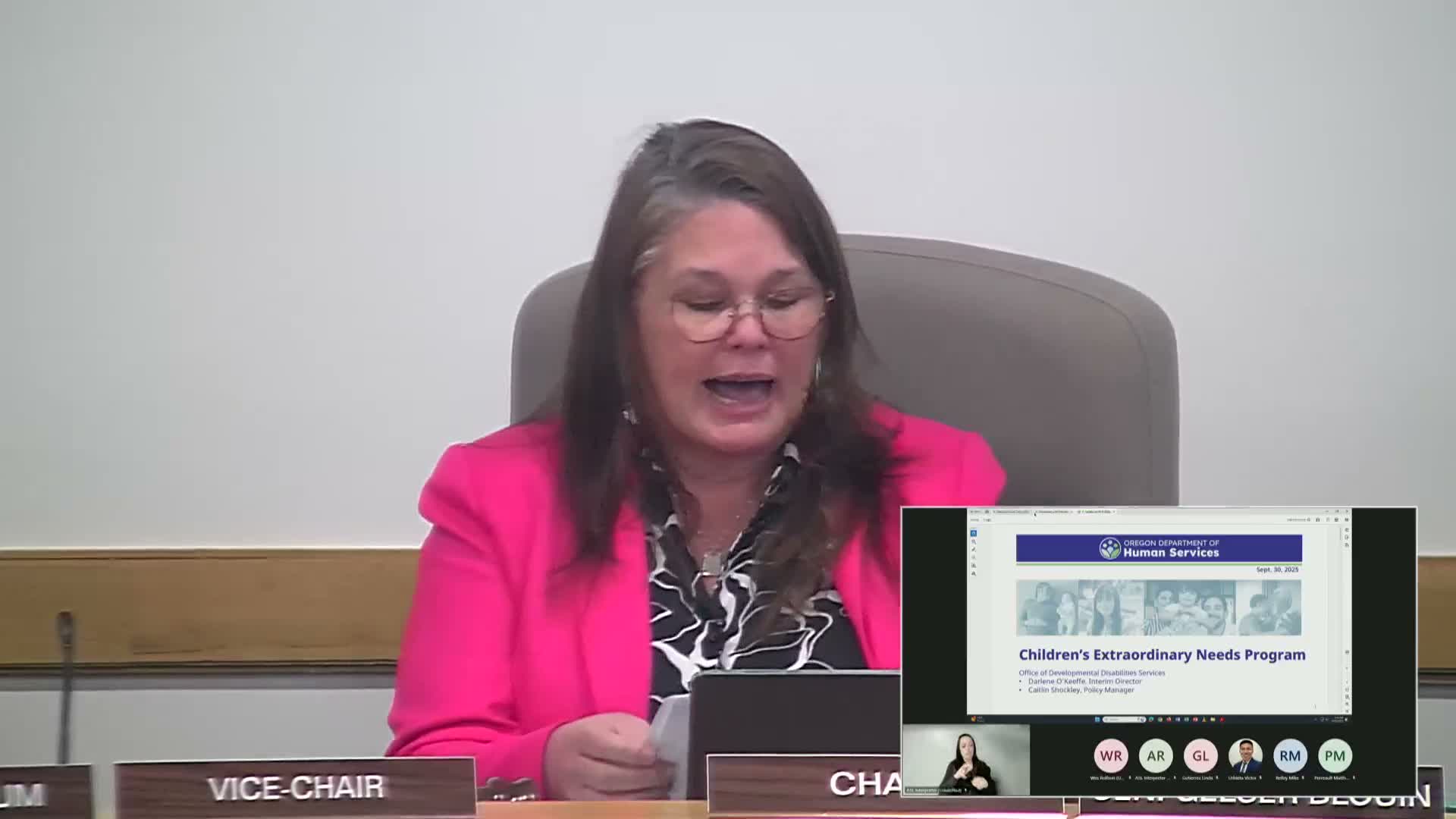
State officials gave the Senate Committee on Human Services an update on the Children's Extraordinary Needs (CEN) program created by Senate Bill 91.
Darlene O'Keefe, interim director of the Office of Developmental Disability Services, explained the program was launched July 1, 2024, to allow parents to provide Medicaid-funded attendant care for children with very high medical or behavioral needs. "The CN program was launched on 07/01/2024, providing 155 families to participate," ODDS' presentation said. Eligibility is limited to Oregon residents living at home who meet a qualifying institutional level of care and who are enrolled in Title 19 Medicaid benefit packages.
Caitlin Shockley presented enrollment and billing data: as of Sept. 19, 2025, 137 children were enrolled, 13 had exited, and the wait list showed 2,664 children (including an initial random selection pool of families offered the first 155 slots). Shockley said six rounds of offers have gone out and that monthly billing timelines and delayed claims mean cost figures continue to be refined.
Program staff briefed the committee on cost comparisons and early rate data: children enrolled in CEN have higher monthly attendant-care costs because they represent the highest-need service group; among the highest-need group ODDS calculated about a 23 percent higher cost per case for children in the program compared with similar children not enrolled. ODDS also reported an average monthly attendant-care billing from parent providers of about $2,700 and more than $4,000 from nonparent providers for enrolled children.
Committee members asked technical questions about how paying parents interacts with Medicaid rules and whether agencies with an "employer-of-record" model could be used to allow parents to be paid without contravening program rules. ODDS said agencies with choice will be available in January and that some rate-model changes would probably require legislative direction; ODDS pledged additional data in the November legislative report.
The committee did not take statutory action during the hearing but asked ODDS to return with the requested breakouts and clarifications to help assess the program's capacity and costs.