Get Full Government Meeting Transcripts, Videos, & Alerts Forever!
Get email alerts on the State Budget Forecast topic
No spam. Unsubscribe anytime.
LRO: HR 1 pushed Oregon’s 2025–27 ending balance into the red; legislature faces choices to restore it
Summary
Legislative Revenue Office analysts told the Senate Interim Committee on Finance and Revenue that HR 1’s federal tax changes are embedded in the September forecast and contributed to a projected $373 million biennial deficit, leaving Oregon to reduce spending, raise revenue or tap reserves.
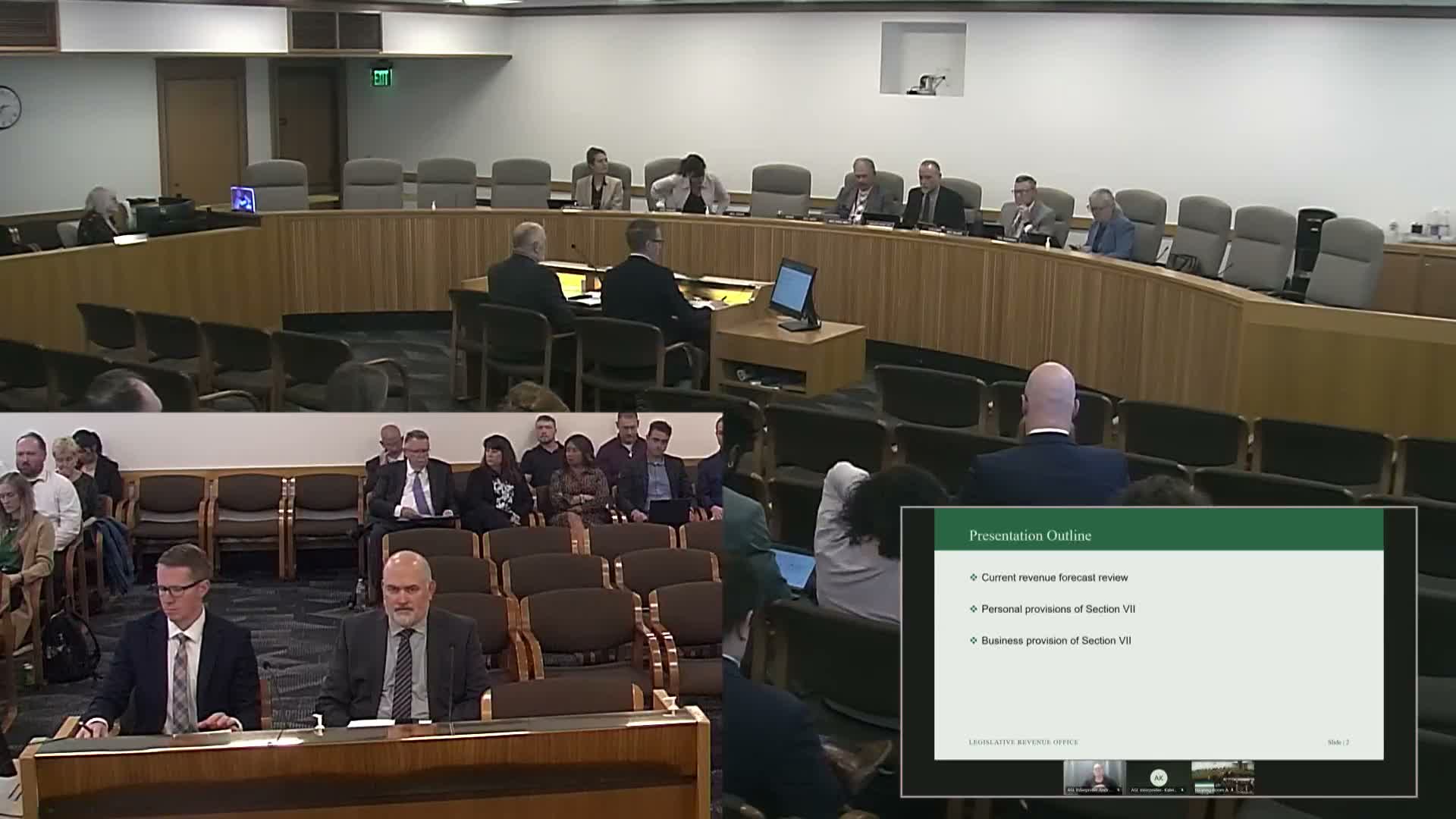
The Legislative Revenue Office presented the Senate Interim Committee on Finance and Revenue with an updated picture of Oregon’s finances after HR 1, saying the federal law changes were already reflected in the September forecast and contributed to a projected $373,000,000 shortfall in the 2025–27 biennium.
LRO staff told senators the biennium began with a roughly $2.0 billion beginning balance and more than $35.0 billion in net revenue but that, with HR 1 incorporated, the forecast now shows a negative ending fund balance of about $373 million. "With the passage of HR1 and our automatic connection to federal law, where we stand at the moment is in the red at $373,000,000," a Legislative Revenue Office presenter said during the briefing.
The office outlined three broad responses the legislature can use to restore a positive ending balance: reduce spending, increase revenue through policy changes, or access reserve funds such as the statutory rainy day fund and the constitutionally created education stability fund. LRO explained that accessing reserves requires meeting statutory and constitutional triggers — for example, two consecutive quarters of declining seasonally adjusted nonfarm payrolls and a revenue forecast at least 2% below the prior closed-session forecast.
LRO also walked the committee through the timing of Oregon’s revenue streams, noting that personal income tax withholding, estimated payments and refund patterns drive quarterly variability and that the November and February forecasts will provide additional information before any final budget choices. Committee members asked whether subsequent forecasts or lower-than-expected collections could require a special session; LRO replied the November and February forecasts will anchor decisions and that calling a special session would be a political choice.
The presentation emphasized that estimates of HR 1’s provisions were already incorporated in the most recent forecast and therefore any legislative adjustments would not be “new” revenue outside the baseline; rather, disconnection choices would change how much of those previously assumed revenues remain in Oregon’s budget. The committee did not take votes on policy changes during this informational meeting. The chair closed the session by saying he would oppose proposals to remove the tip and overtime exclusions in any disconnection package and adjourned the meeting.