Get Full Government Meeting Transcripts, Videos, & Alerts Forever!
Get email alerts on the State Revenue topic
No spam. Unsubscribe anytime.
Legislative revenue office: September forecast shows $373 million shortfall for 2025–27 biennium
Summary
The Legislative Revenue Office told the Joint Committee the September forecast shows a projected $373 million deficit for the 2025–27 biennium, driven by changes in federal tax law and weakness in employment; lawmakers must consider reducing spending, raising revenue or using reserves ahead of the 2026 short session.
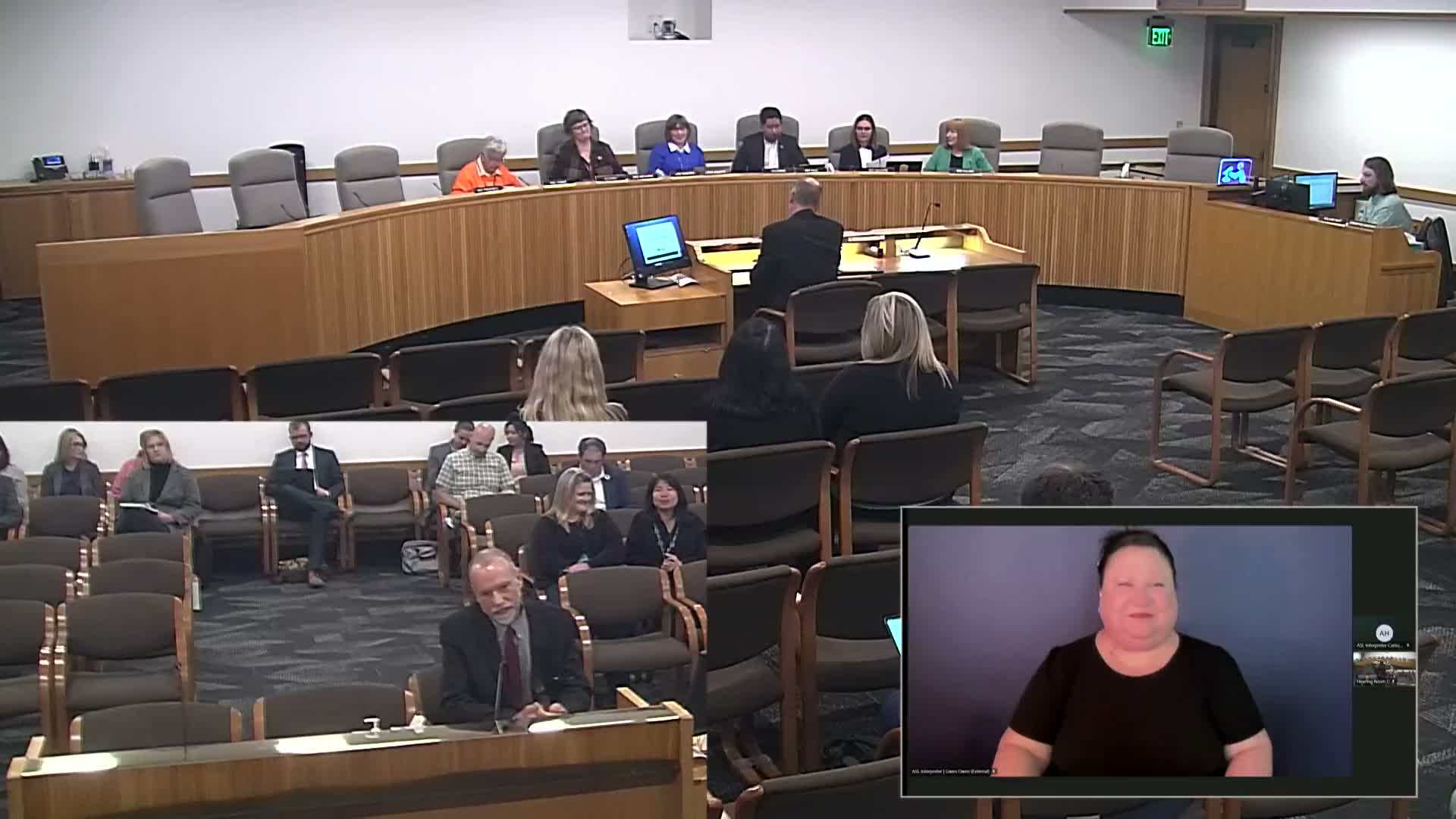
The Legislative Revenue Office briefing to the Joint Committee on Public Education Appropriation on Sept. 30 laid out a narrowed set of options for addressing an emerging shortfall in the 2025–27 biennium.
For the record, Chris Alenak of the Legislative Revenue Office provided the quarterly September forecast and emphasized Oregon’s heavy reliance on the personal income tax. He said, “So our position right now is at negative $373,000,000,” and explained that federal tax law changes reduced the revenue forecast because Oregon’s tax rules are tied to federal definitions. He added: “We are tied to those laws.”
Alenak described the composition and timing of general fund receipts: roughly 85% of general fund revenue comes from personal income taxes and about 9% from corporate taxes; withholding (wage income) supplies the largest, more stable share of receipts while nonwage income such as capital gains is more volatile. He noted May forecasts (after annual filings) are typically the most informative, and the next quarterly forecast in November will include first-quarter actuals for July–September.
On rebalancing options, Alenak summarized three buckets available to the Legislature: reduce spending, increase revenue or draw on reserve accounts (the rainy day fund and the Education Stability Fund). He said the state currently holds about $3,000,000,000 in reserve funds and explained statutory triggers for accessing the reserves, including two consecutive quarters of decline in seasonally adjusted nonfarm payrolls and a revenue forecast decline of 2% or more from the close-of-session forecast; once triggered, those conditions remain for the biennium.
Members asked for more detail on HR 1 impacts and the forecast methodology; LRO staff said the revenue committees are reviewing HR 1 provisions in detail and offered to share slide decks and post materials in OLIS. Committee members urged LRO and fiscal offices to prepare nimble scenarios for the short session, noting both policy and timing constraints if revenue or reserves are used.
Next steps: LRO will provide the slide decks to committee staff and monitor the November forecast and subsequent actuals; the committee will use these inputs as it moves toward potential rebalancing decisions in the 2026 short session.