Get Full Government Meeting Transcripts, Videos, & Alerts Forever!
Get email alerts on the Vaccine Policy topic
No spam. Unsubscribe anytime.
Oregon and West Coast partners act to preserve vaccine access after federal policy changes
Summary
Oregon Health Authority briefed the committee on federal disruptions to vaccine-policy bodies and described the West Coast Health Alliance actions and state steps (Medicaid coverage guidance, insurer bulletin, pharmacy protocols) to keep COVID‑19, flu and RSV vaccines accessible without new consumer costs.
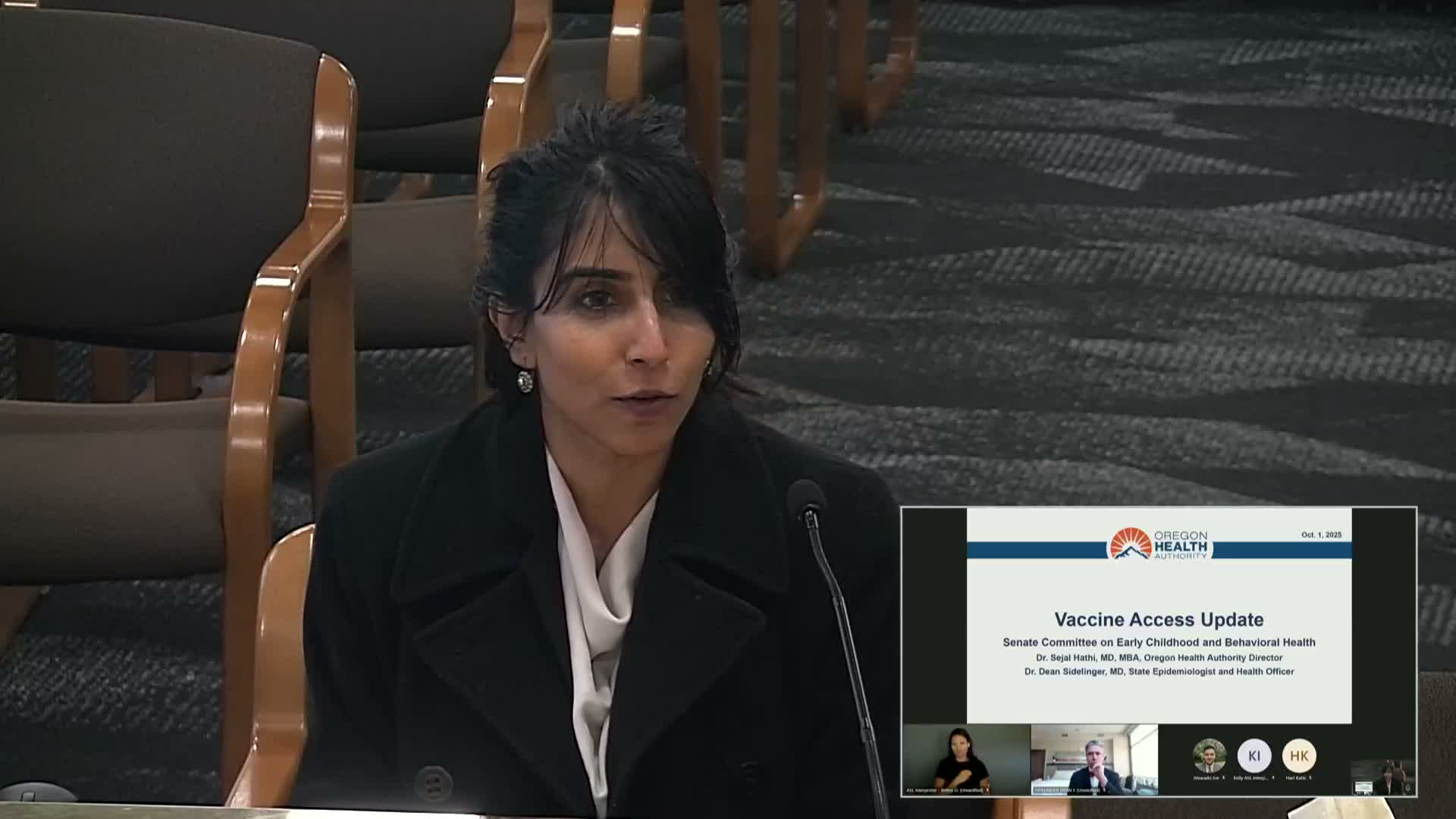
Oregon Health Authority Director Sejal Hathy and State Epidemiologist Dean Seidlinger told senators that abrupt federal changes this summer—from HHS announcements to ACIP membership upheaval and FDA shifts—created confusion about who is eligible for vaccines and how they are covered.
"When this federal administration began flouting the science and gutting the CDC, the governors of Oregon, California, Washington, and Hawaii came together to chart a different course," Hathy said, describing the West Coast Health Alliance's consensus recommendations for COVID-19, influenza and RSV vaccination that align with major medical societies.
Seidlinger summarized specific federal actions that created uncertainty: an HHS announcement limiting eligibility statements for pregnant women and children; ACIP membership and liaison terminations; and an FDA narrowing of COVID-19 product approvals to older adults and people with underlying conditions. He said the West Coast recommendations prioritized those at highest risk while keeping vaccines available to anyone who chooses protection.
To maintain access, OHA and partner agencies implemented an interagency incident-management team that, on Sept. 17, issued coordinated actions: OHA required Medicaid coverage of alliance-recommended vaccines; the Department of Consumer and Business Services issued a bulletin requiring state-regulated plans to continue covering COVID vaccines without cost sharing; the Board of Pharmacy drafted a pharmacist protocol authorizing pharmacists to prescribe and administer the recommended vaccines; and medical and nursing boards issued guidance protecting clinicians who follow the alliance recommendations.
Committee members asked about practical effects, including whether Vaccines for Children ordering is open and whether routine childhood immunizations remain available. Presenters said routine childhood vaccines remain available, but federal ordering and program steps for the new COVID formulation were delayed pending CDC action; OHA permitted VFC clinics to borrow private stock and explored Medicaid backstops to reduce financial risk for providers.
Meg Olsen, director of Oregon Families for Vaccines, urged the legislature to act to preserve vaccine access at the state level if federal guidance continues to diverge from medical organizations.
OHA said it would continue monitoring federal actions, coordinate with alliance partners, and prepare statutory fixes if federal changes create gaps.