Lifetime Citizen Portal Access — AI Briefings, Alerts & Unlimited Follows
Legislative analysts outline Joint Task Force work, warn HR 1 affects recommendations
Loading...
Summary
Legislative Policy and Research analysts updated the committee on the Joint Task Force on Regional Behavioral Health Accountability (created by HB 4,002), described its priorities and timeline, and said federal HR 1 will affect state Medicaid planning and the task force's recommendations due Dec. 15.
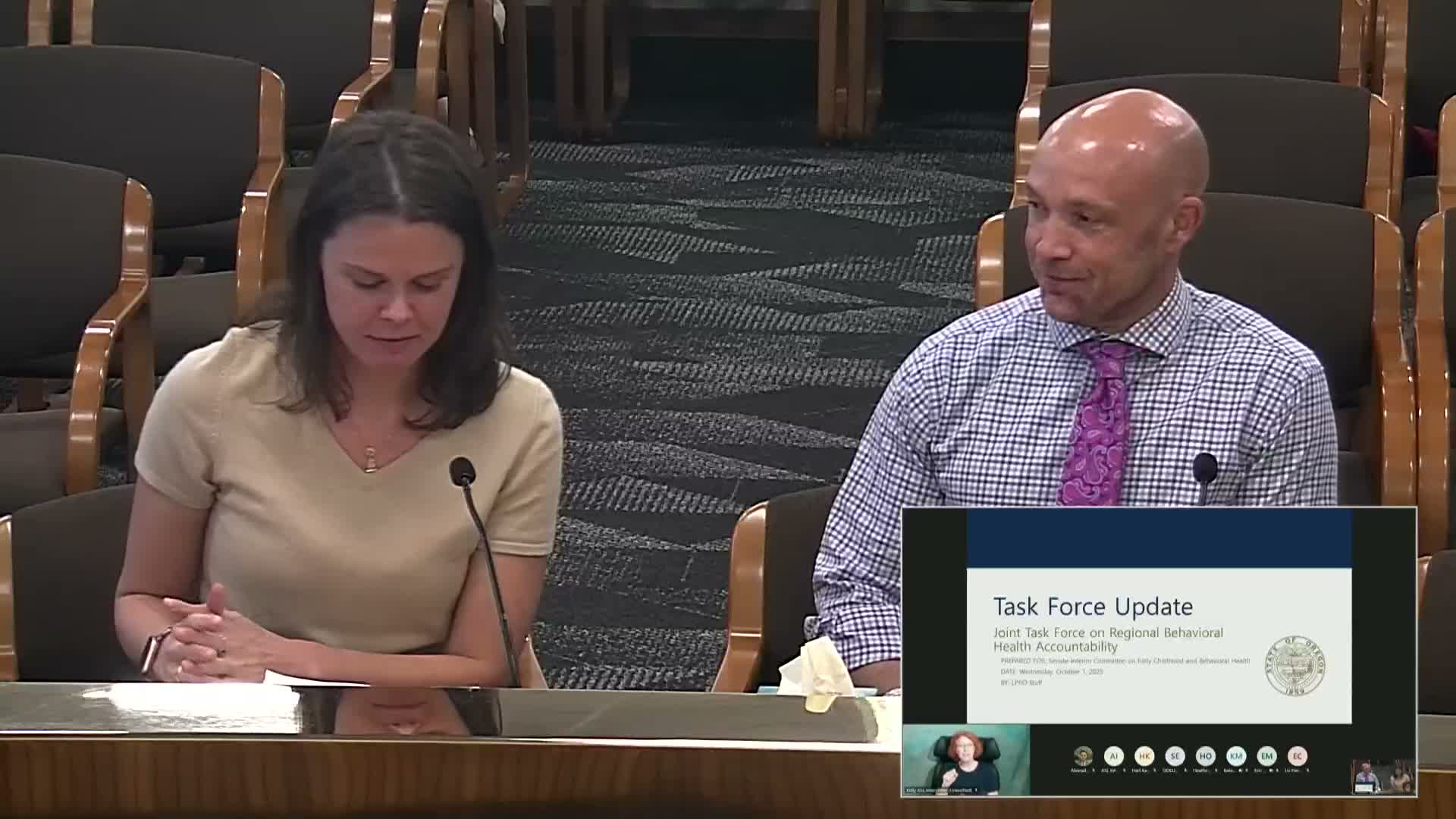
Legislative analysts Alexander Kienstang and Brian Nebert briefed the Senate committee on the Joint Task Force on Regional Behavioral Health Accountability, created by House Bill 4,002. They described the task force's membership, its needs-assessment process, and three priority areas that will frame final recommendations: achieving a statewide behavioral-health system, aligning governance and funding, and increasing system transparency.
Kienstang said the task force comprises governor appointees, agency representatives and legislative nonvoting members and has been meeting monthly; its final report is due Dec. 15. Nebert said the task force's work plan was disrupted by federal changes: the signing of "HR 1" (referred to in the briefing) introduces potential Medicaid financing and eligibility shifts that could materially affect state choices and the scope of task-force recommendations.
Analysts said the task force will continue meeting through December and may need to adjust recommendations to account for federal changes affecting Medicaid and grant structures. They encouraged the committee to review the December report when available and noted the task force intentionally limited youth-specific work because other interim assignments (ADPC) took youth-focused items.
Senators asked whether the task force would address youth-specific crisis stabilization; staff said youth had not been a primary focus to date but that prevention recommendations might still emerge.