Get Full Government Meeting Transcripts, Videos, & Alerts Forever!
Get email alerts on the Budget topic
No spam. Unsubscribe anytime.
Carmel schools present 2025–26 budget draft: proposed 0.75% levy increase and targeted capital uses
Summary
District administrators presented a draft 2025–26 budget that projects a 3.9% overall increase, proposes a 0.75% tax‑levy increase, relies on a 3.62% rise in state foundation aid and recommends targeted capital and repair reserves plus transportation and safety staffing additions.
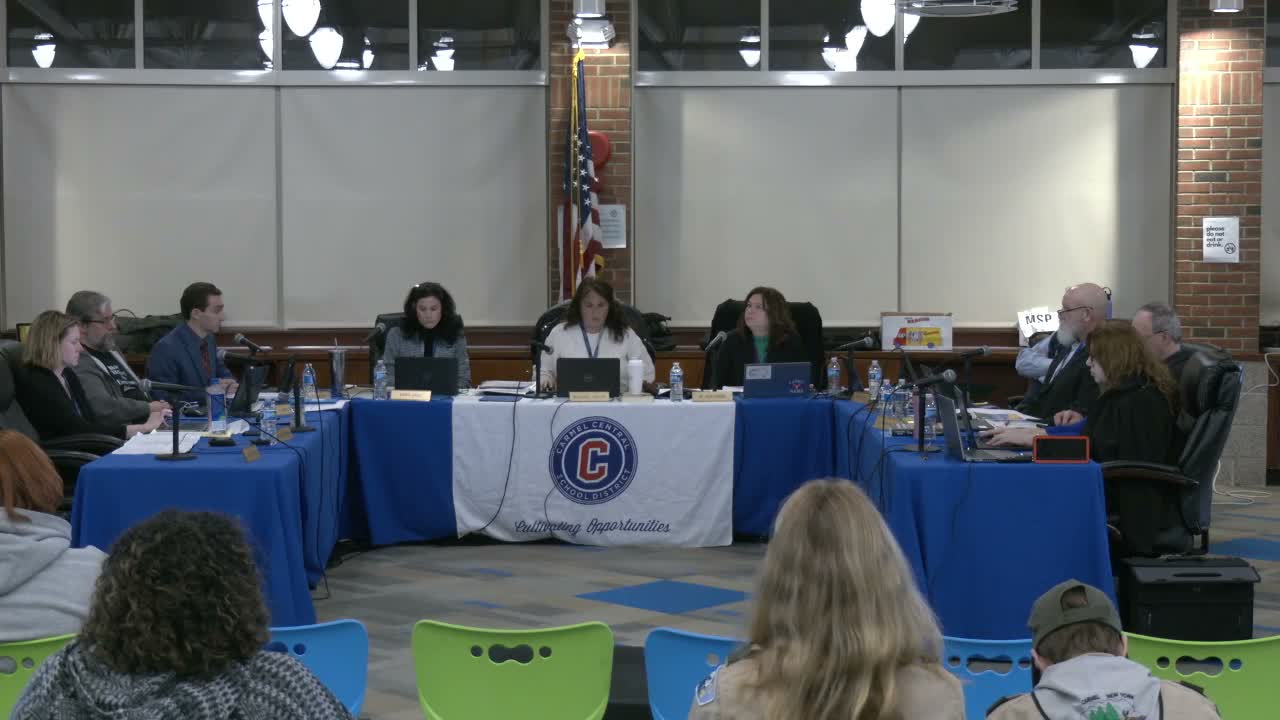
Carmel Central School District administrators presented the draft 2025–26 budget at the Feb. 25 Board of Education meeting, laying out revenue assumptions, proposed expenditures and specific capital and staffing priorities.
Assistant Superintendent for Business Ken Silver described a budget scenario that would seek a tax‑levy increase of 0.75% (three quarters of one percent) and cited an anticipated 3.62% increase in state foundation aid — approximately $1.8 million under the executive budget figures used at the time of the presentation. He said administrators were proposing a total budget increase of roughly 3.9% at that point in the process and that the administration favored raising taxes only as needed rather than taking the full tax cap available.
Among the spending and capital items highlighted were:
• A proposed repair reserve (to be established by the board) of up to $3 million to fund repairs to recently completed capital projects and newly purchased equipment eligible for reimbursement.
• Capital‑reserve funded projects totaling $850,000 for items such as stair repairs and technology refreshes; several procurements would be structured through BOCES to capture 67% state aid on eligible equipment purchases.
• Transportation plans that include leasing 12 large buses and purchasing seven small buses plus two Suburbans; the administration recommended leasing large buses because of anticipated electric‑bus adoption and fleet transition unknowns.
• Two additional school resource officers (SROs) to increase coverage at the middle and high schools and three additional lower‑level security officers (SPOs) for elementary coverage and after‑hours events.
Administration also told trustees the district is carrying significant reserves (described as around $25 million at the time of the presentation) and that unallocated revenue shown in the draft (about $770,000 in the draft) could be used to cover some vehicle purchases without increasing the tax levy beyond the 0.75% proposal. The administration said a planned land sale under contract could reduce debt‑service costs by roughly $260,000 per year through 2037 and add to reserves if completed.
Trustees raised several questions during a detailed Q&A: how reserve usage would affect long‑term financial health; how foundation‑aid figures were derived (administration used the executive budget figures from Jan. 16 and noted legislative changes could alter the total before finalization); the scope and categorization of planned SRO/SPO positions; and how health‑insurance-plan changes and different staffing scenarios could alter the bottom line. Board members requested additional scenarios and a follow‑up workshop to ensure the community can see alternative tax‑and‑reserve approaches prior to final adoption.
Administration said it would return with more detailed materials and noted that some figures (aid, staffing and the results of a proposed retirement incentive discussed later in the meeting) remain contingent.