Get Full Government Meeting Transcripts, Videos, & Alerts Forever!
Get email alerts on the Floodplain topic
No spam. Unsubscribe anytime.
Fairview Planning Commission reviews floodplain overlay code updates to align with 2020 Oregon model ordinance
Summary
Staff presented proposed floodplain overlay revisions to adopt the 2020 Oregon model Flood Hazard Management Ordinance, add PICM-related (FEMA) standards to protect habitat and endangered species, and shift review procedures to Type 1/2/3 permits; a public hearing and Measure 56 notices are likely in November.
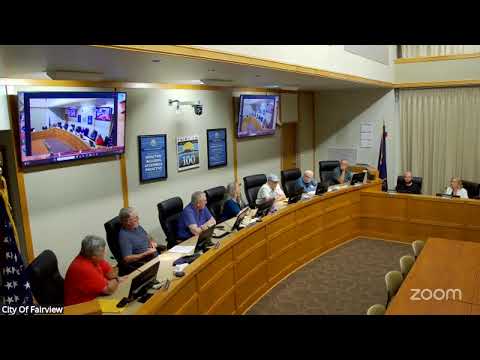
The Fairview Planning Commission on Sept. 23 reviewed a draft overhaul of the city's floodplain overlay code designed to bring the city into compliance with FEMA pre-implementation compliance measures and the state model ordinance.
Planning staff told the commission the draft would replace Fairview's 2019 ordinance with the 2020 Oregon model Flood Hazard Management Ordinance approved by FEMA and the Department of Land Conservation and Development. The change, staff said, would make future state or FEMA updates easier to incorporate because the city's ordinance would match the state model's structure and language.
"These amendments may limit the use of your property within the floodplain," an unidentified presenter told the commission, adding that the changes include new definitions, expanded administration and permit submittal requirements, and more detailed standards for construction materials and utilities.
Why it matters: staff said the draft adds three principal changes. First, adoption of the 2020 Oregon model ordinance (replacing the city's 2019 version) and consolidation of local definitions so the code aligns with the state model. Second, additional PICM-related standards intended to meet Endangered Species Act consultation requirements; the draft requires applicants to confirm one of a set of options (for example, a qualified floodplain assessment or an existing habitat assessment) to achieve no-net-loss mitigation. Third, the draft implements a tiered review system (Type 1, 2 and 3) so lower-intensity activities can be handled at staff level rather than requiring Planning Commission hearings for all floodplain development.
Staff said the draft retains Fairview-specific variance procedures that are more detailed than the model ordinance and recommended carrying local variance language forward where appropriate. The draft also designates the floodplain administrator as the city manager or the manager's designee; staff noted Fairview currently contracts with an engineering firm that provides the necessary certifications.
Commissioners pressed for technical clarifications, including how the city will measure or verify that utility equipment is "flood resistant" and how basements and crawlspaces are treated. Planning staff said building-permit conditions and the building department would verify equipment specifications at the permit stage, and that for the purpose of the floodplain chapter the lowest floor requirement includes basements for new construction, conversions and substantial improvements.
Process and next steps: staff said they will assemble a Measure 56 mailing list of affected property owners and aim to hold a public hearing in November. The staff presentation noted notices must be sent 20'40 days before the hearing and that technical follow-up with the city's floodplain administrator will be used to answer outstanding engineering questions.
The commission did not take final action; staff will return with revised materials and a public-notice plan ahead of the anticipated November hearing.