Get Full Government Meeting Transcripts, Videos, & Alerts Forever!
Get email alerts on the Rezoning topic
No spam. Unsubscribe anytime.
Moore County denies rezoning request for 3.59 acres on US 15‑501 after runoff, traffic concerns
Summary
After hours of public comment citing erosion, truck‑turning hazards and ‘commercial creep,’ the Moore County Board of Commissioners voted to find a requested rezoning inconsistent with the land‑use plan and denied a conventional rezoning for a 3.59‑acre parcel at 6620 US 15‑501.
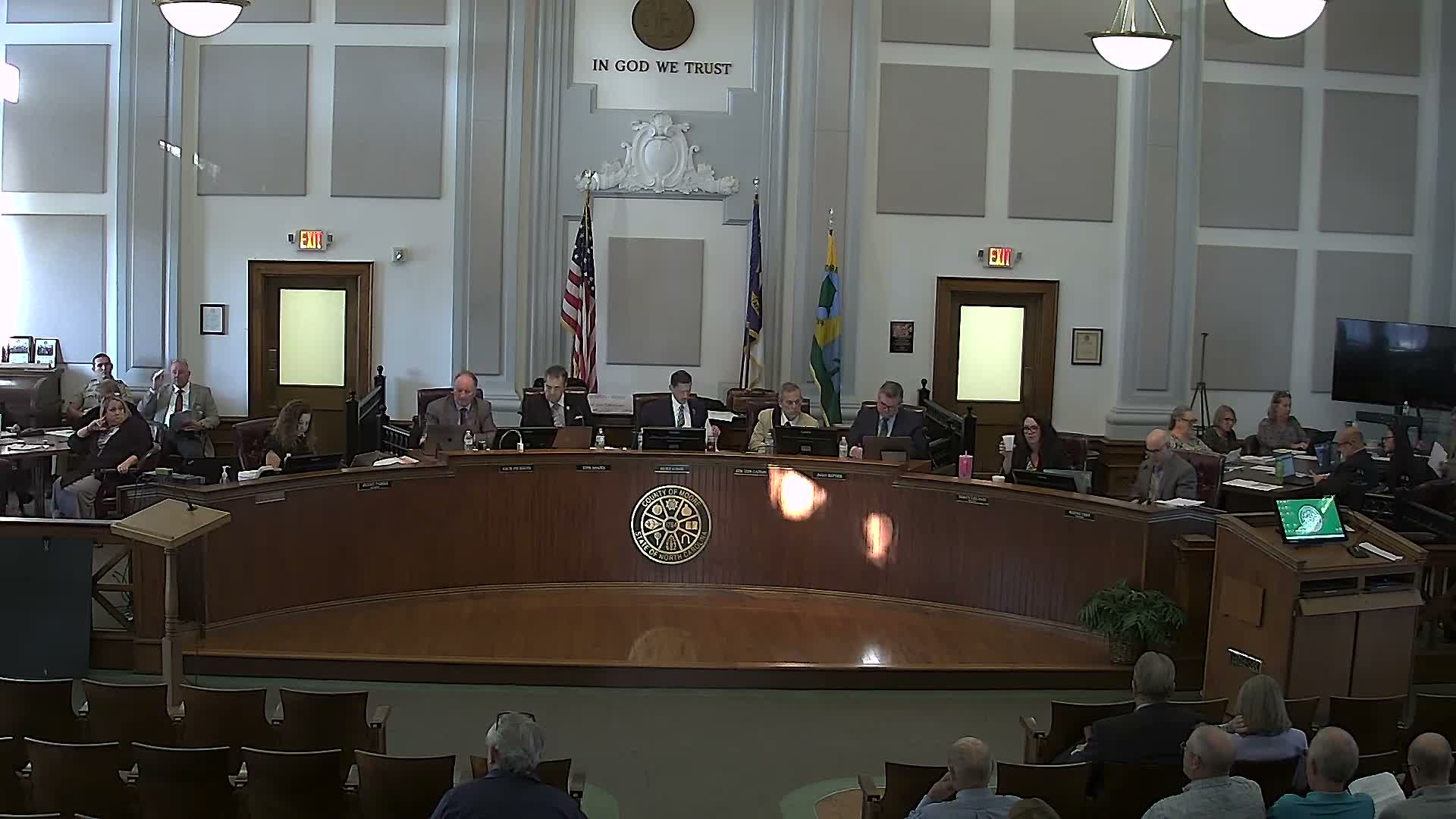
The Moore County Board of Commissioners on Sept. 16 denied a conventional rezoning request that would have changed roughly 3.59 acres at 6620 US 15‑501 from Rural Agricultural/RA‑40 to Highway Commercial (B‑2), following a lengthy public hearing in which neighbors raised traffic‑safety and erosion concerns.
Planning Director Ruth Peterson told the board the request, filed by Araya Associates, would allow the applicant to combine the 3.59 acres with an adjacent commercial parcel to create space for storage of stone pallets, plant backstock and staff parking. Peterson noted the site sits within the Cape Fear/Little River watershed (a WS‑3P, high‑quality watershed) and warned that development exceeding one acre would require a state post‑construction stormwater permit; she also cited applicable Unified Development Ordinance provisions on nonresidential screening and outdoor storage.
Residents and planning‑board members urged the commissioners to reject the rezoning. "If we allow this to be rezoned, it opens the door for other industries under the B‑2 zoning to apply, furthering the danger and the traffic issues," said Tyler Bridal, a West End resident and chairman of the Planning Board, citing multiple tractor‑trailer crashes at the site. Tom Bridal described recent heavy‑rain runoff that he said pushed stone, silt and mud into roadside ditches and a nearby creek and warned rezoning would likely worsen erosion.
The applicant, Laura May, who owns the existing garden center at the adjacent parcel, said the rezoning would allow her family to move outdoor storage to a rear yard so the front of the business remains compliant and visually attractive. May said she contacted the North Carolina Department of Transportation about blocked pipes under the driveway and that DOT told her county crews handle the repair; she called for resolution of the drainage issue.
Multiple speakers provided historical context on the county’s 1999 land‑use plan and earlier zoning choices. Former commissioner and planning‑board chair Robert Timothy Lee urged commissioners to guard against what he called "commercial creep" into rural areas and to honor the vision established by the earlier land‑use process.
After questions from commissioners about compliance, visibility from US‑15‑501 and which uses would be allowed in B‑2 if the property later changed hands, a commissioner moved that the board find the rezoning request inconsistent with the adopted land‑use plan and authorized the chairman to execute the required North Carolina General Statute 160D‑605 consistency statement. The board then voted to deny the conventional rezoning for parcel ID 2020074 (deed book 6273, page 545). The chair announced the motion carried.
What happens next: The board’s denial leaves the parcel zoned as RA‑40. The planning department and applicant may pursue other remedies or permit options, but any future rezoning would require a new application and another public hearing.