Get Full Government Meeting Transcripts, Videos, & Alerts Forever!
Get email alerts on the Budget Adoption topic
No spam. Unsubscribe anytime.
Moore County adopts balanced fiscal 2026 budget, restores 6% allocation to Sandhills Community College and approves 3.5% employee COLA
Summary
The Moore County Board of Commissioners voted to adopt the fiscal year 2026 budget effective July 1, 2025, restoring Sandhills Community Collegefunding to 6%, increasing the rural fire protection district fund for Eagle Springs Fire Department, approving ARPA-related capital ordinance changes, and authorizing a 3.5% cost-of-living adjustment for county employees.
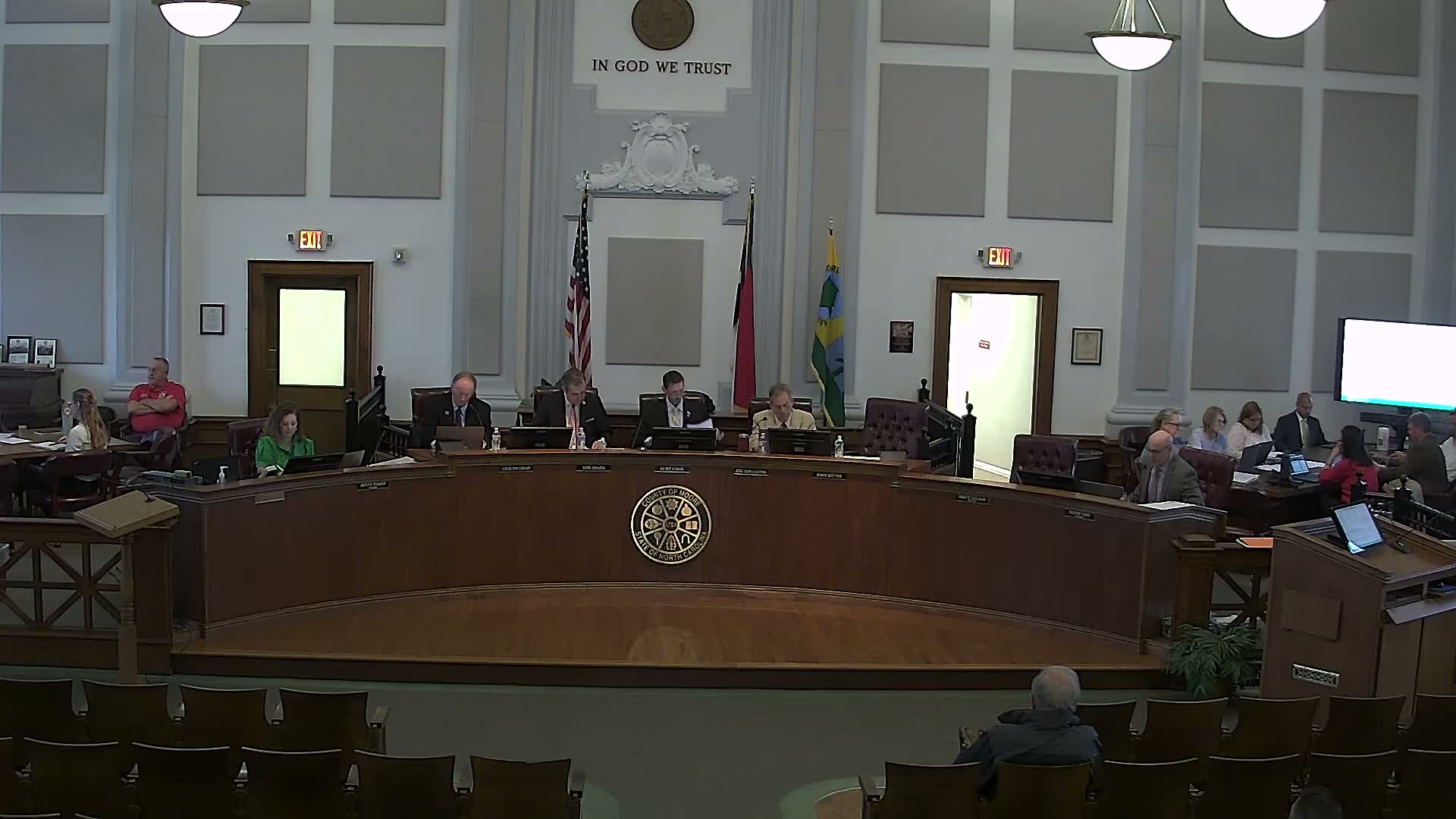
The Moore County Board of Commissioners voted June 5 to adopt a balanced fiscal year 2026 budget that restores a 6% funding allocation to Sandhills Community College, increases the rural fire protection district fund for Eagle Springs Fire Department, and includes a 3.5% cost-of-living adjustment for county employees, all effective July 1, 2025.
The action concluded a budget process that the board began with a recommended presentation May 20 and a required public hearing June 3. Speaker 2 told the board there was one change from the hearing: an increase to Fund 216, the rural fire protection district fund, to $939,776 tied to an approved Eagle Springs Fire Department project. "The budget is balanced, and would recommend the board consider adopting the budget," Speaker 2 said.
Commissioner (Speaker 3), who moved the ordinance, outlined how the countyproperty tax dollars are allocated to education and public safety. He said public schools account for "17.5¢ or 59.3%" of property tax revenue and that Sandhills Community College receives "2 and a half cent or 8.5%". He added, "If you add all that up, 30¢ or 101% of our property tax revenue goes to education." The board approved the budget by voice vote.
As part of the package, the board approved a resolution to return Sandhills Community Collegeto a 6% share under the county's long-standing funding formula. Speaker 2 told commissioners the task force concluded this year was appropriate to revisit the college allocation and bring it back to the original 6% level incorporated into the adopted budget.
The board also approved changes tied to American Rescue Plan Act (ARPA) funds. Finance staff discussed revisions to the capital project ordinance for Fund 437, the county's ARPA standard allowance account. Caroline Chong, introduced by the chair as the county's finance director, and a subsequent speaker said the county had "earned $300,000" in the pandemic recovery capital project and proposed transferring $200,000 to the general fund and $100,000 to property management vehicles; the board approved the capital project ordinance revision.
County personnel and pay issues were also resolved. Dawn Gilbert, the assistant county manager, presented personnel policy revisions that remove the pandemic leave benefit (section 18), effective June 30, and clarify the employee assistance program (including an age-18 eligibility statement). The board adopted the revised personnel policy and approved a separate motion to dissolve the Human Resources Appeals Committee effective July 1, 2025.
Commissioners approved updates to the county pay and classification plan that incorporate a 3.5% cost-of-living adjustment for all county employees, plus a few title and grade adjustments. Gilbert also asked the board to approve the North Carolina Office of State Human Resources salary plan reporting form for FY 2025-26, which the board authorized for submission.
Separately, the board revised its expense and reimbursement procedure for commissioners: the county will roll the current salary and travel allowance components together (without changing total dollar amounts) and allow board members to submit mileage reimbursement at the current IRS rate; the mileage portion would not be taxable under the new approach.
All motions described above were adopted by voice votes during the meeting. Most comments at the dais were expressions of appreciation for county staff and the finance team. The chair and commissioners closed the meeting after a brief acknowledgment of attendees.