Get Full Government Meeting Transcripts, Videos, & Alerts Forever!
Get email alerts on the Behavioral Health topic
No spam. Unsubscribe anytime.
Trillium Health Resources reports local behavioral‑health activity; commissioners press for clearer local crisis coverage and staffing details
Summary
Trillium’s southern regional vice president presented the annual report showing 1,582 Moore County tailored‑plan members served July–December with service claims of roughly $14.5 million; commissioners and residents pressed Trillium on after‑hours crisis access, building underuse, staff presence in county and mobile crisis response times.
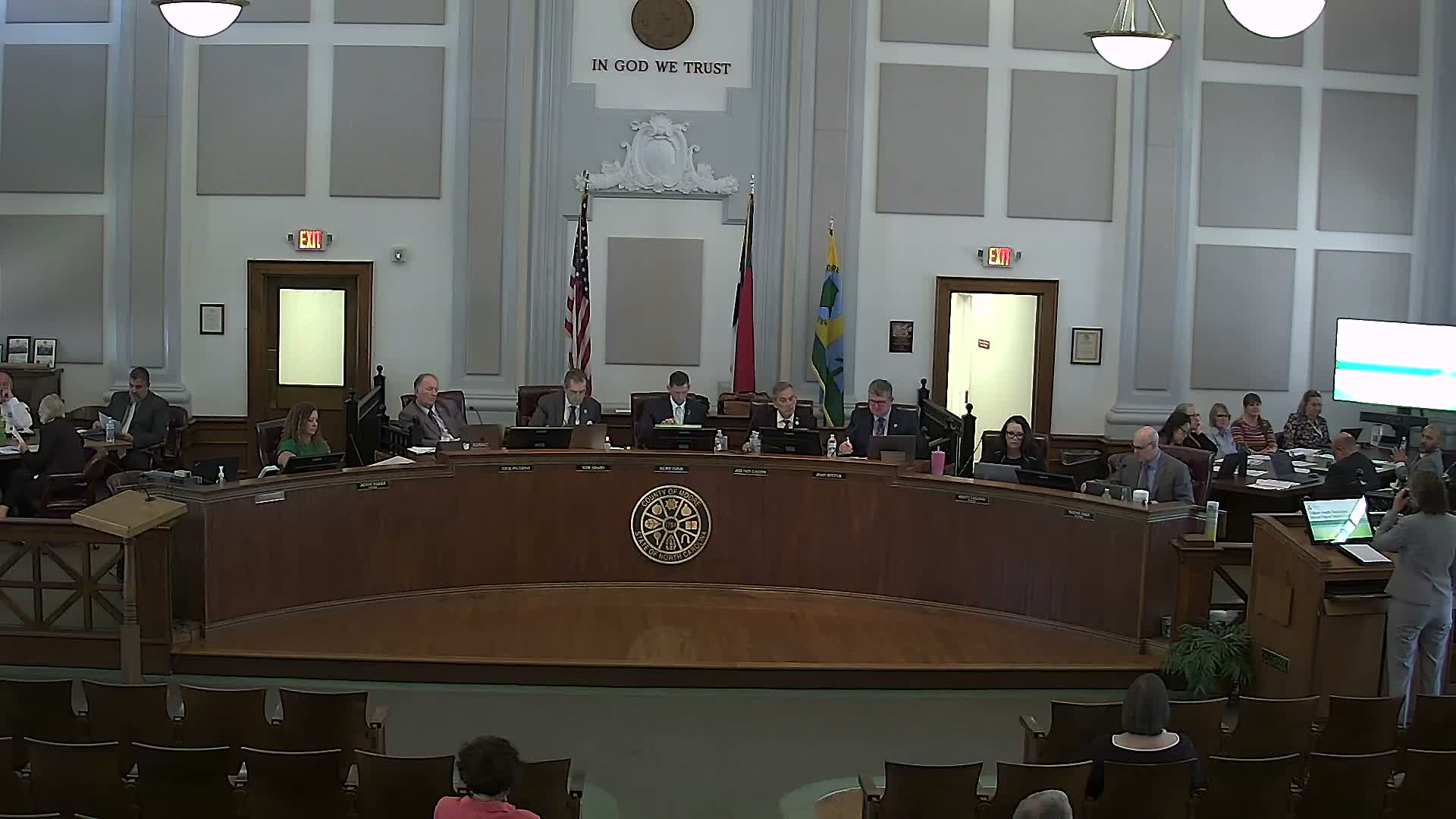
Cecilia Pierce, regional vice president for Trillium Health Resources, briefed the Moore County Board of Commissioners on Trillium’s annual results and local activity in the tailored behavioral‑health plan. Pierce said Trillium administers the tailored plan for Moore County and 45 other counties and provides behavioral‑health and other services for members who are uninsured or underinsured.
Pierce said that, in the six months after the tailored plan’s July 1 launch, Trillium served 1,582 members in Moore County: 998 received mental‑health services, 403 received substance‑use services and 372 received intellectual and developmental disabilities services (with overlap among groups). She reported the value of services provided in that period was “a little over $14,500,000.” Trillium also described governance and regional advisory structures and outlined county‑level partnerships for training and non‑billable services.
Commissioners and members of the public raised concerns about crisis coverage and local presence. One commissioner and several residents said they had difficulty contacting providers after hours and noted perceptions that local Trillium buildings were underutilized. Pierce said mobile crisis services are provided by a contracted provider (Therapeutic Alternatives) and that Trillium had recently contracted a second vendor (Southeastern Integrated Care) to increase redundancy and improve response times. She acknowledged response time has been a problem and stated the required response time is “within 2 hours,” while adding Trillium is working to reduce that interval.
When pressed about staff based in Moore County and building usage, Pierce said roughly 50–60 Trillium employees are based in the county but many staff work regionally or remotely. She also said vehicles tied to an underused site were put up for sale and that the organization is exploring reusing smaller facilities as local service sites.
Public commenters questioned whether the high level of administrative or executive compensation was justified given perceived local under‑utilization of facilities. Pierce and board members said Trillium contracts with approximately 140 local providers for physical and behavioral services and that many services are delivered in community settings rather than centralized offices.
What happens next: Trillium said it will follow up with commissioners on requests for more granular staffing and service‑overlap data (how many individuals received services in multiple service categories) and on after‑hours provider availability.