Get Full Government Meeting Transcripts, Videos, & Alerts Forever!
Get email alerts on the Youth Programs topic
No spam. Unsubscribe anytime.
YouthLED summer interns plant Patterson Park food forest; staff report grant-funded training and certificates
Summary
Natural-resources staff reported that an 8-week, grant-funded YouthLED program engaged eight students from Rutherford County in habitat work, installed phase one of a Patterson Park food forest (about 13 trees/shrubs), and logged 672 field work and 624 classroom hours.
Natural-resources staff updated the commission on YouthLED (Leadership Environment Development), an eight-week summer program for local high-school–age students funded primarily by the Tennessee Department of Agriculture Urban and Community Forestry Grant (part of the Inflation Reduction Act).
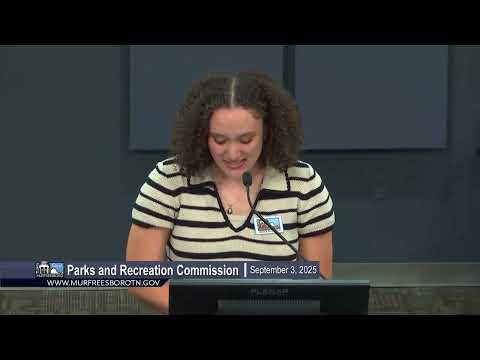
Caitlin, speaking for natural resources, said the program combined hands-on habitat management and classroom instruction designed to develop workforce skills in sustainability and native-plant landscaping. She said partners included Oregon State University’s Professional and Continuing Education Department, New Directions in the American Landscape, and Beyond Organic Design.
As part of the program the cohort completed a phase-1 installation of a community food forest at the rear entrance of Patterson Park Community Center. Caitlin said the students planted about 13 trees and shrubs including blueberries, chokeberries, serviceberries and elderberries and described the food forest as “open to the community” for people to harvest.
Caitlin listed outcomes: each student received a stipend, a certificate in fundamentals of permaculture and food-forest design from Oregon State University, and the group logged what she reported as “672 field work hours and 624 classroom hours” across the cohort. The program also included invasive-species removal, litter clean-up at trailheads and contributions to the native-plant nursery.
Applications for YouthLED required two short essays (about 250 words each); Caitlin said eight students participated this year and the program’s practical capacity is about 10. Staff said they will broaden neighbor involvement in future design work and open continuing-education classes on trees and food-forest practices to interested community members this fall and winter.
Commissioners praised the program’s hands-on experience and community partnerships; staff said they plan to share student testimony via City TV and to bring a final written or media report to the commission when available.