Get Full Government Meeting Transcripts, Videos, & Alerts Forever!
Get email alerts on the Property Maintenance topic
No spam. Unsubscribe anytime.
Taunton ordinance committee debates new vacant‑property rules; tables vote for more work
Summary
The ordinance committee reviewed a redlined property‑maintenance ordinance to add commercial properties, require 30‑day registration for vacant/foreclosed sites, and escalate annual fees; committee members asked for stronger enforcement language, penalties for failure to register, and more attention to notification and commercial fee tiers before advancing.
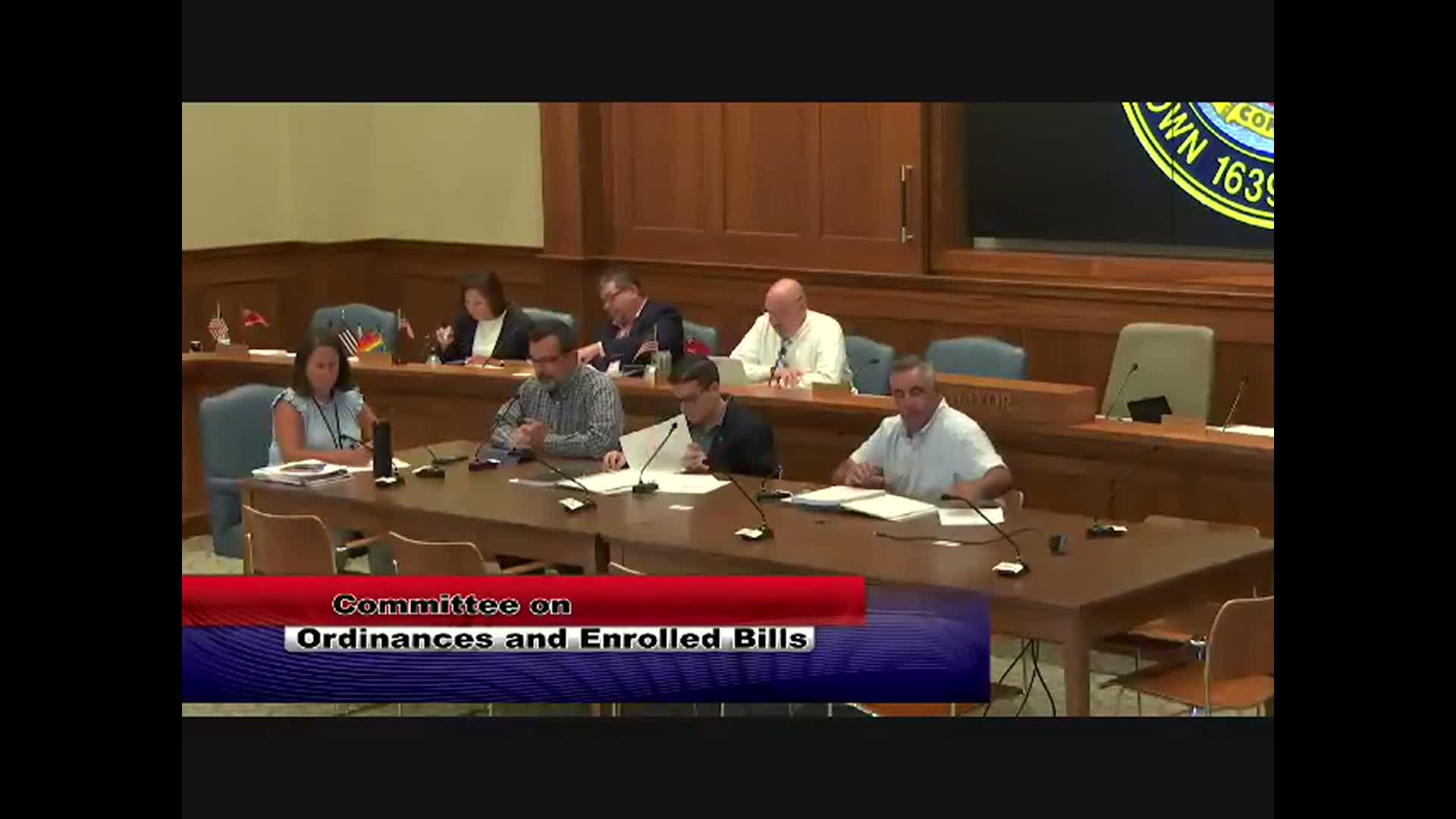
The Taunton Committee on Ordinances and Enrolled Bills spent an extended session on Aug. 26 examining proposed revisions to the city’s property‑maintenance ordinance, focusing on vacant and foreclosed properties and a new registration and fee structure.
Assistant City Solicitor Lisa Bond told the committee that the draft extends the ordinance to commercial properties, defines terms such as “abandoned” and “vacant,” and would "require that properties be registered within 30 days" of becoming vacant, with an annual fee that increases each year "to incentivize people to take care of their own property" (Lisa Bond, assistant city solicitor). Bond said the building commissioner and the fire department would share enforcement responsibilities.
Councilors pressed staff on enforcement mechanics, collection, notification of owners and banks, and whether penalties should be increased for those who never register. Councilor Coit and others asked whether residential vacancies that are maintained (for example, seasonal absences) would be exempt; Bond clarified residential treatment differs from commercial. Councilors suggested options including an initial registration fee, a daily fine enforced through 40U tickets up to $300 per day, or a stepped escalating annual fee with the possibility of liens for prolonged noncompliance. Patrick Dela Russo, the city CFO, flagged the potential for using lien authority and urged careful drafting to avoid unduly burdening owners while preventing gaming of the system.
Members also discussed whether commercial properties should face a higher fee schedule or be based on a percentage of assessed value; the proposal from the blight task force had suggested mirroring the residential structure for now, with a follow‑up review and a potential commercial‑rate recommendation in six weeks.
After discussion the committee voted to table the ordinance and asked the law department and the task force to refine enforcement language, confirm notification procedures and liabilities, and return with recommended fee language and options for commercial property treatment.
The committee’s request emphasizes additional drafting and stakeholder outreach before a formal vote; the committee also asked for explicit language on penalties for failure to register and methods for collection.