Get Full Government Meeting Transcripts, Videos, & Alerts Forever!
Get email alerts on the Facility Use Policy topic
No spam. Unsubscribe anytime.
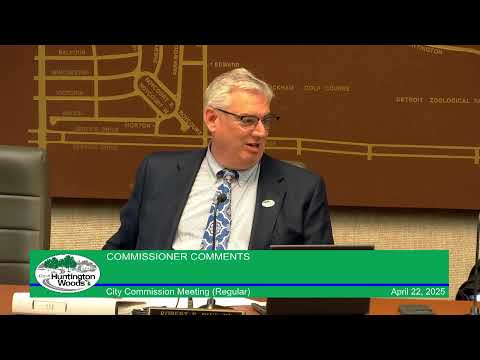
Huntington Woods commission rejects 60-day moratorium on room rentals after packed public comment
Summary
After an hourslong public-comment period largely defending the Huntington Woods Peace Group, the city commission voted down a motion to impose a 60-day moratorium on room and park rentals and scheduled a study session to refine the facility use policy.
Huntington Woods ' The Huntington Woods City Commission voted down a motion to impose a 60-day temporary moratorium on room and park rentals following an extended public-comment period in which many residents defended the Huntington Woods Peace Group and urged the commission to protect free-speech rights. The motion to approve the moratorium was denied by voice vote after commissioners removed the item from the table and reopened discussion.
The debate began with the mayor explaining that the room-and-park rental policy draft contained "a lot of issues" and that the commission would direct the city attorney at a high-level study session next week to simplify the document. Dozens of residents then addressed the commission. Linda Ashley, chair of the Huntington Woods Peace Group, told commissioners the 22-year-old civic group is an "official city group" and said labeling it a hate group is "truly distressing"; she urged the commission to "create a fair policy that allows groups of different interests to rent space for meetings in Huntington Woods." Mary Murphy, reading a statement for the group, apologized for an image that included an inverted red triangle and said, "We had no idea that this symbol was tied to Hamas," adding the image had been removed and the group would review communications practices.
Supporters and critics both urged the commission to proceed carefully. Tom Schramm, who said he had served as director of public education for the ACLU of Michigan, warned the commission about First Amendment risks if a moratorium were imposed and said he would consult the ACLU if restrictions remained. Other speakers recounted personal experiences of feeling targeted on neighborhood social media or at public events and urged dialogue rather than exclusion.
Commissioners emphasized the policy-review process would be public and that next Tuesday's study session would provide limited direction to the city attorney. Several commissioners noted the current parks-and-recreation rental policy already contains seasonal limits (May'August) and clarified that the prior motion to table the moratorium left the issue in a suspended state rather than in force. After a brief commission exchange and no on-the-record public support for immediate suspension, the moratorium motion was denied.
The commission closed public participation and scheduled a short, high-level study session for next Tuesday at 6:06 p.m. to give staff and the city attorney direction on simplifying and clarifying the draft facility use policy. The meeting record shows the item was removed from the table, debated, and then the motion to impose the 60-day moratorium was denied.