Get Full Government Meeting Transcripts, Videos, & Alerts Forever!
Get email alerts on the Land Use Home Based Business topic
No spam. Unsubscribe anytime.
City of The Colony updates home-based business rules to align with recent state change
Summary
The council approved an ordinance replacing the city's 'home occupation' definition with a 'no-impact home-based business' category and added home-based business regulations to align with state changes referenced in the meeting. Staff said the new state standard limits municipal regulation of 'no-impact' operations.
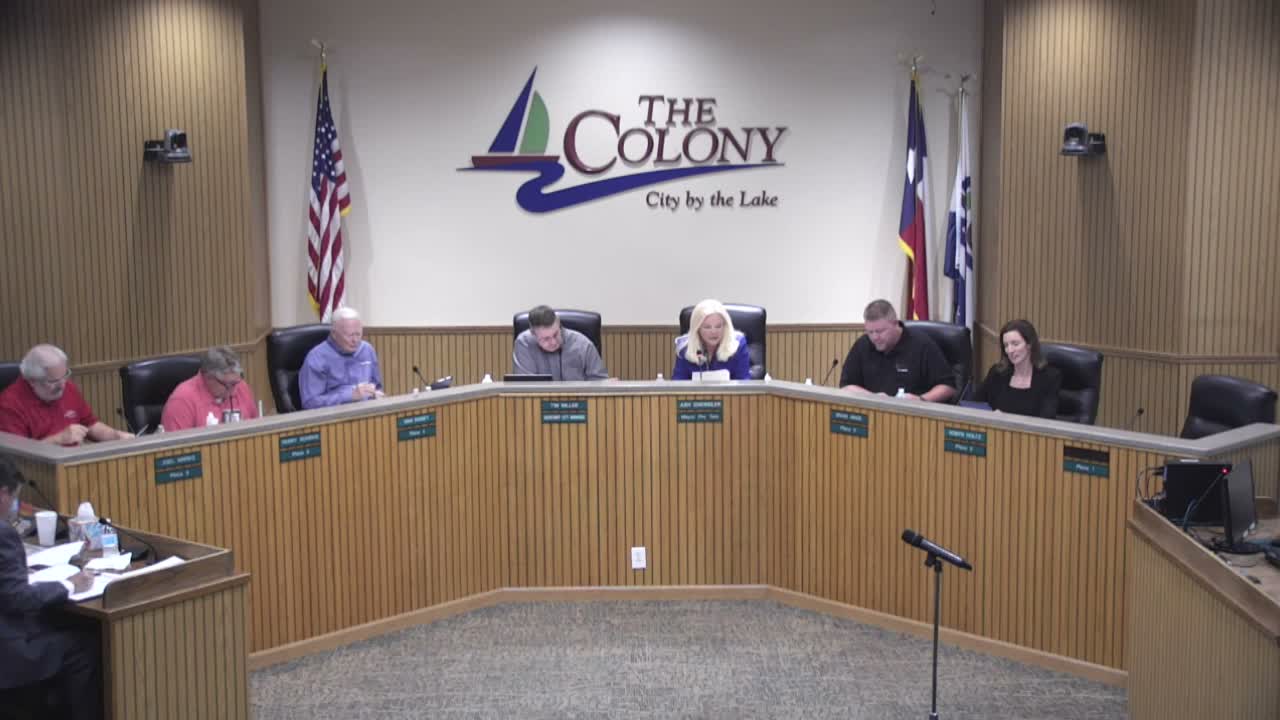
The City of The Colony on Sept. 2 approved an ordinance that replaces the local 'home occupation' classification with a new 'no-impact home-based business' definition and adds related home-based business regulations.
City planning staff said the ordinance implements changes the city described in the meeting as resulting from a recent state bill (referred to in the council discussion as "h b 24 64"). Under the new no-impact definition presented by staff, such a business must (1) keep the combined total of employees, clients and patrons on the property within the city's adopted occupancy limit, (2) not generate on-street parking or a substantial increase in local traffic, and (3) conduct activities so they are not visible from the street. The staff presentation also noted the city retains authority to enforce building, fire, health, sanitation, noise and hazardous-waste rules and may still prohibit businesses that sell alcohol, illegal drugs or operate as what the staff described as an "adult-oriented business." The city said nothing in the local ordinance overrides private covenants enforced by homeowners associations.
During the public hearing there were no speakers. Planning staff described an administrative checklist that will be used when residents request to operate a home-based business; if an application fails the no-impact test, the operator must obtain an administrative use permit and may be subject to the city's prior home-based-business standards. Councilmember Rainey moved to approve the ordinance; the council voted and the motion passed.
The council did not record a roll-call vote in the discussion transcript; council commentary indicated unanimous approval. The ordinance discussion and passage occurred as part of the regular agenda items addressing multiple ordinance and fee updates tied to state legislative changes.
Next steps: staff said they will finalize the checklist with the city attorney's office and incorporate the new definitions into the zoning code and administrative procedures.