Get Full Government Meeting Transcripts, Videos, & Alerts Forever!
Get email alerts on the Special Education topic
No spam. Unsubscribe anytime.
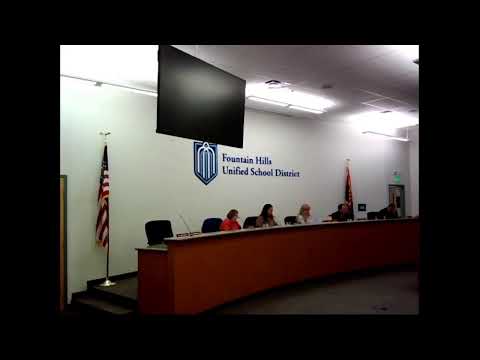
Fountain Hills board hears special-education overview as staff flag limits in state and federal funding
Summary
At a board meeting, Ms. Gleason outlined special-education eligibility, IEP-team roles and funding sources, saying the district serves about 178 special-education students (~17%) and highlighting gaps in federal and state support. Board members pressed staff on case management, Medicaid billing and high-cost reimbursements.
Ms. Gleason, the district’s special-education presenter, gave a 10-minute overview of the special-education process and how services are funded.
She described the referral and evaluation process, the composition and role of an IEP team and the district’s approach to least restrictive environment placements. "When a student is referred for special education ... we look at pre interventions," Ms. Gleason said, adding that parents and school staff can initiate referrals and that evaluations require parental consent.
Ms. Gleason reported the district currently has "178 students that receive special education services in our district, so it's about 17% of our total population." She explained funding mechanics: some disability categories carry modest additional weights (she said roughly $2,000 extra per pupil in common categories) while higher-needs categories receive significantly larger per-student funding. She also noted the district shows up in state accountability measures that provide bonus points when schools are at or above state averages for identification.
On revenue sources, Ms. Gleason outlined state and federal channels including ADM-based weights, federal IDEA grants (the 611 basic grant and 619 preschool grant), and Medicaid reimbursement for billable related services such as speech, OT, PT, nursing and special-education transportation. "Last year, we collected, we were reimbursed a $108,000," she said of Medicaid reimbursements and added the district has already received about $18,000 this year while projecting more.
She described the high-cost reimbursement process for students placed outside the district and said the district had previously received sizable awards (she noted an earlier $76,000 award in a prior year). Ms. Gleason said the program’s rules have tightened — the state now allows one submission per quarter and funds frequently run out: "the state ran out of money," she said, explaining that quarters can close before later submissions are paid.
Board members sought specifics on who serves as case manager and whether outside providers or parents’ private therapists can participate in IEP meetings. Ms. Gleason said special-education teachers act as case managers (preschool cases overseen by the preschool special-education teacher; middle- and elementary-level caseloads are divided to balance workload), and that parents may bring outside providers to IEP meetings. She also clarified that the district tracks service levels in PowerSchool to support funding claims and compliance.
Board members pressed for comparisons with neighboring districts and for clarity about funding tiers. Dr. J said some schools in the district receive bonus points for being above state averages and that the district’s special-education costs are unusually high "for a district of our size." The board asked staff to follow up on several items, including an exact determination of whether special-education transportation for outside placements is reimbursed at 100% of cost.
Ms. Gleason and staff said they would share presentation slides with the board and that finance staff are reviewing reimbursement projections, high-cost submission timing and ongoing grant allocations. The presentation closed with board members thanking staff for a detailed review and asking for additional written detail on funding calculations and any outstanding reimbursement estimates.
The board did not take a direct vote on policy changes; the presentation was informational and followed by direction to provide follow-up financial detail and documentation.