Get Full Government Meeting Transcripts, Videos, & Alerts Forever!
Get email alerts on the Budget Enrollment topic
No spam. Unsubscribe anytime.
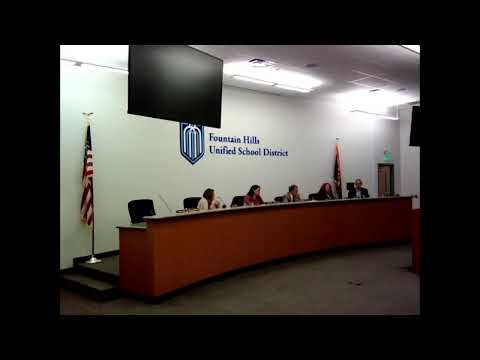
Fountain Hills board confronts enrollment drop and readies budget cuts; land sale, transportation and class size on table
Summary
Board members heard a multi-hour budget briefing that tied a roughly 200-student drop since 2022 to a multi‑hundred‑thousand‑dollar funding gap and discussed potential reductions, a planned land sale, and transportation changes. A recommendation is due Feb. 19 with possible votes in March.
The Fountain Hills Unified School District governing board on Tuesday outlined a budget strategy to address several years of declining enrollment and growing operating pressure, including proposals to adjust class sizes, consolidate transportation routes and prepare a land sale to shore up capital funds.
Superintendent Dr. Jay told the board the district’s enrollment stood at just over 1,100 students and has fallen by about 200 since 2022, a shift he said can translate to roughly $1 million in lost revenue when measured over typical funding formulas. With that gap and an upcoming maintenance-and-operations (M&O) override renewal on the horizon, the district is pursuing a mix of reductions and revenue strategies.
Why it matters: The board’s financial choices could reshape staffing and services. Dr. Jay said the district is trying to minimize cuts that affect classrooms while addressing unsustainably small class sections at some campuses.
What the board discussed: Board members and staff traded specific options, including: - Class-size adjustments at sites with very small enrollment, notably McDowell Mountain Elementary and the high school, where some sections were described as being in the low-to-mid teens; Dr. Jay said principals will be asked to explore shared-grade or team-teaching models to preserve instructional quality while reducing positions if necessary. - Transportation changes such as moving to K–12 consolidated bus routes and limiting district-funded morning-only service in some cases. Dr. Jay said staff will confirm with the Arizona Department of Education whether reduced miles or routes will affect funding eligibility before implementing changes. - Administrative and operational savings where possible, balanced against community and staff feedback that many site-administration positions are critical to school operations.
Land sale and capital planning: The board received an update on an RFP process to select a real-estate broker to market up to three district parcels. Staff recommended Land Advisors after a competitive process and said they expect a listing period of roughly 12–18 months. Proceeds from any sale are expected to be used for capital repairs; Dr. Jay said an anticipated $10 million-plus land-sale receipt could cover major projects and free M&O dollars over time.
Timeline and next steps: The board will receive a formal budget recommendation on Feb. 19 and staff aim to bring a vote in early- to mid‑March so contracts and staffing decisions can be communicated to employees ahead of the next school year.
“We have to start making those reductions now so we’re in a good space for the future,” Dr. Jay said in the session, noting the district will try to prioritize changes that are least noticeable to students.
The meeting closed with a pledge to continue stakeholder engagement; the board listed strategies to boost enrollment among future agenda items.