Get Full Government Meeting Transcripts, Videos, & Alerts Forever!
Get email alerts on the Budget topic
No spam. Unsubscribe anytime.
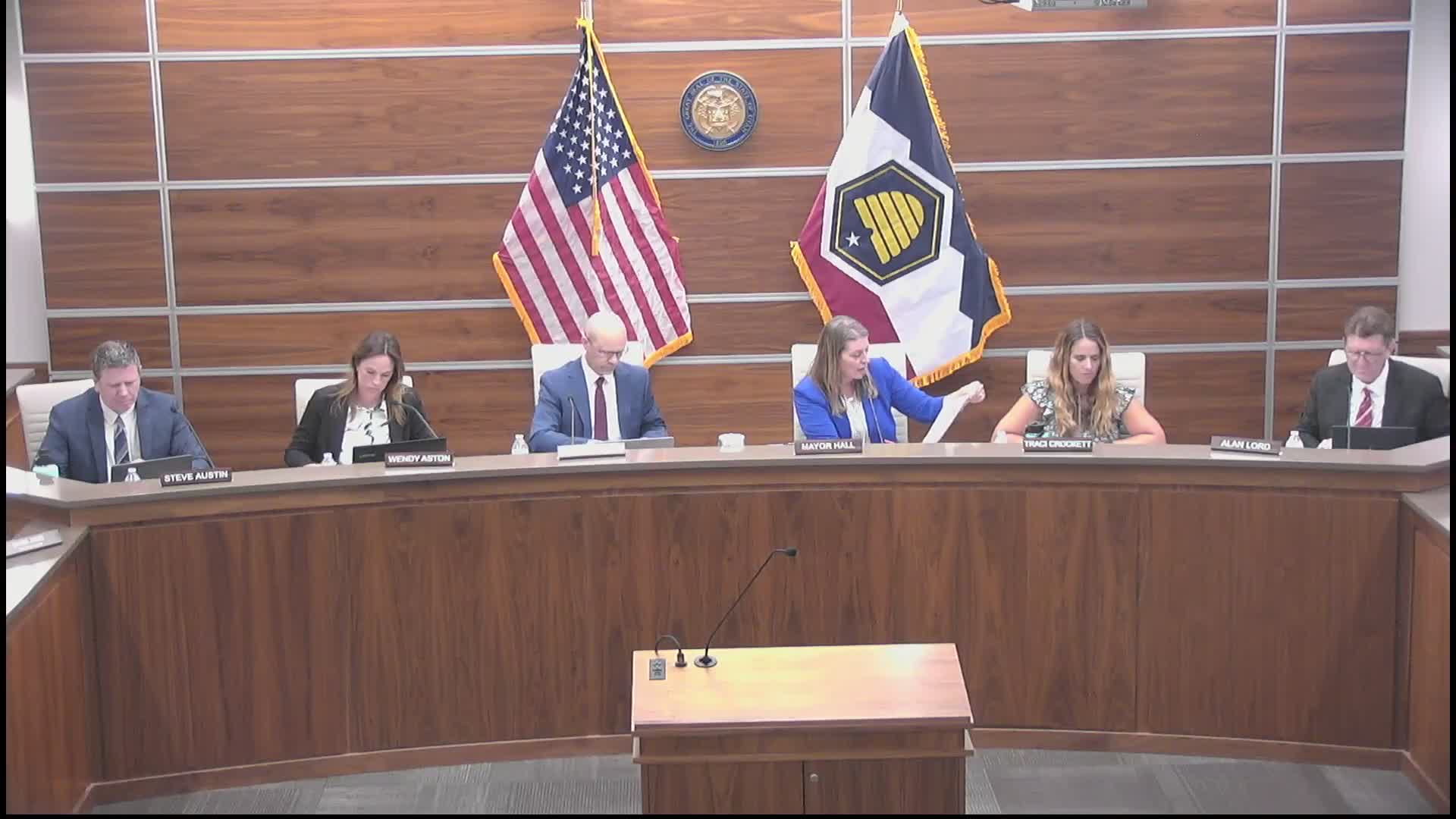
Bluffdale council adopts 2025–26 budget, sets certified tax rates and approves 3% COLA for staff
Summary
Bluffdale’s City Council on June 18 adopted the 2025–26 operating budget, approved final certified tax rates for Salt Lake and Utah counties and included a 3% cost-of-living adjustment for municipal staff. Council reduced the planned use of reserves to about $3,164 and approved several staffing additions.
Bluffdale Mayor Hall and the City Council unanimously approved the city’s final operating budget for fiscal year 2025–26 and adopted the certified tax rates for Salt Lake and Utah counties during their June 18 meeting. The adopted budget includes a 3% cost-of-living adjustment (COLA) for executive municipal officers, a near-elimination of the planned draw on reserves and a small slate of new hires.
City finance staff told the council the state auditor’s certified tax rate for Bluffdale this year is 0.000866, which produced required property tax revenue of $2,246,566 that must be included in the budget. Staff said Bluffdale’s portion of a homeowner’s total property tax bill is about 10%. Stephanie (finance staff) explained how adjusted valuations lower the tax rate as required under Utah law and that the city is not proposing a separate property tax increase for 2025.
The council’s adopted budget moves several staffing and capital items forward while trimming an earlier projected use of fund balance from approximately $1 million in the tentative budget to roughly $3,164 in the final budget after updated property-tax and revenue estimates. City Manager Mark Reid and finance staff described planned additions that include two police officers (one detective, one patrol/traffic), a streets worker focused on stormwater maintenance, an entry-level engineer to support a large trestle/bridge project, a part-time recreation position and two water-fund positions.
During the public hearing, residents urged stronger support for public safety. Chris Aston said the city’s fire chief, Matt Evans, is “severely underpaid” and asked the council to consider raising his wage. A candidate for council, Alan Larson, echoed the emphasis on police and fire. Another resident, Mackie Smith, thanked staff for preserving a healthy reserve level.
Councilmember Austin moved to adopt the Salt Lake County certified tax-rate resolution (Resolution 2025-55) and the Utah County certified tax-rate resolution (Resolution 2025-56). Council later approved the city’s final operating budget for 2025–26 (Resolution 2025-57) and the Police & Fire Protection Fund operating budget (Resolution 2025-61). Each measure passed on roll-call votes with all members voting in the affirmative.
The budget documents presented to the council anticipate fee schedule updates later this summer — including water, garbage and stormwater fees — to reflect increases the city receives from wholesale providers. Staff also noted several capital items will be carried forward into the next fiscal year (the arena finish work, portions of the public works building) depending on final invoices and grant completions.
Votes at a glance: - Resolution 2025-55 (Salt Lake County certified tax rate): moved by Councilmember Austin; seconded; passed (roll-call: all ayes). - Resolution 2025-56 (Utah County certified tax rate): moved by Councilmember Austin; seconded by Councilmember Wilding; passed (roll-call: all ayes). - Resolution 2025-57 (Final operating budget 2025–26): moved by Councilmember Austin; seconded by Councilmember Crockett; passed (roll-call: all ayes). - Resolution 2025-61 (Police & Fire Protection Fund budget): moved by Councilmember Austin; seconded; passed (roll-call: all ayes).
What’s next: Staff will bring the updated consolidated fee schedule back to the council in a future meeting for formal adoption, and the council will monitor year-end revenues and any necessary budget adjustments.